-
-
Breast Cancer Research and Treatment Prevalence and oncologic outcomes of BRCA 1/2 mutations in unselected triple-negative breast cancer patients in Korea 2019.01.01.Breast Cancer Res Treat. 2019 Jan;173(2):385-395. 논문 보기PurposeTriple-negative breast cancer (TNBC) accounts for 10–20% of all diagnosed BCs and it is enriched in BRCA1 mutation. Guidelines for Western countries suggest that BRCA 1/2 genetic testing should be done for patients with TNBC diagnosed less than 60 years, but there is lack of evidence supporting genetic testing in Asian populations. We determined the prevalence of germline BRCA 1/2 mutations among unselected Korean patients with TNBC and analyzed oncologic outcomes.MethodsFrom among 1628 women with TNBC who underwent surgery at Samsung Medical Center (SMC) between Jul 2008 and Jan 2016, 999 samples were available in the SMC biobank for testing germline BRCA 1/2 mutations using next-generation DNA sequencing.ResultsOverall, 131 Korean patients (13.1%) had BRCA 1/2 mutations: 97 (9.7%) were in BRCA 1, and 35 (3.5%) were in BRCA 2. One patient had both BRCA 1 and BRCA 2 mutations. Overall, 68 distinct pathologic or likely pathogenic variants (43 BRCA1 and 25 BRCA2) were found. Among those diagnosed at ≤ 60 years, the prevalence of BRCA 1/2 mutation was 14.5%. The mean age of diagnosis of BRCA1/2 mutation carriers was significantly younger than that of non-carriers (45.6 vs. 50.1 years, p < 0.0001). The median follow-up duration was 53.6 months. There were no significant differences in disease-free survival, overall survival, or breast cancer-specific survival (p = 0.799, 0.092, and 0.124, respectively) between BRCA 1/2 carriers and non-carriers, although BRCA 1/2 carriers showed significantly worse contralateral breast cancer-free survival (p < 0.0001) than non-carriers.
Total : 35개 (page : 1/3)
-
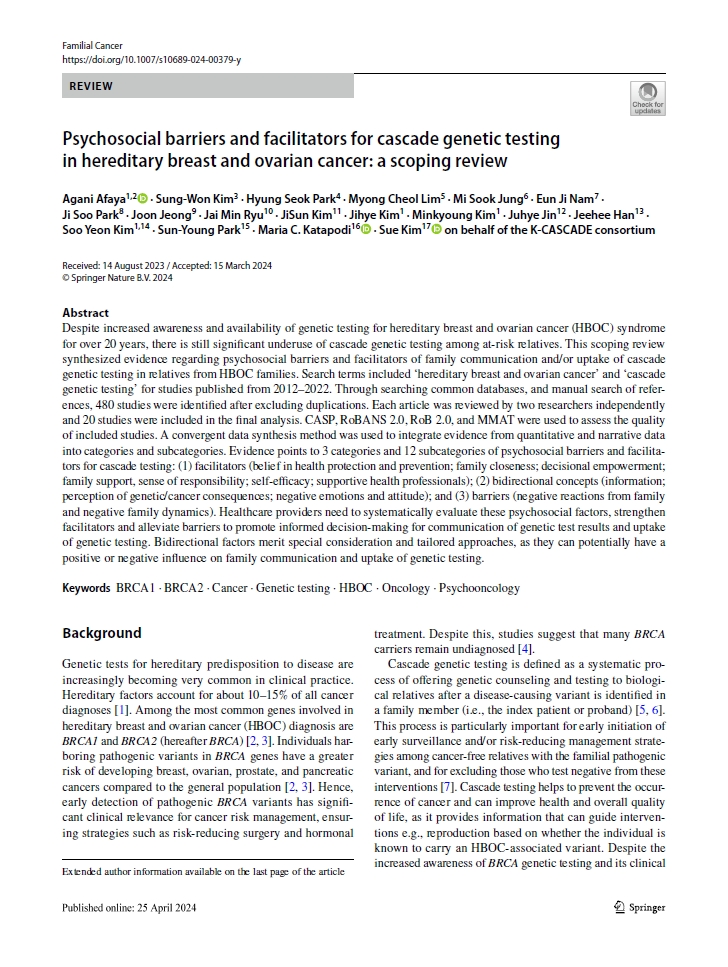 Psychosocial barriers and facilitators for cascade genetic testing in hereditary breast and ovarian cancer: a scoping review
-
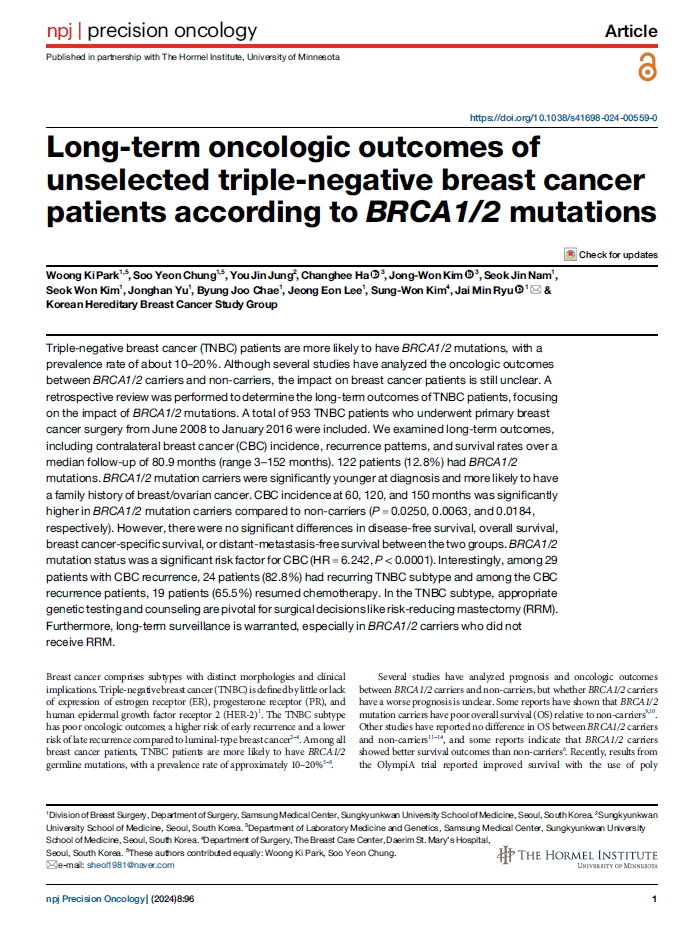 Long-term oncologic outcomes of unselected triple-negative breast cancer patients according to BRCA1/2 mutations
-
Associations of a Breast Cancer Polygenic Risk Score With Tumor Characteristics and Survival
-
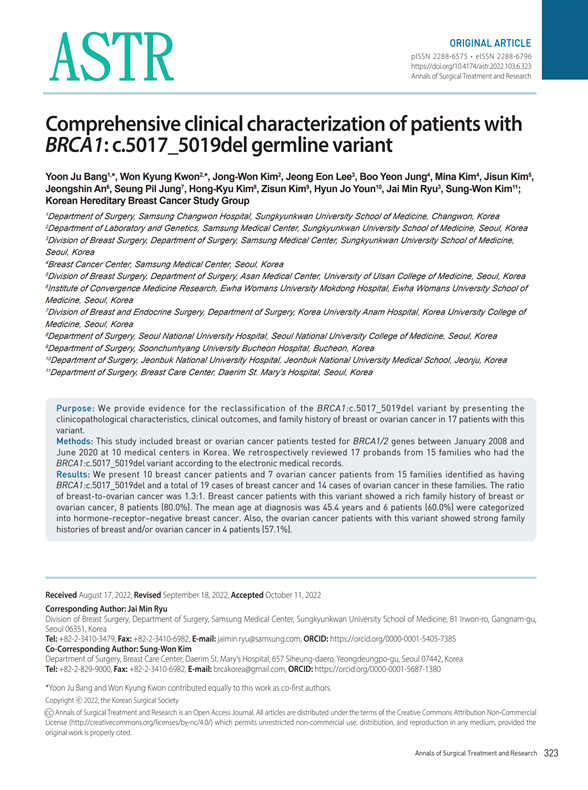 Comprehensive clinical characterization of patients with BRCA1: c.5017_5019del germline variant
-
 BRCA and Breast Cancer-Related High-Penetrance Genes
-
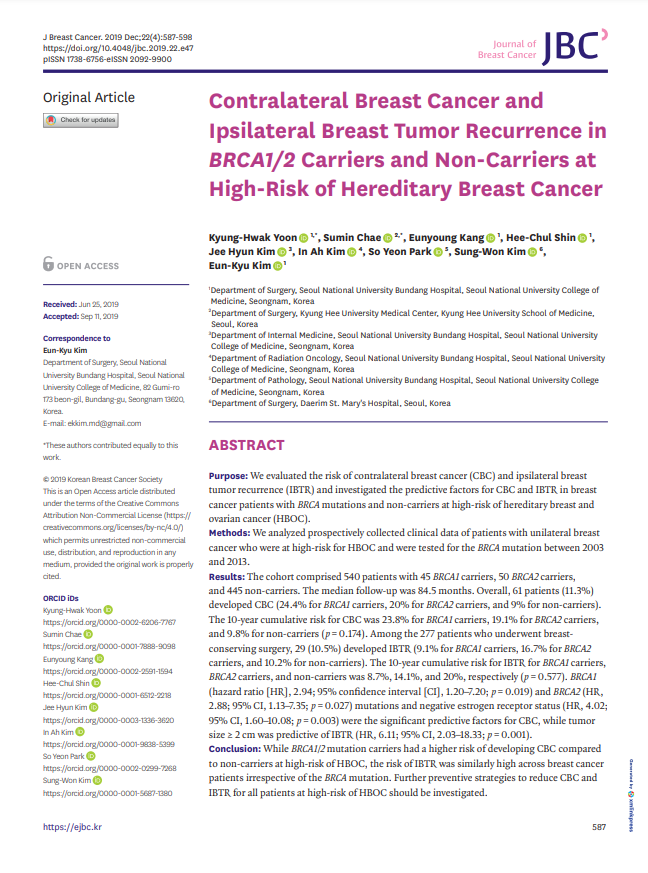 Contralateral Breast Cancer and Ipsilateral Breast Tumor Recurrence in BRCA1/2 Carriers and Non-Carriers at High-Risk of Hereditary Breast Cancer
-
 The functional ALDH2 polymorphism is associated with breast cancer risk: A pooled analysis from the Breast Cancer Association Consortium
-
 Height and body mass index as Modifiers of breast cancer risk in BRCA1/2 mutation carriers: A Mendelian randomization study
-
Prevalence and oncologic outcomes of BRCA 1/2 mutations in unselected triple-negative breast cancer patients in Korea
-
 Development of a Management Algorithm for the Diagnosis of Cellular Fibroepithelial Lesions From Core Needle Biopsies
-
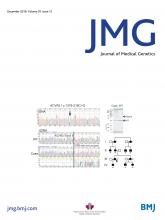 Reclassification of BRCA1 and BRCA2 variants of uncertain significance: a multifactorial analysis of multicentre prospective cohort
-
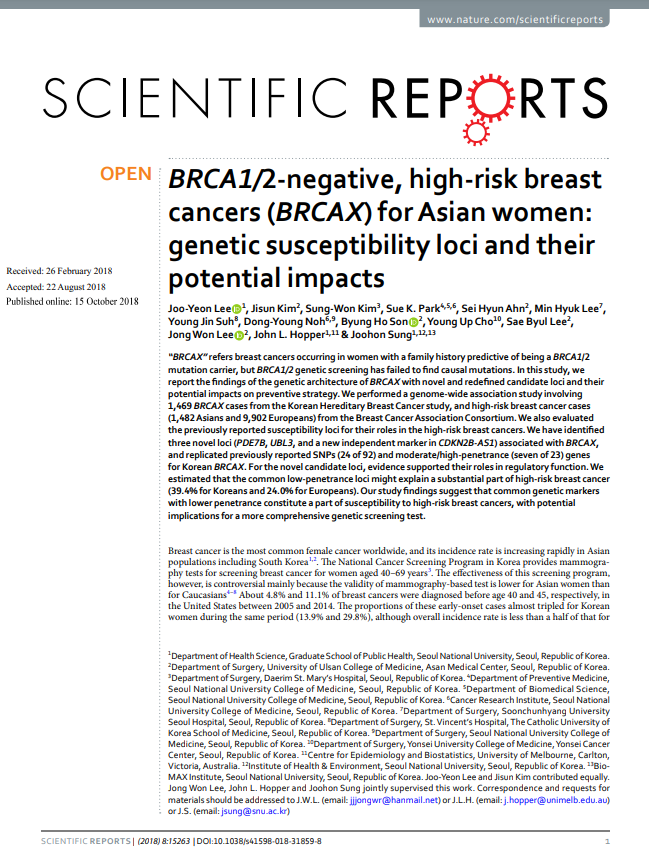 BRCA1/2-negative, high-risk breast cancers (BRCAX) for Asian women: genetic susceptibility loci and their potential impacts
-
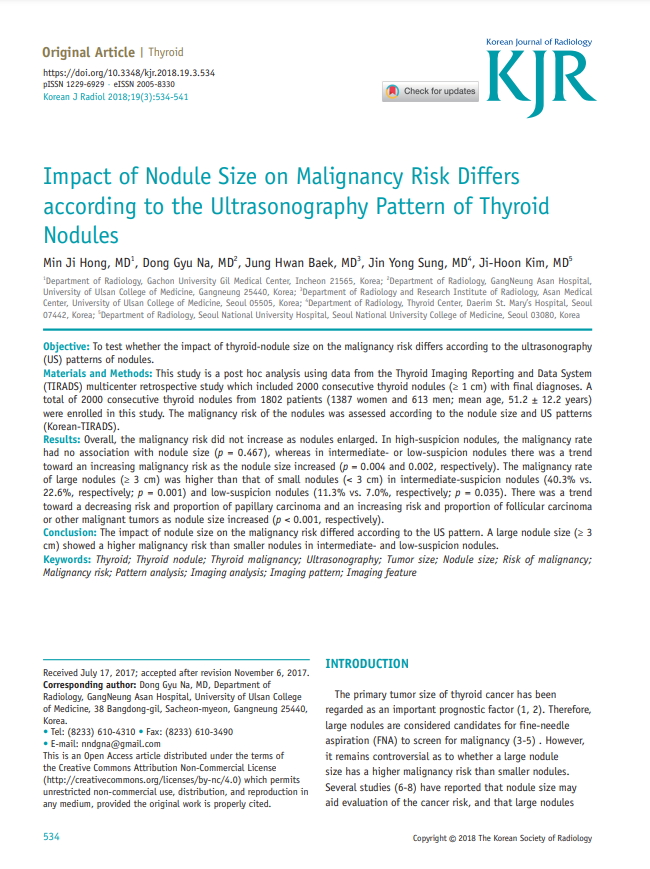 Impact of Nodule Size on Malignancy Risk Differs according to the Ultrasonography Pattern of Thyroid Nodules
-
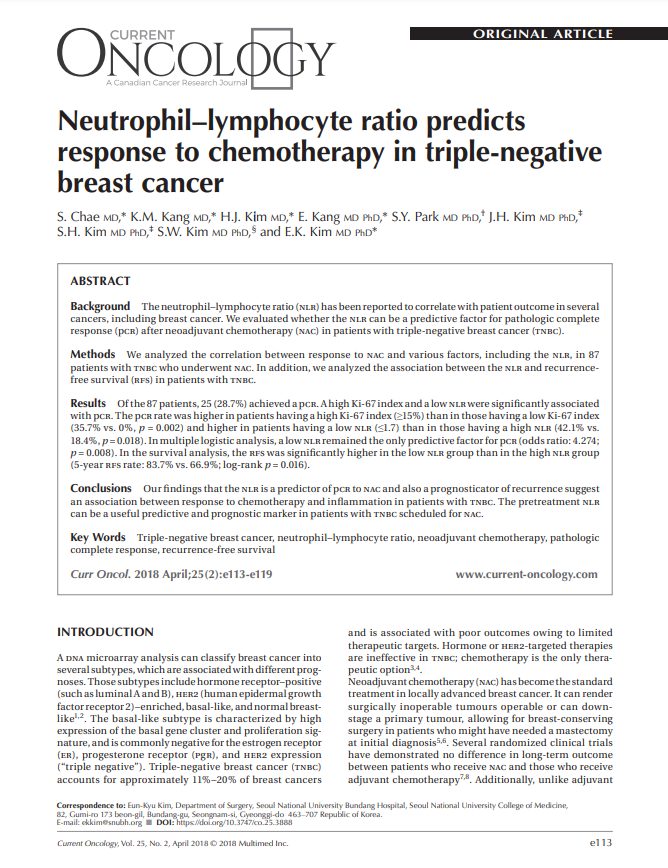 Neutrophil–lymphocyte ratio predicts response to chemotherapy in triple-negative breast cancer
-
 Identification of ten variants associated with risk of estrogen-receptor-negative breast cancer