


-
-
Journal of Medical Genetics Reclassification of BRCA1 and BRCA2 variants of uncertain significance: a multifactorial analysis of multicentre prospective cohort 2018.12.07.J Med Genet . 2018 Dec;55(12):794-802. 논문 보기PurposeBRCA1 and BRCA2 (BRCA1/2) variants classified ambiguously as variants of uncertain significance (VUS) are a major challenge for clinical genetic testing in breast cancer; their relevance to the cancer risk is unclear and the association with the response to specific BRCA1/2-targeted agents is uncertain. To minimise the proportion of VUS in BRCA1/2, we performed the multifactorial likelihood analysis and validated this method using an independent cohort of patients with breast cancer.MethodsWe used a data set of 2115 patients with breast cancer from the nationwide multicentre prospective Korean Hereditary Breast Cancer study. In total, 83 BRCA1/2 VUSs (BRCA1, n=26; BRCA2, n=57) were analysed. The multifactorial probability was estimated by combining the prior probability with the overall likelihood ratio derived from co-occurrence of each VUS with pathogenic variants, personal and family history, and tumour characteristics. The classification was compared with the interpretation according to the American College of Medical Genetics and Genomics-Association for Molecular Pathology (ACMG/AMP) guidelines. An external validation was conducted using independent data set of 810 patients.ResultsWe were able to redefine 38 VUSs (BRCA1, n=10; BRCA2, n=28). The revised classification was highly correlated with the ACMG/AMP guideline-ba
sed interpretation (BRCA1, p for trend=0.015; BRCA2, p=0.001). Our approach reduced the proportion of VUS from 19% (154/810) to 8.9% (72/810) in the retrospective validation data set.
Total : 35개 (page : 2/3)
-
 Association analysis identifies 65 new breast cancer risk loci
-
 Reproductive factors as risk modifiers of breast cancer in BRCA mutation carriers and high risk
-
 The Effect of Reproductive Factors on Breast Cancer Presentation in Women Who Are BRCA Mutation Carrier
-
 The Management Strategy of Benign Solitary Intraductal Papilloma on Breast Core Biopsy
-
 Prediction of Breast and Prostate Cancer Risks in Male BRCA1 and BRCA2 Mutation Carriers Using Polygenic Risk Scores
-
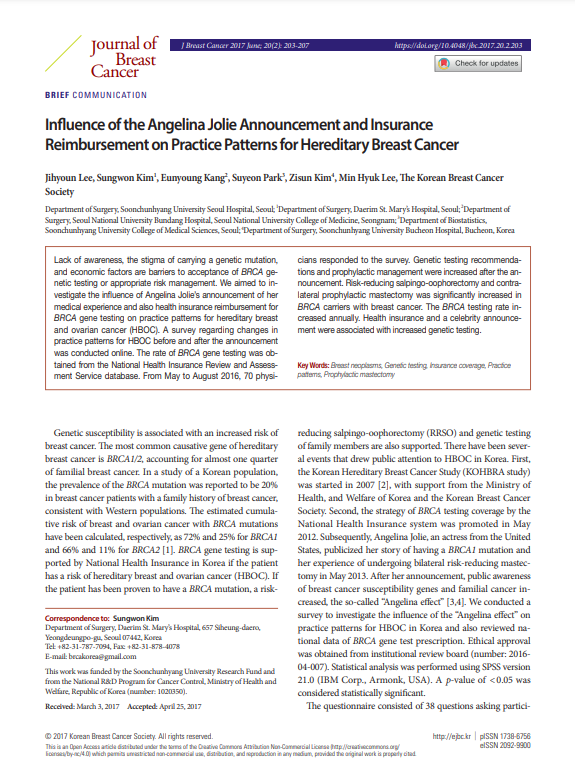 Influence of the Angelina Jolie Announcement and Insurance Reimbursement on Practice Patterns for Hereditary Breast Cancer
-
 Suggestion of BRCA1 c.5339T>C (p.L1780P) variant confer from 'unknown significance' to 'Likely pathogenic' based on clinical evidence in Korea
-
 Identification of 12 new susceptibility loci for different histotypes of epithelial ovarian cancer
-
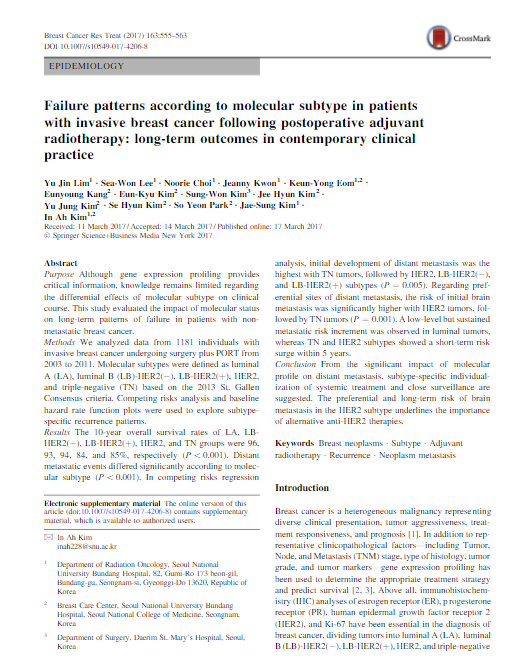 Failure patterns according to molecular subtype in patients with invasive breast cancer following postoperative adjuvant radiotherapy: long-term outcomes in contemporary clinical practice
-
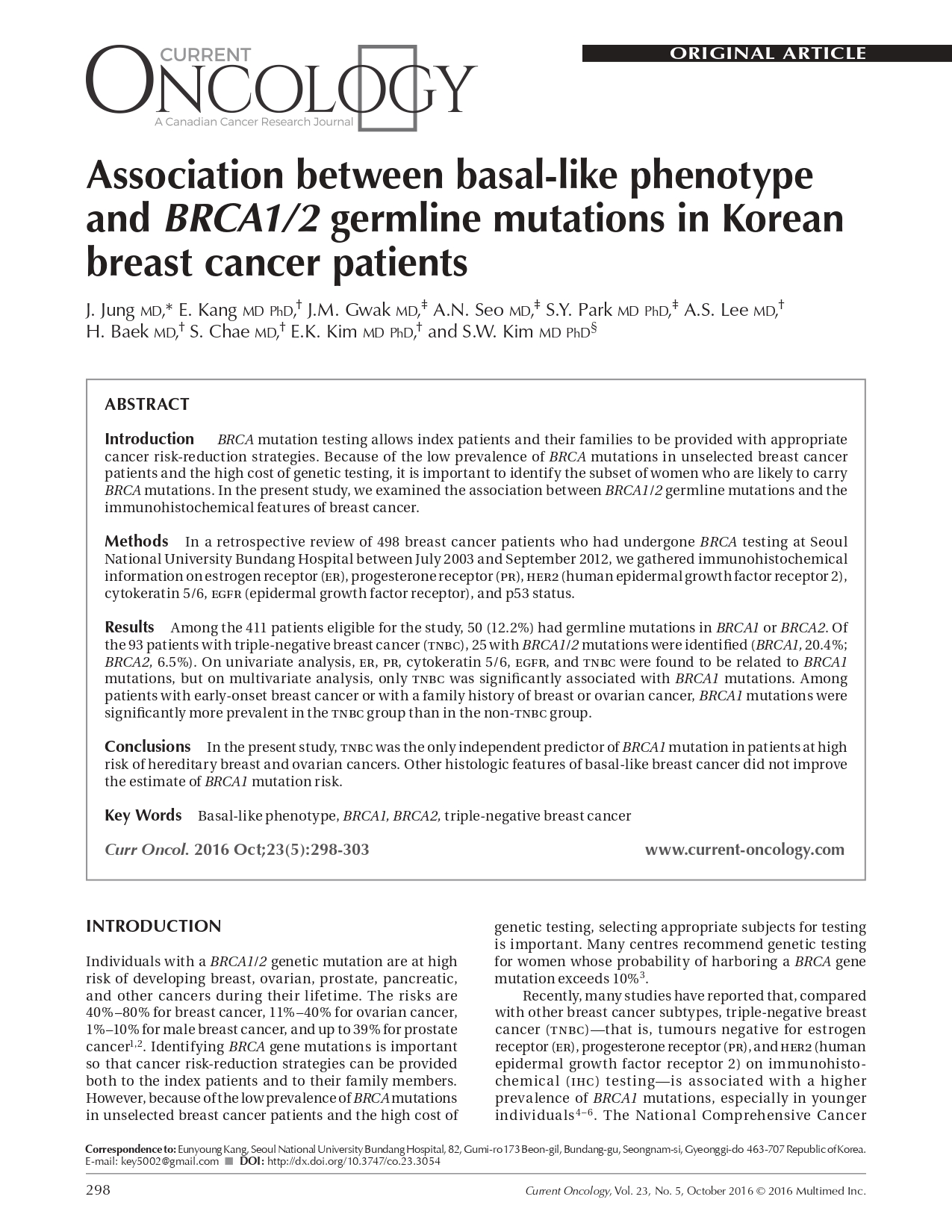 Association between basal-like phenotype and BRCA1/2 germline mutations in Korean breast cancer patients
-
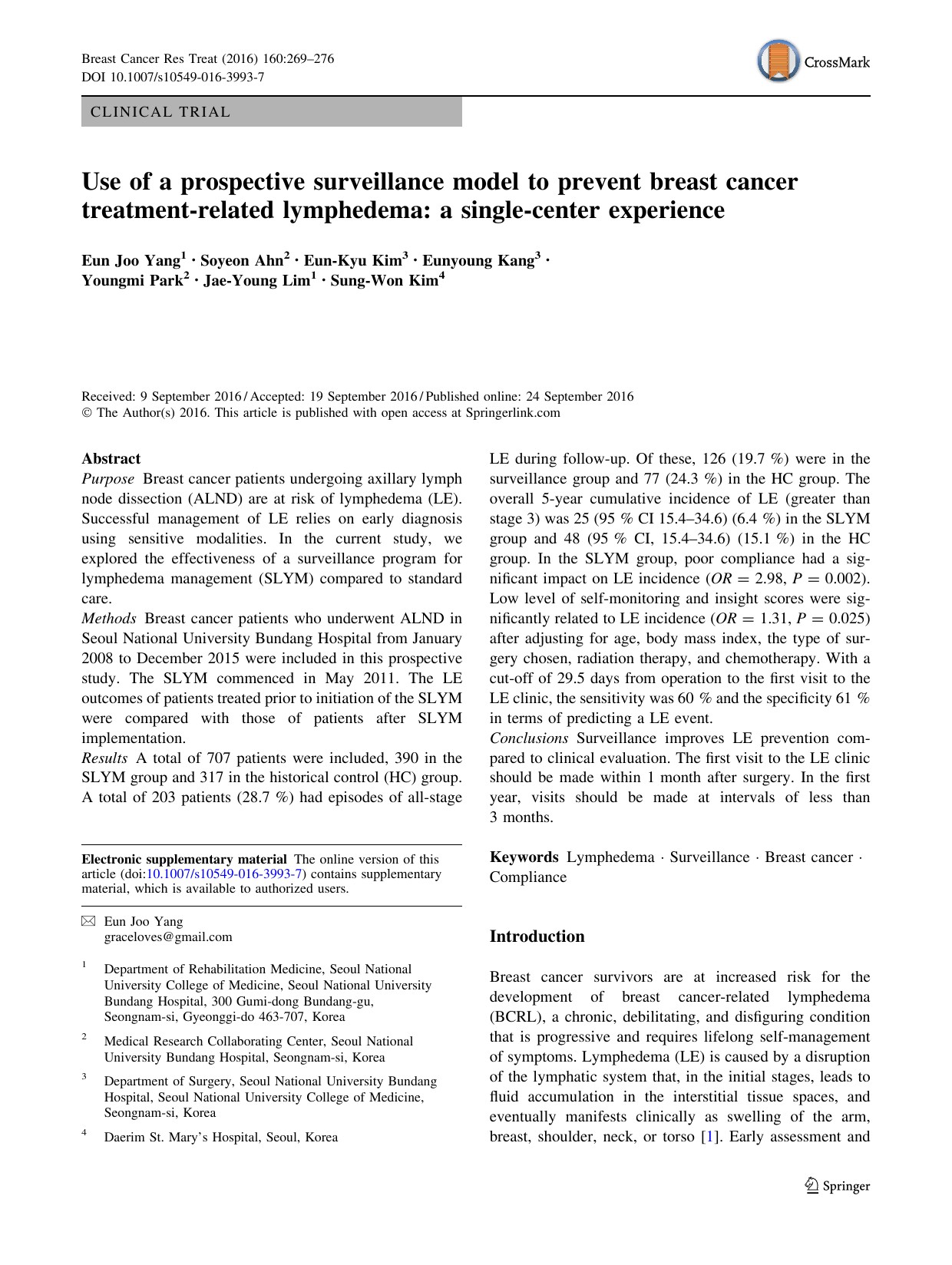 Use of a prospective surveillance model to prevent breast cancer treatment-related lymphedema: a single-center experience
-
 Reliability of Computer-Assisted Breast Density Estimation: Comparison of Interactive Thresholding, Semiautomated, and Fully Automated Methods
-
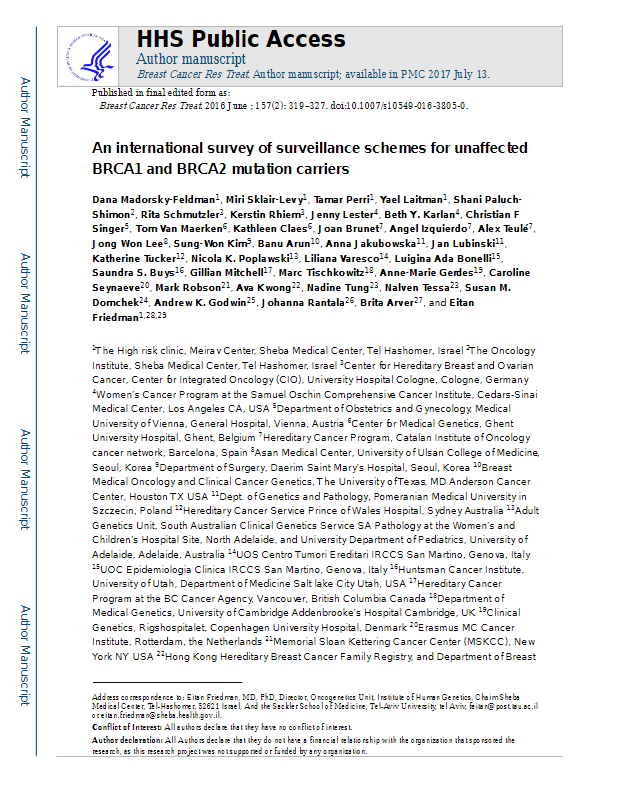 An international survey of surveillance schemes for unaffected BRCA1 and BRCA2 mutation carriers
-
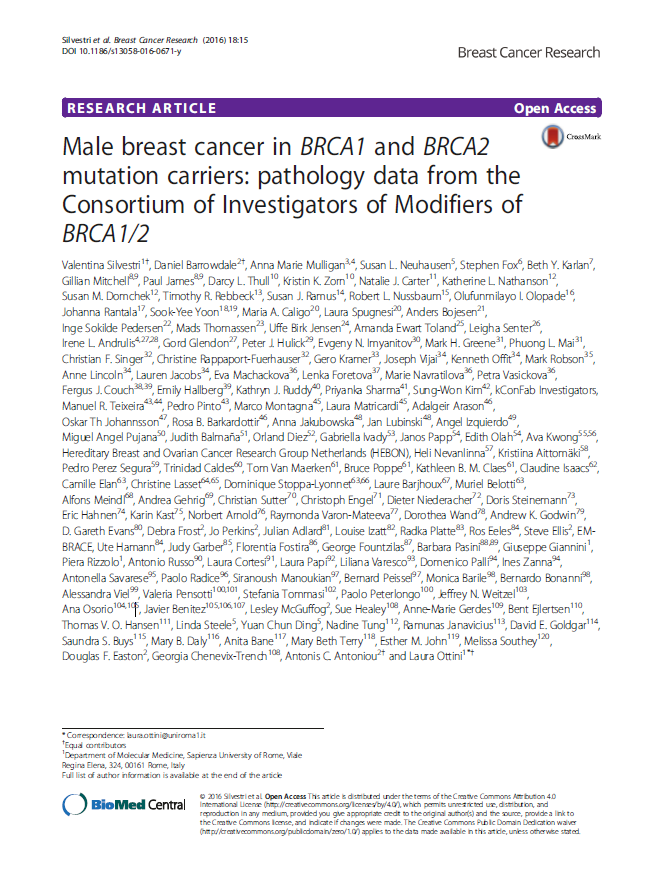 Male breast cancer in BRCA1 and BRCA2 mutation carriers: pathology data from the Consortium of Investigators of Modifiers of BRCA1/2
-
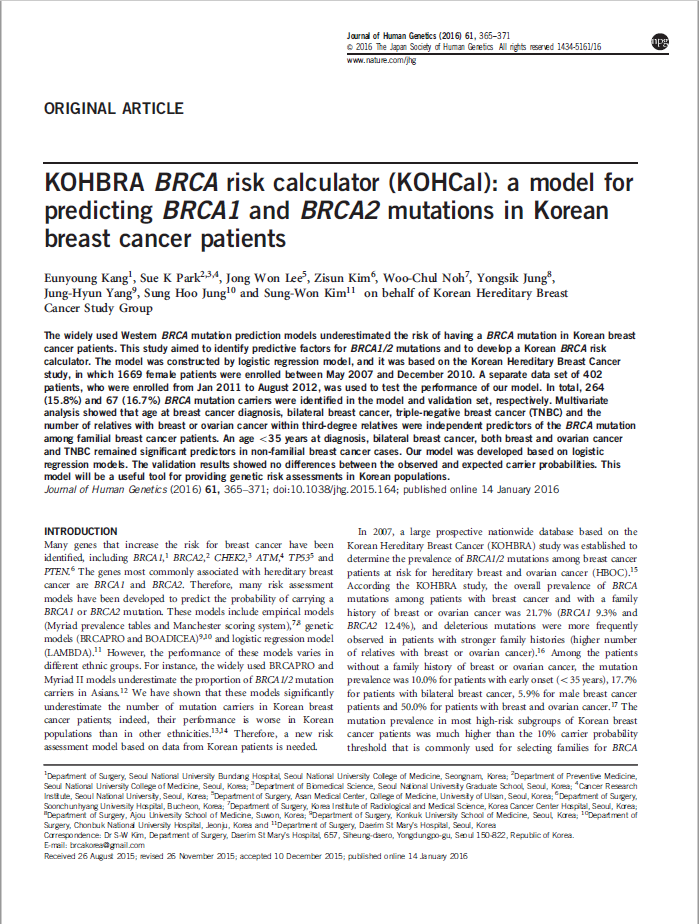 KOHBRA BRCA risk calculator (KOHCal): a model for predicting BRCA1 and BRCA2 mutations in Korean breast cancer patients


