


-
-
Nature Association analysis identifies 65 new breast cancer risk loci 2017.11.02.Nature. 2017 Nov: 551, 92-94. 논문 보기PurposeBreast cancer risk is influenced by rare coding variants in susceptibility genes, such as BRCA1, and many common, mostly non-coding variants. However, much of the genetic contribution to breast cancer risk remains unknown. Here we report the results of a genome-wide association study of breast cancer in 122,977 cases and 105,974 controls of European ancestry and 14,068 cases and 13,104 controls of East Asian ancestry1. We identified 65 new loci that are associated with overall breast cancer risk at P < 5 × 10⁻⁸. The majority of credible risk single-nucleotide polymorphisms in these loci fall in distal regulatory elements, and by integrating in silico data to predict target genes in breast cells at each locus, we demonstrate a strong overlap between candidate target genes and somatic driver genes in breast tumours. We also find that heritability of breast cancer due to all single-nucleotide polymorphisms in regulatory features was 2–5-fold enriched relative to the genome-wide average, with strong enrichment for particular transc
ription factor binding sites. These results provide further insight into genetic susceptibility to breast cancer and will improve the use of genetic risk scores for individualized screening and prevention.
Total : 35개 (page : 2/3)
-
Association analysis identifies 65 new breast cancer risk loci
-
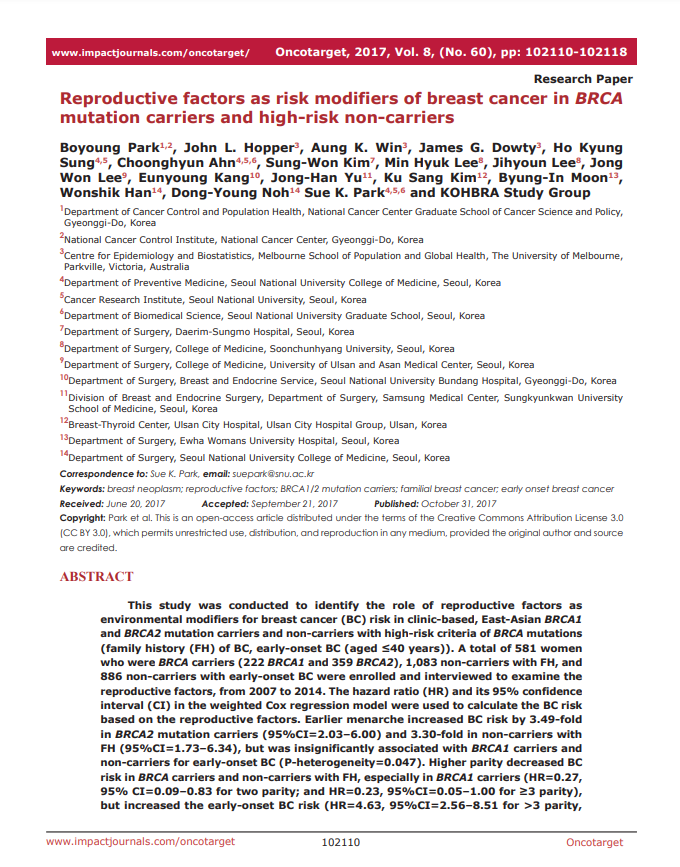 Reproductive factors as risk modifiers of breast cancer in BRCA mutation carriers and high risk
-
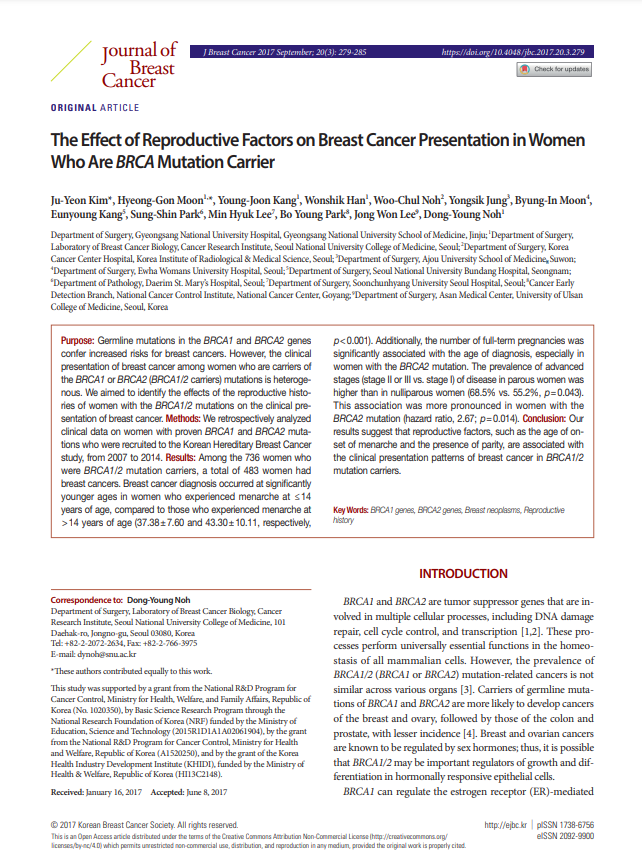 The Effect of Reproductive Factors on Breast Cancer Presentation in Women Who Are BRCA Mutation Carrier
-
 The Management Strategy of Benign Solitary Intraductal Papilloma on Breast Core Biopsy
-
 Prediction of Breast and Prostate Cancer Risks in Male BRCA1 and BRCA2 Mutation Carriers Using Polygenic Risk Scores
-
 Influence of the Angelina Jolie Announcement and Insurance Reimbursement on Practice Patterns for Hereditary Breast Cancer
-
 Suggestion of BRCA1 c.5339T>C (p.L1780P) variant confer from 'unknown significance' to 'Likely pathogenic' based on clinical evidence in Korea
-
 Identification of 12 new susceptibility loci for different histotypes of epithelial ovarian cancer
-
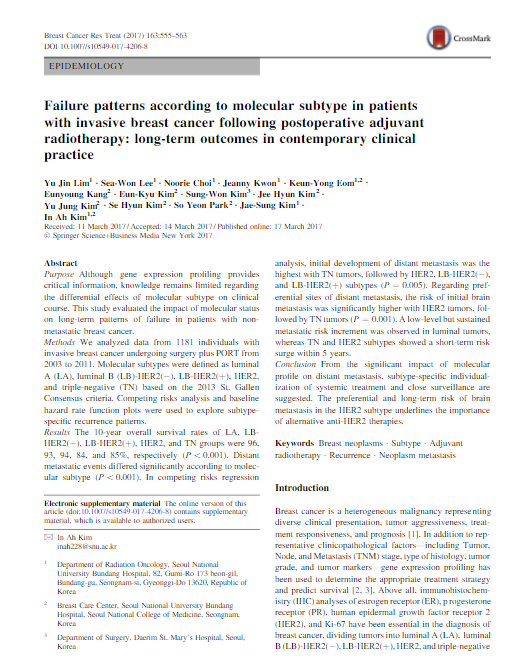 Failure patterns according to molecular subtype in patients with invasive breast cancer following postoperative adjuvant radiotherapy: long-term outcomes in contemporary clinical practice
-
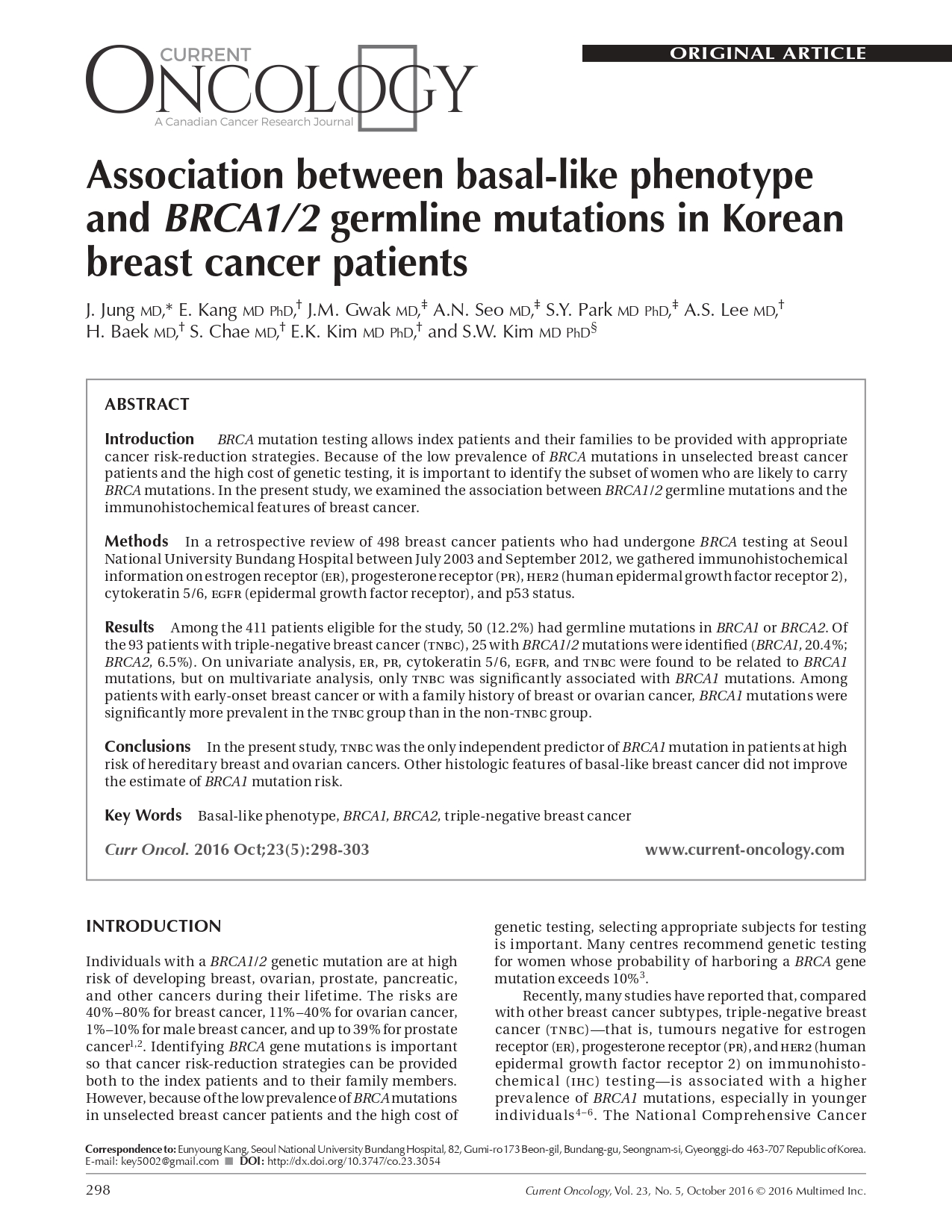 Association between basal-like phenotype and BRCA1/2 germline mutations in Korean breast cancer patients
-
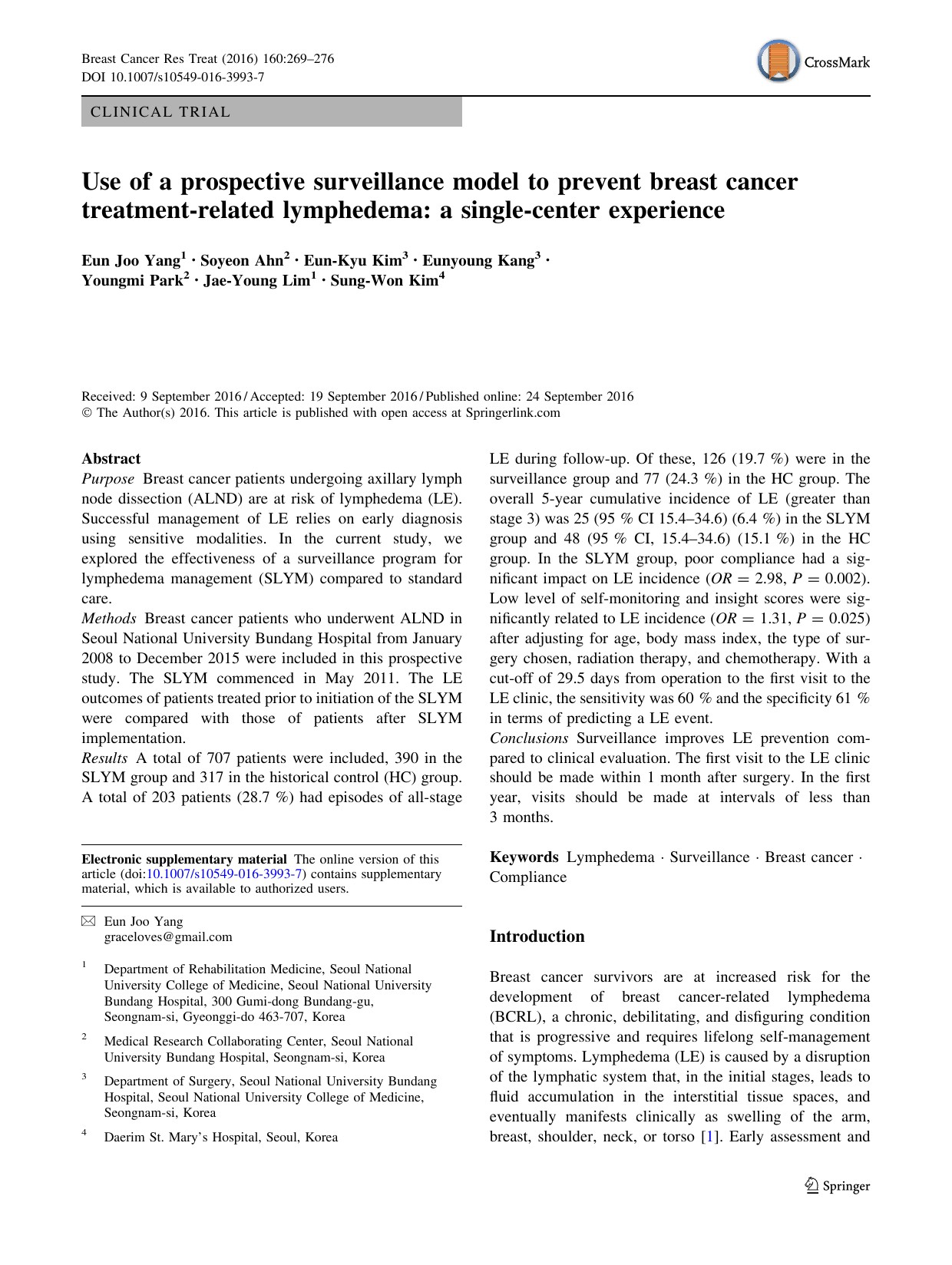 Use of a prospective surveillance model to prevent breast cancer treatment-related lymphedema: a single-center experience
-
 Reliability of Computer-Assisted Breast Density Estimation: Comparison of Interactive Thresholding, Semiautomated, and Fully Automated Methods
-
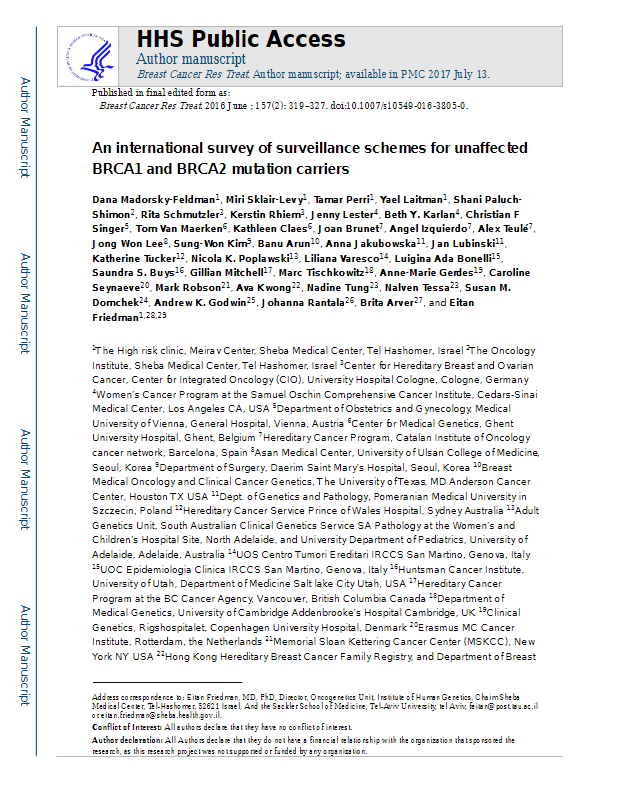 An international survey of surveillance schemes for unaffected BRCA1 and BRCA2 mutation carriers
-
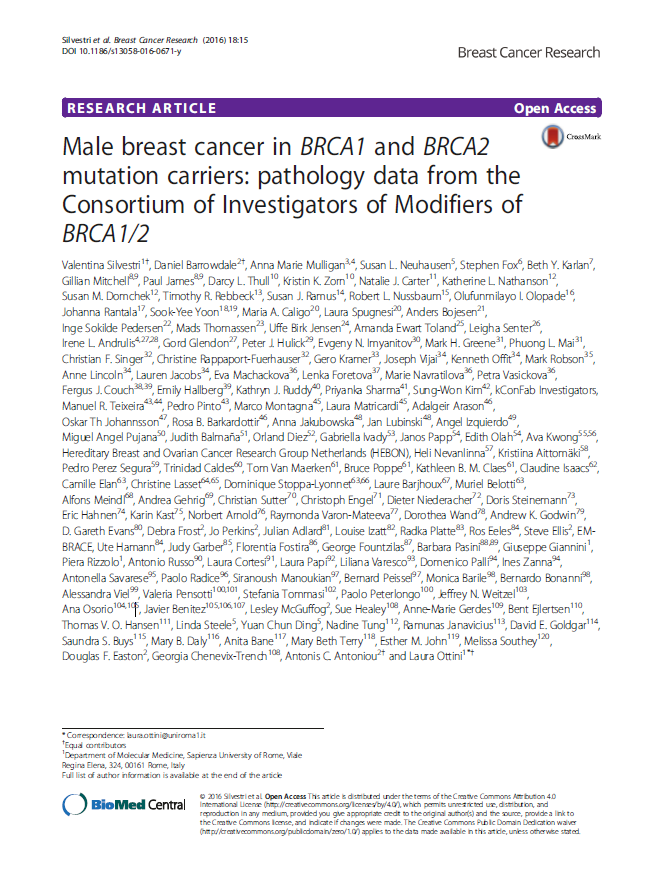 Male breast cancer in BRCA1 and BRCA2 mutation carriers: pathology data from the Consortium of Investigators of Modifiers of BRCA1/2
-
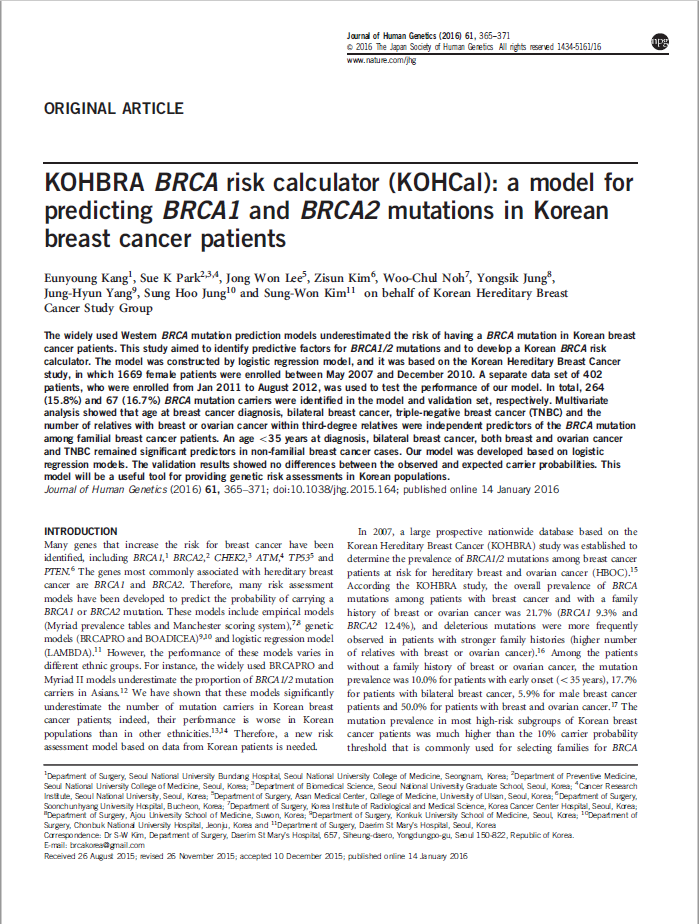 KOHBRA BRCA risk calculator (KOHCal): a model for predicting BRCA1 and BRCA2 mutations in Korean breast cancer patients


