


-
-
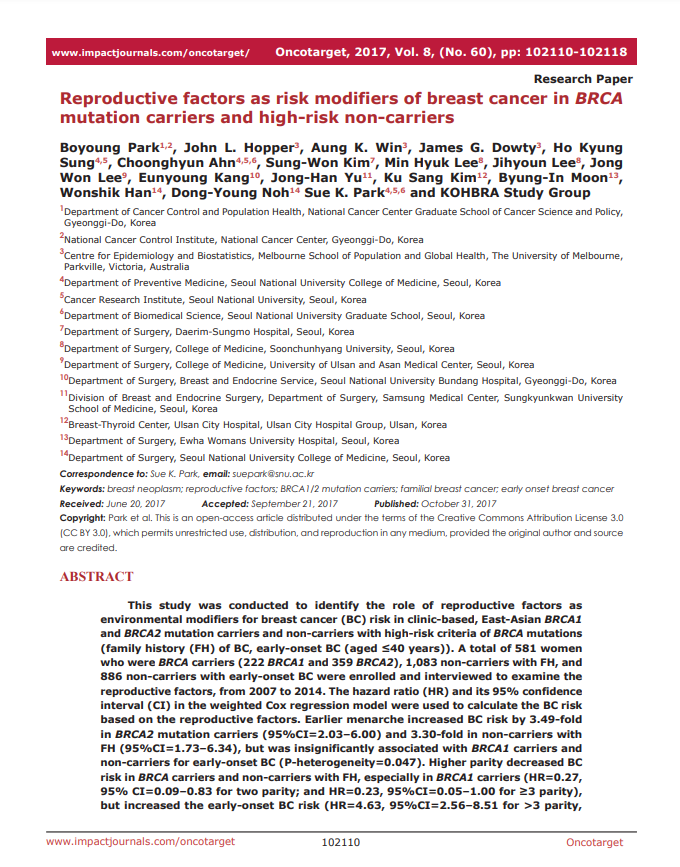
Oncotarget Reproductive factors as risk modifiers of breast cancer in BRCA mutation carriers and high risk 2017.10.31.Oncotarget. 2017 Nov 24; 8(60): 102110–102118. 논문 보기AbstractThis study was conducted to identify the role of reproductive factors as environmental modifiers for breast cancer (BC) risk in clinic-ba
sed, East-Asian BRCA1 and BRCA2 mutation carriers and non-carriers with high-risk criteria of BRCA mutations (family history (FH) of BC, early-onset BC (aged ≤40 years)). A total of 581 women who were BRCA carriers (222 BRCA1 and 359 BRCA2), 1,083 non-carriers with FH, and 886 non-carriers with early-onset BC were enrolled and interviewed to examine the reproductive factors, from 2007 to 2014. The hazard ratio (HR) and its 95% confidence interval (CI) in the weighted Cox regression model were used to calculate the BC risk ba sed on the reproductive factors. Earlier menarche increased BC risk by 3.49-fold in BRCA2 mutation carriers (95%CI=2.03–6.00) and 3.30-fold in non-carriers with FH (95%CI=1.73–6.34), but was insignificantly associated with BRCA1 carriers and non-carriers for early-onset BC (P-heterogeneity=0.047). Higher parity decreased BC risk in BRCA carriers and non-carriers with FH, especially in BRCA1 carriers (HR=0.27, 95% CI=0.09–0.83 for two parity; and HR=0.23, 95%CI=0.05–1.00 for ≥3 parity), but increased the early-onset BC risk (HR=4.63, 95%CI=2.56–8.51 for >3 parity, p-heterogeneity=0.045). Oral contraceptive (OC) use and longer estrogen exposure periods (≥30 years) were associated with an increased risk of early-onset BC (HR=3.99, 95%CI=1.65–9.67; HR=7.69, 95%CI=1.96–25.01), while OC use was not associated with BC risk in other groups and longer estrogen exposure had rather decreased risk for BC risk (both p-heterogeneity<0.001). Several reproductive factors as risk modifiers could heterogeneously be associated with BC among BRCA1/2 mutation carriers, non-carriers with FH, and early-onset BC non-carriers.
Total : 35개 (page : 2/3)
-
 Association analysis identifies 65 new breast cancer risk loci
-
Reproductive factors as risk modifiers of breast cancer in BRCA mutation carriers and high risk
-
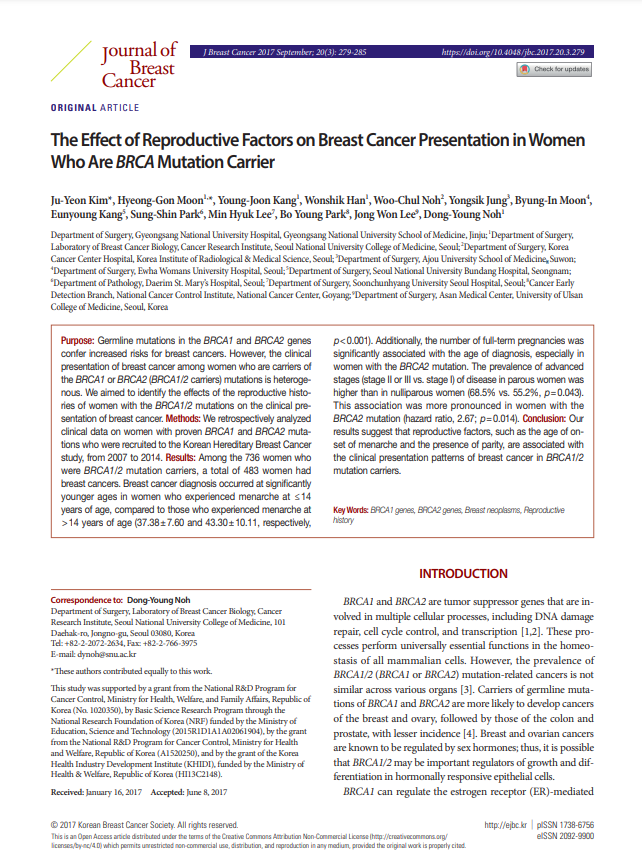 The Effect of Reproductive Factors on Breast Cancer Presentation in Women Who Are BRCA Mutation Carrier
-
 The Management Strategy of Benign Solitary Intraductal Papilloma on Breast Core Biopsy
-
 Prediction of Breast and Prostate Cancer Risks in Male BRCA1 and BRCA2 Mutation Carriers Using Polygenic Risk Scores
-
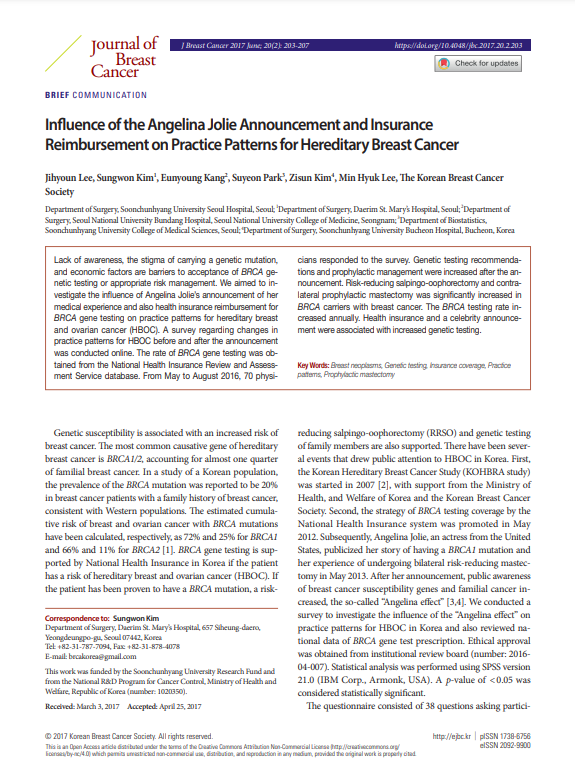 Influence of the Angelina Jolie Announcement and Insurance Reimbursement on Practice Patterns for Hereditary Breast Cancer
-
 Suggestion of BRCA1 c.5339T>C (p.L1780P) variant confer from 'unknown significance' to 'Likely pathogenic' based on clinical evidence in Korea
-
 Identification of 12 new susceptibility loci for different histotypes of epithelial ovarian cancer
-
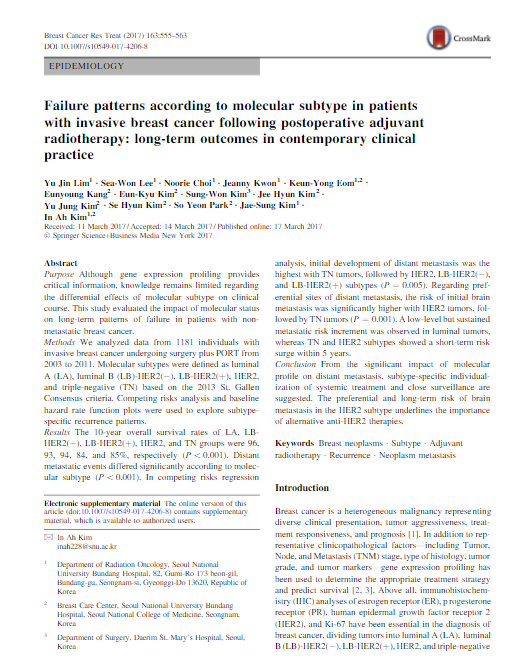 Failure patterns according to molecular subtype in patients with invasive breast cancer following postoperative adjuvant radiotherapy: long-term outcomes in contemporary clinical practice
-
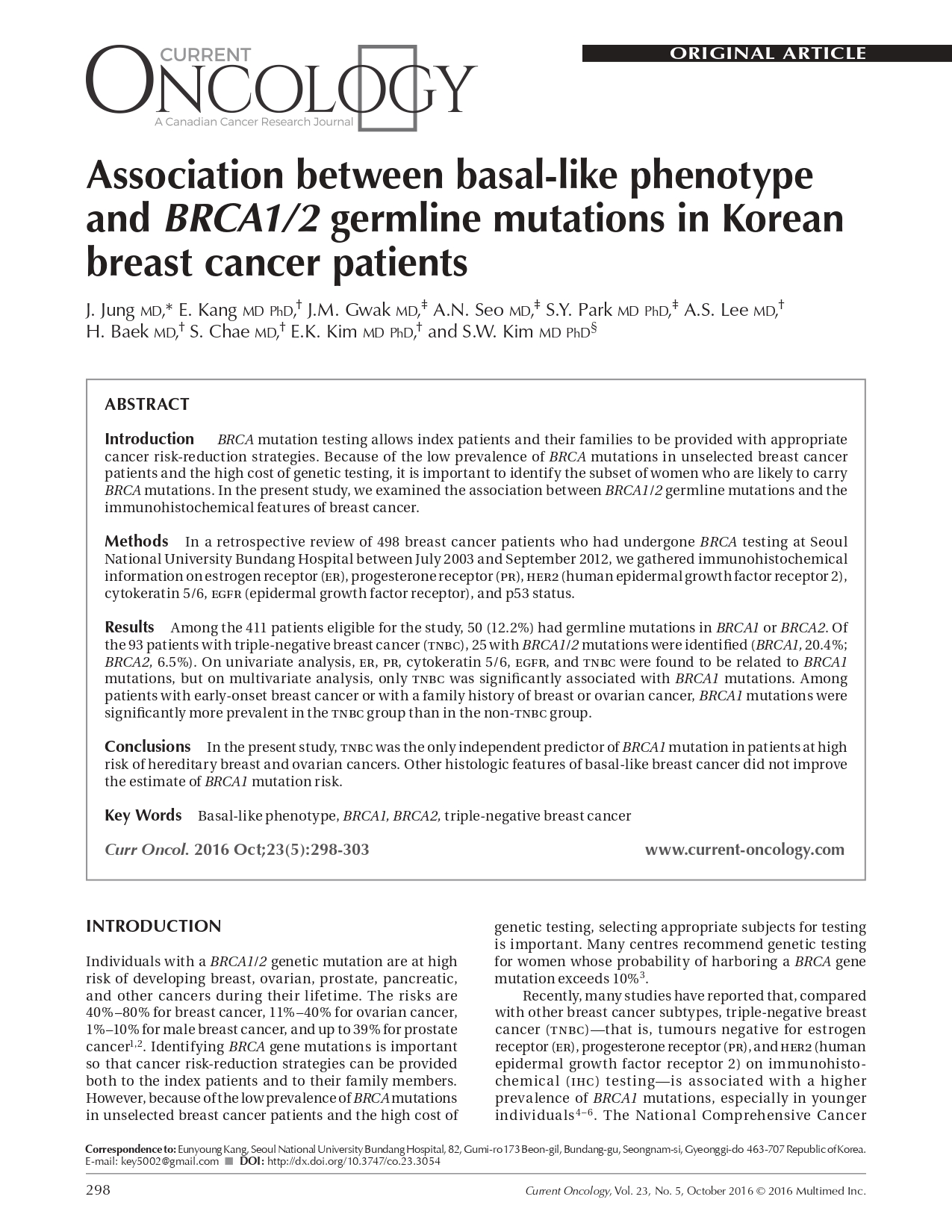 Association between basal-like phenotype and BRCA1/2 germline mutations in Korean breast cancer patients
-
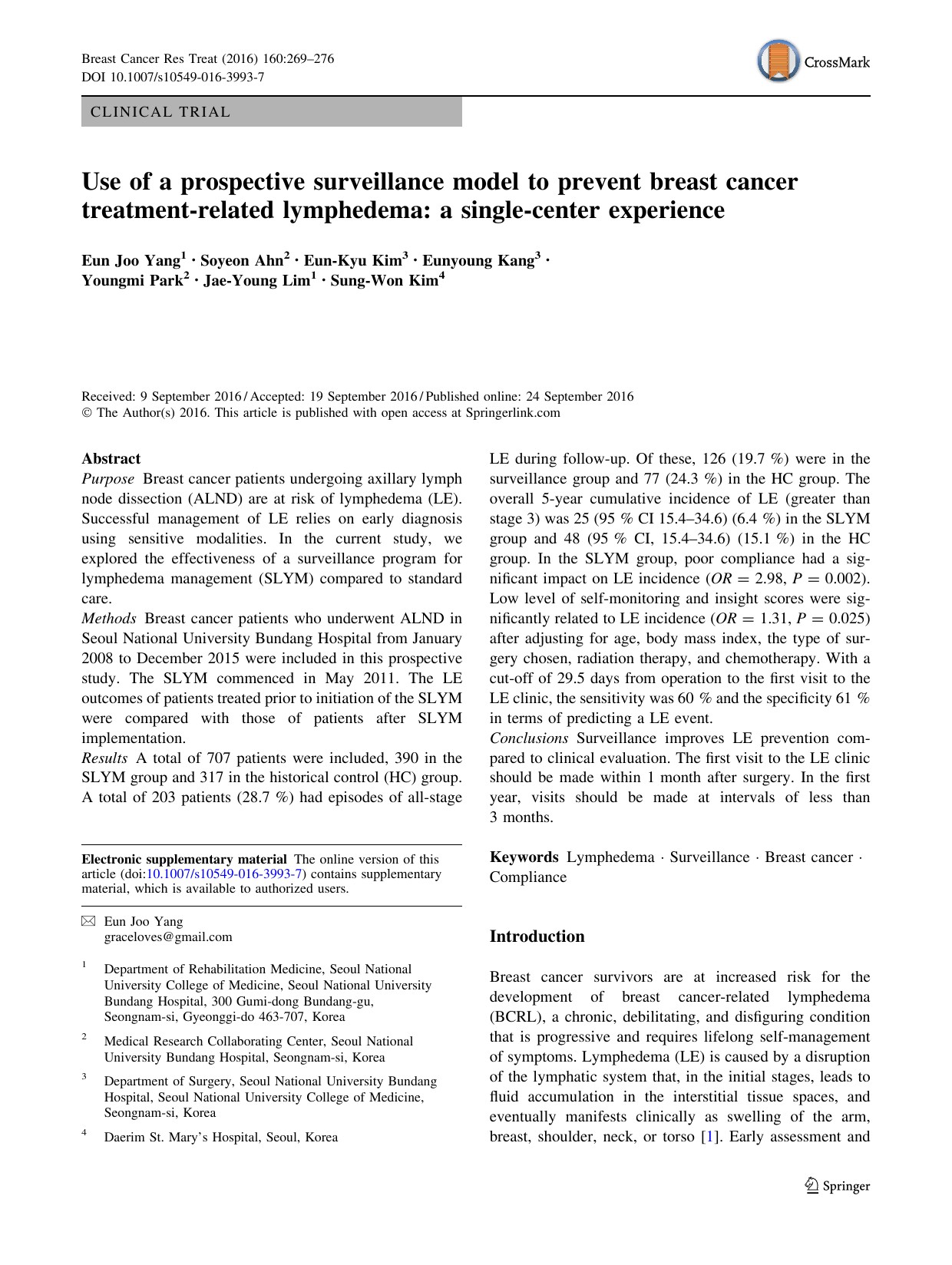 Use of a prospective surveillance model to prevent breast cancer treatment-related lymphedema: a single-center experience
-
 Reliability of Computer-Assisted Breast Density Estimation: Comparison of Interactive Thresholding, Semiautomated, and Fully Automated Methods
-
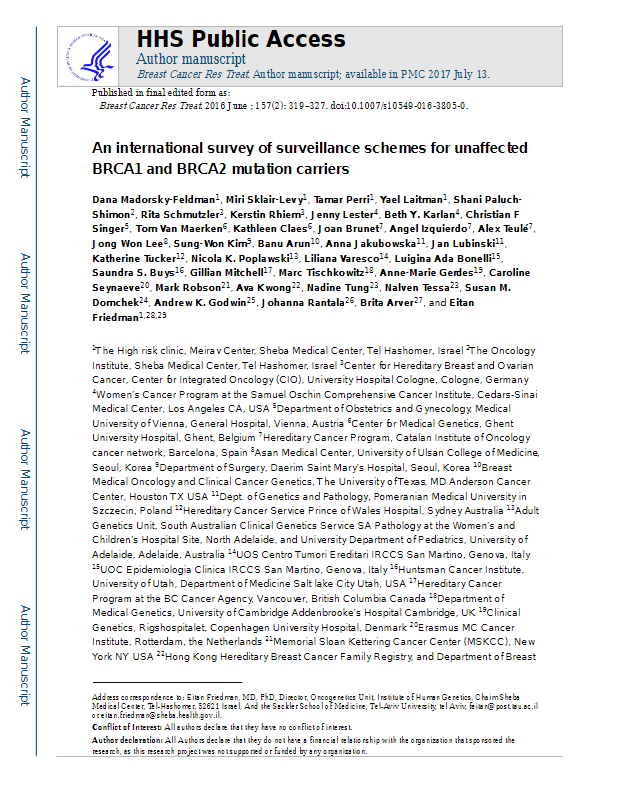 An international survey of surveillance schemes for unaffected BRCA1 and BRCA2 mutation carriers
-
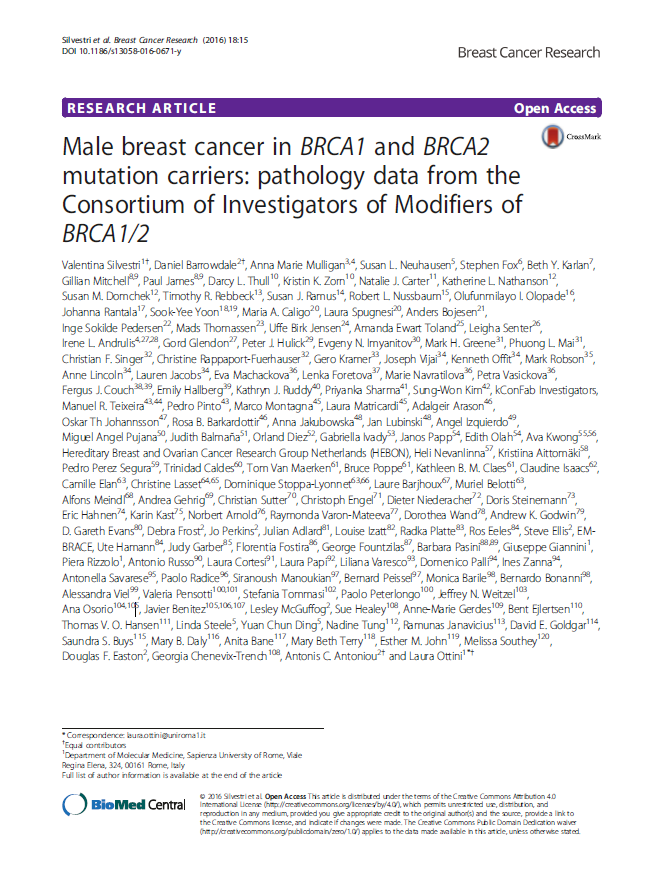 Male breast cancer in BRCA1 and BRCA2 mutation carriers: pathology data from the Consortium of Investigators of Modifiers of BRCA1/2
-
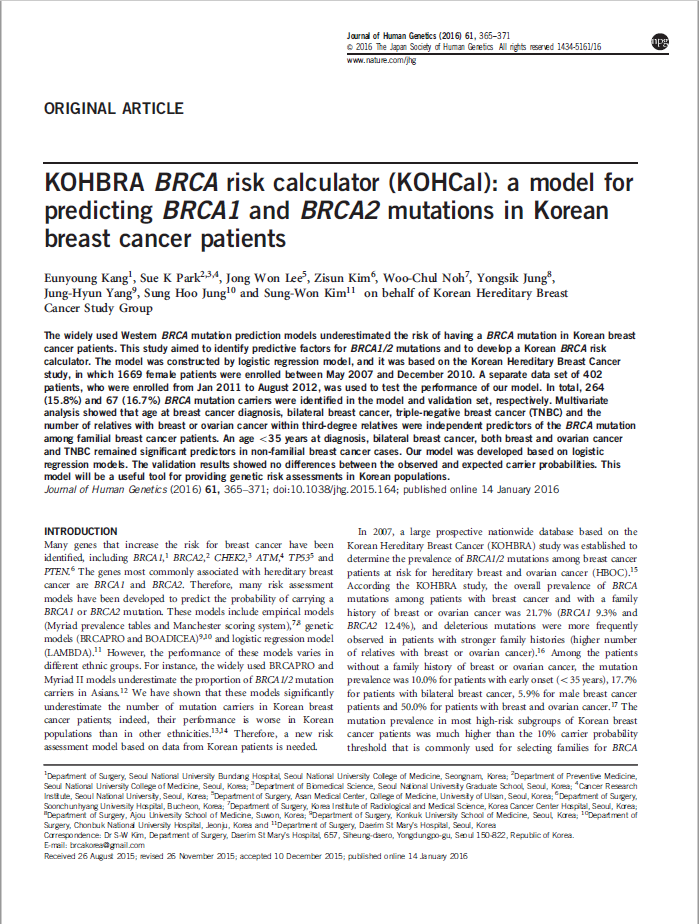 KOHBRA BRCA risk calculator (KOHCal): a model for predicting BRCA1 and BRCA2 mutations in Korean breast cancer patients


