


-
-
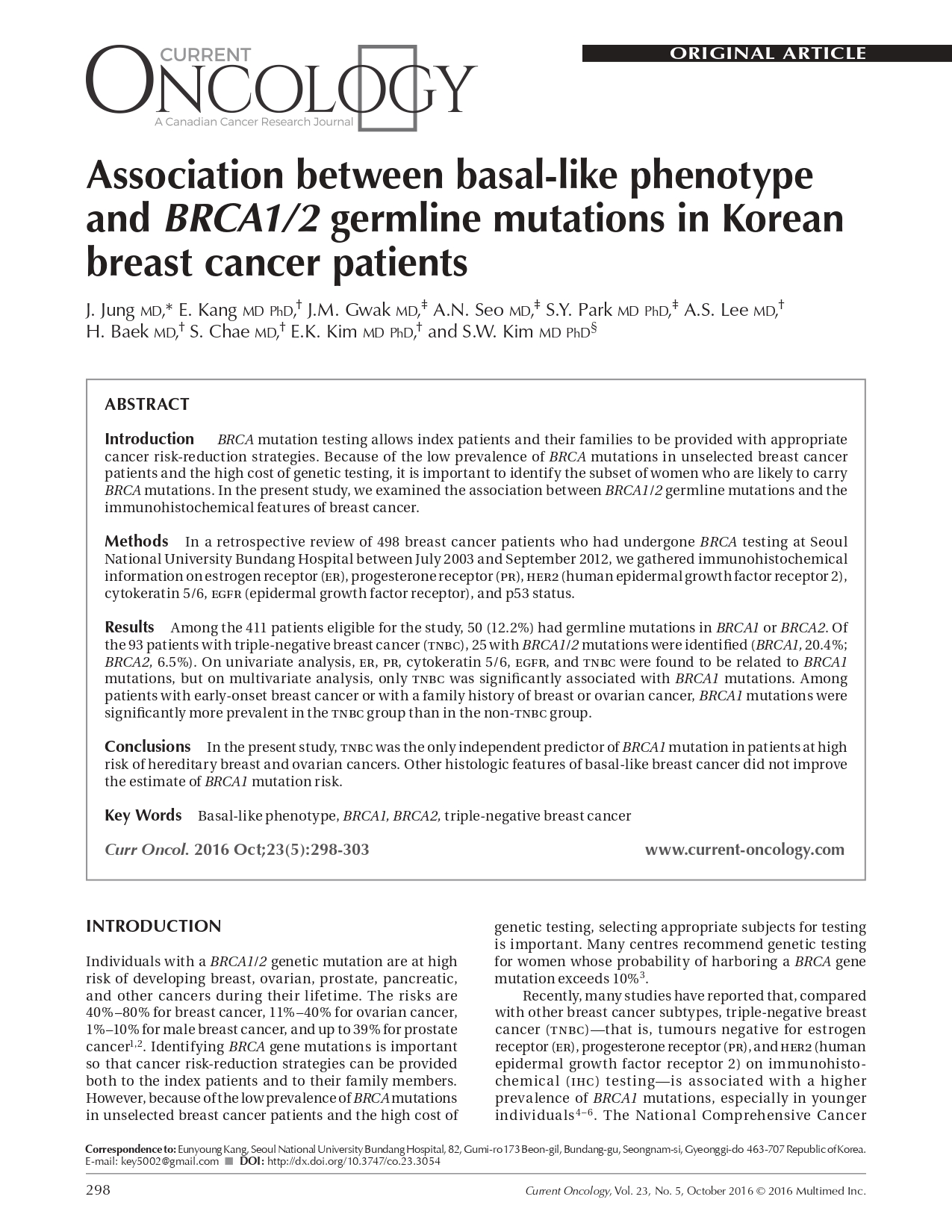
Current Oncology 의학 저널 Association between basal-like phenotype and BRCA1/2 germline mutations in Korean breast cancer patients 2016.10.23.Curr Oncol. 2016 Oct; 23(5): 298–303 논문 보기MethodsIn a retrospective review of 498 breast cancer patients who had undergone BRCA testing at Seoul National University Bundang Hospital between July 2003 and September 2012, we gathered immunohistochemical information on estrogen receptor (er), progesterone receptor (pr), her2 (human epidermal growth factor receptor 2), cytokeratin 5/6, egfr (epidermal growth factor receptor), and p53 status.ResultsAmong the 411 patients eligible for the study, 50 (12.2%) had germline mutations in BRCA1 or BRCA2. Of the 93 patients with triple-negative breast cancer (tnbc), 25 with BRCA1/2 mutations were identified (BRCA1, 20.4%; BRCA2, 6.5%). On univariate analysis, er, pr, cytokeratin 5/6, egfr, and tnbc were found to be related to BRCA1 mutations, but on multivariate analysis, only tnbc was significantly associated with BRCA1 mutations. Among patients with early-onset breast cancer or with a family history of breast or ovarian cancer, BRCA1 mutations were significantly more prevalent in the tnbc group than in the non-tnbc group.ConclusionsIn the present study, tnbc was the only independent predictor of BRCA1 mutation in patients at high risk of hereditary breast and ovarian cancers. Other histologic features of basal-like breast cancer did not improve the estimate of BRCA1 mutation risk.
- ▲ 이전글 Failure patterns according to molecular subtype in patients with invasive breast cancer following postoperative adjuvant radiotherapy: long-term outcomes in contemporary clinical practice 관**
- ▼ 다음글 Use of a prospective surveillance model to prevent breast cancer treatment-related lymphedema: a single-center experience 관**
Total : 35개 (page : 2/3)
-
 Association analysis identifies 65 new breast cancer risk loci
-
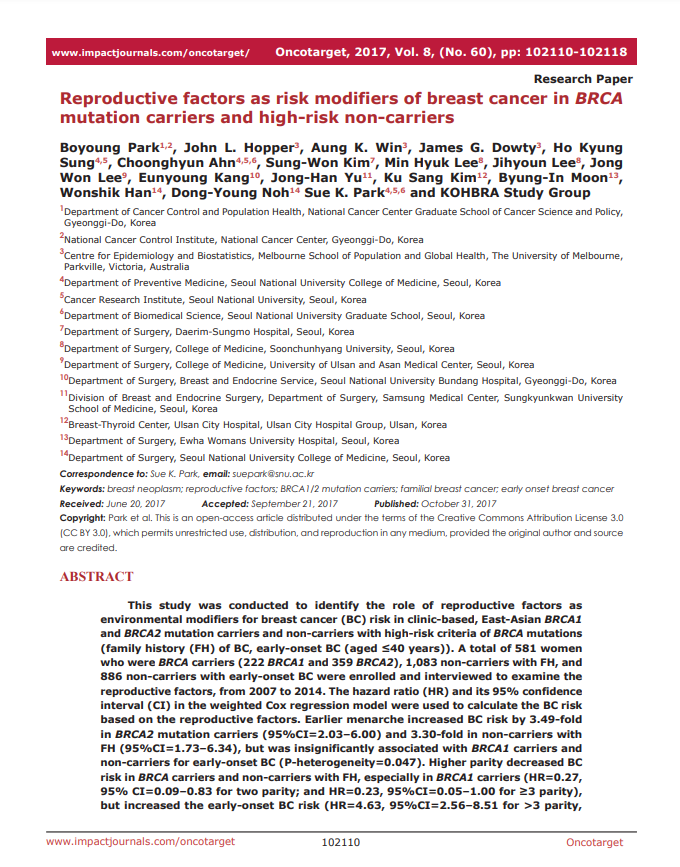 Reproductive factors as risk modifiers of breast cancer in BRCA mutation carriers and high risk
-
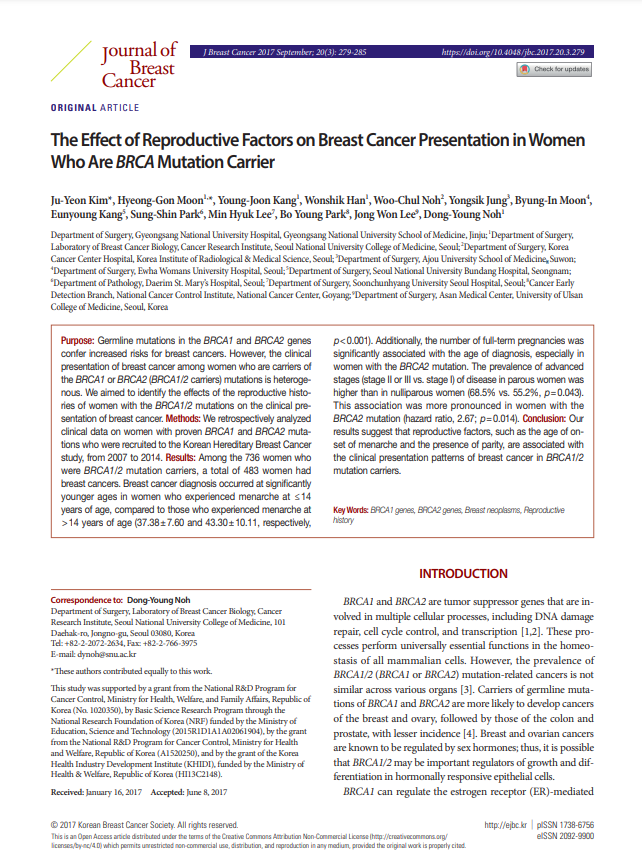 The Effect of Reproductive Factors on Breast Cancer Presentation in Women Who Are BRCA Mutation Carrier
-
 The Management Strategy of Benign Solitary Intraductal Papilloma on Breast Core Biopsy
-
 Prediction of Breast and Prostate Cancer Risks in Male BRCA1 and BRCA2 Mutation Carriers Using Polygenic Risk Scores
-
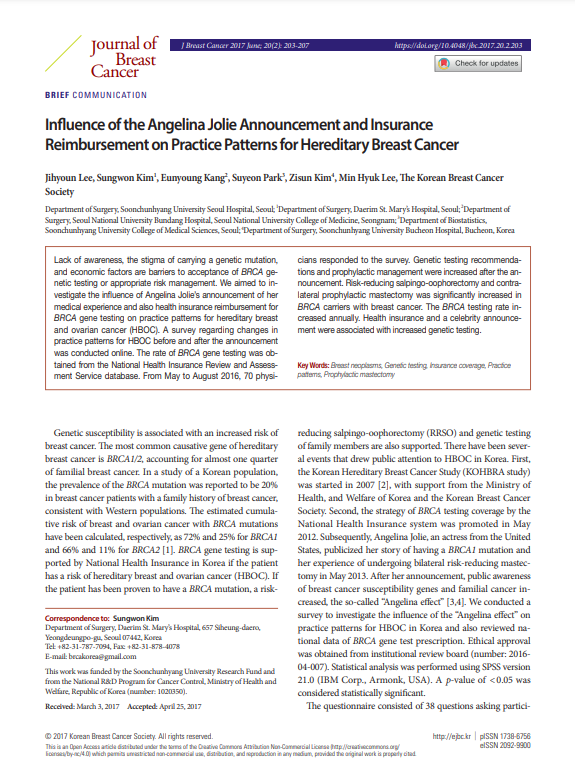 Influence of the Angelina Jolie Announcement and Insurance Reimbursement on Practice Patterns for Hereditary Breast Cancer
-
 Suggestion of BRCA1 c.5339T>C (p.L1780P) variant confer from 'unknown significance' to 'Likely pathogenic' based on clinical evidence in Korea
-
 Identification of 12 new susceptibility loci for different histotypes of epithelial ovarian cancer
-
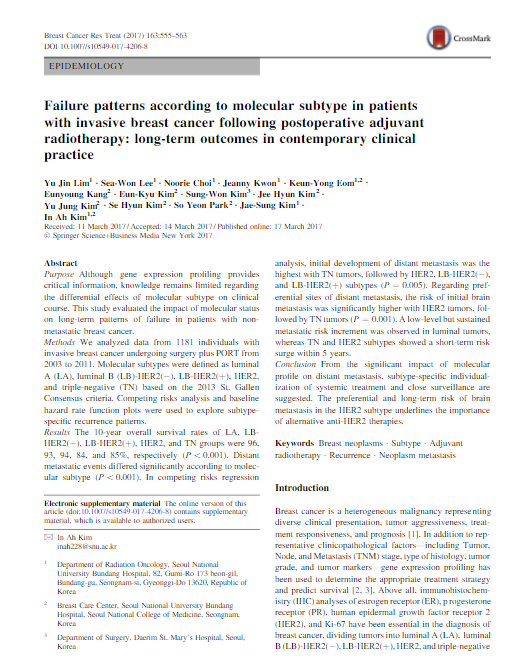 Failure patterns according to molecular subtype in patients with invasive breast cancer following postoperative adjuvant radiotherapy: long-term outcomes in contemporary clinical practice
-
Association between basal-like phenotype and BRCA1/2 germline mutations in Korean breast cancer patients
-
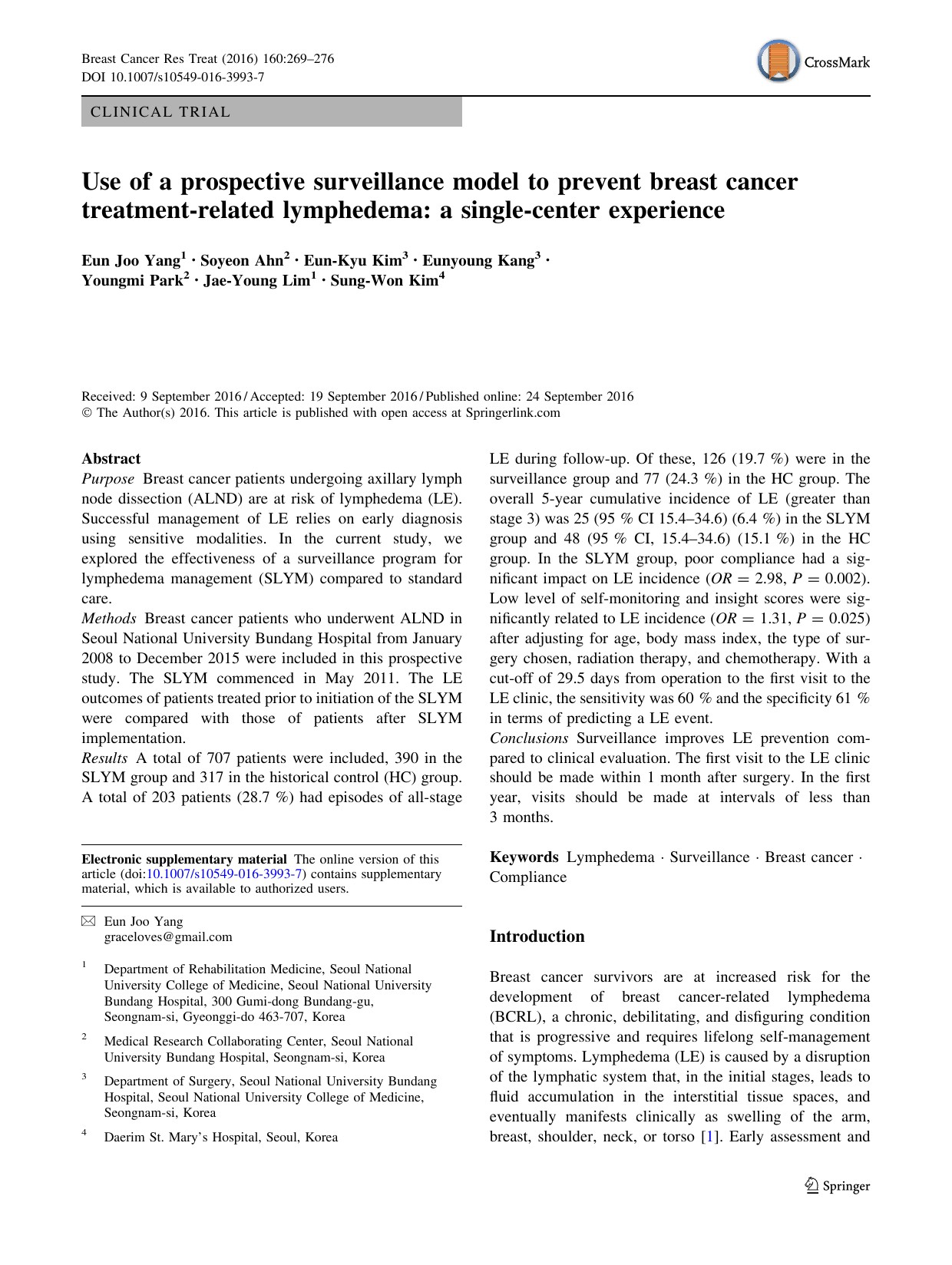 Use of a prospective surveillance model to prevent breast cancer treatment-related lymphedema: a single-center experience
-
 Reliability of Computer-Assisted Breast Density Estimation: Comparison of Interactive Thresholding, Semiautomated, and Fully Automated Methods
-
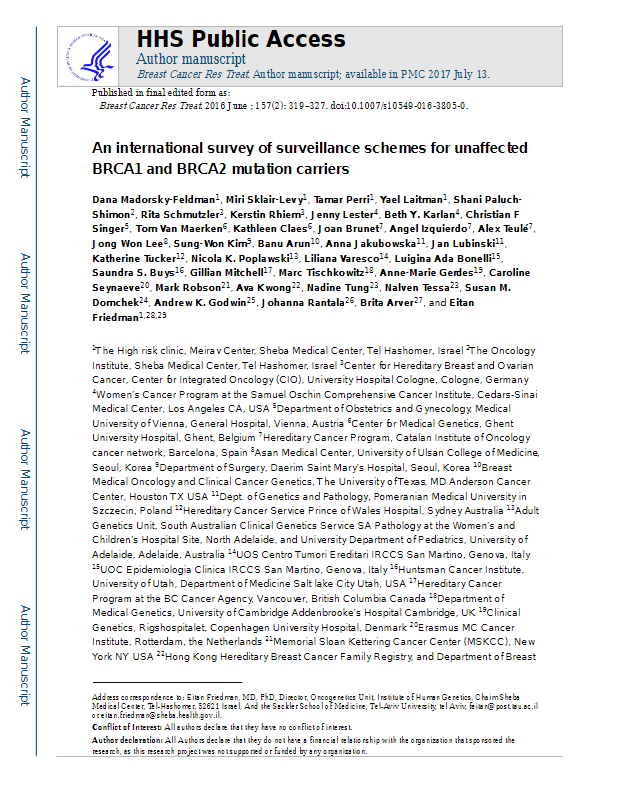 An international survey of surveillance schemes for unaffected BRCA1 and BRCA2 mutation carriers
-
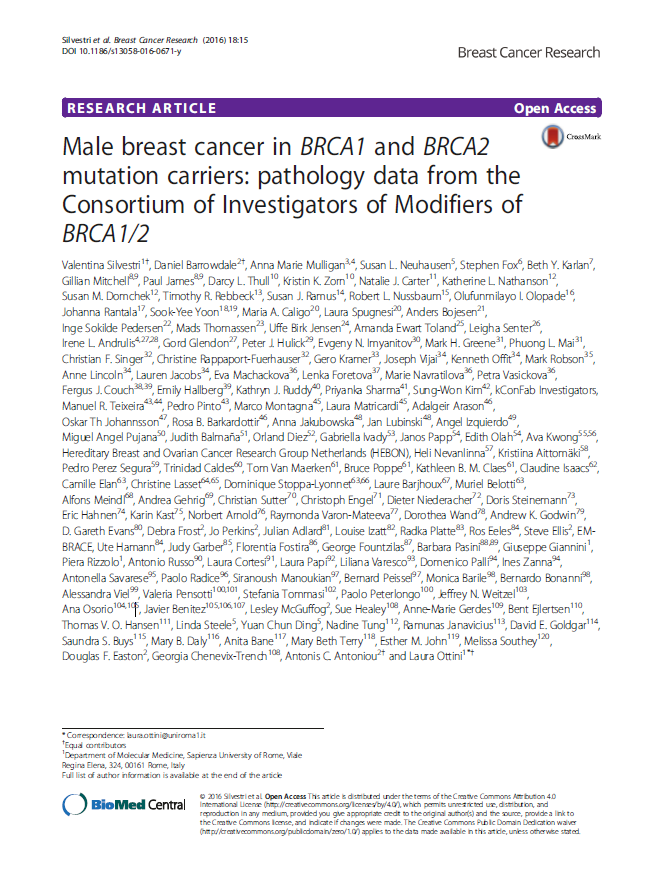 Male breast cancer in BRCA1 and BRCA2 mutation carriers: pathology data from the Consortium of Investigators of Modifiers of BRCA1/2
-
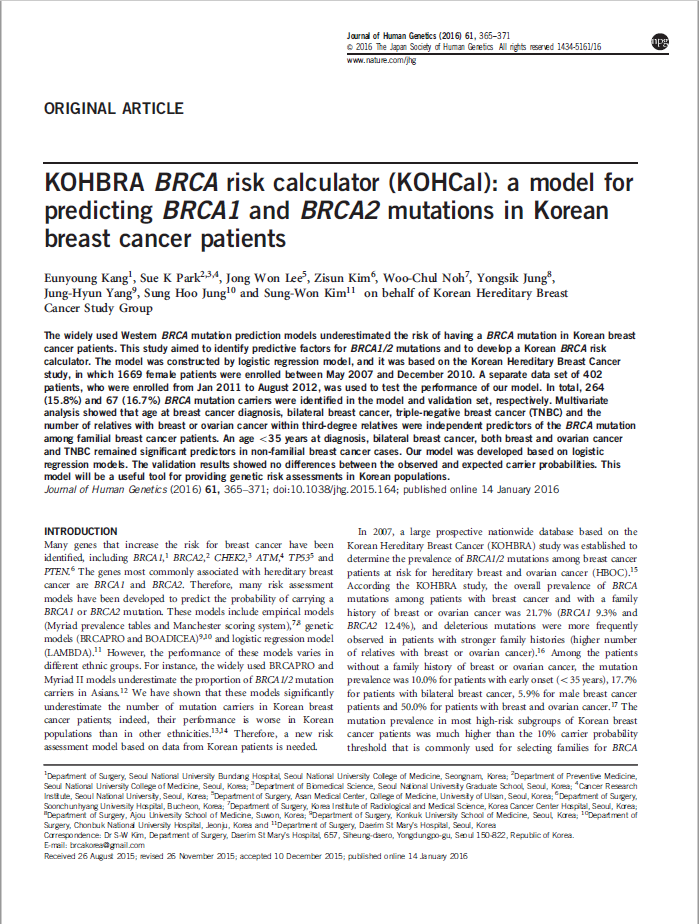 KOHBRA BRCA risk calculator (KOHCal): a model for predicting BRCA1 and BRCA2 mutations in Korean breast cancer patients


