


-
-
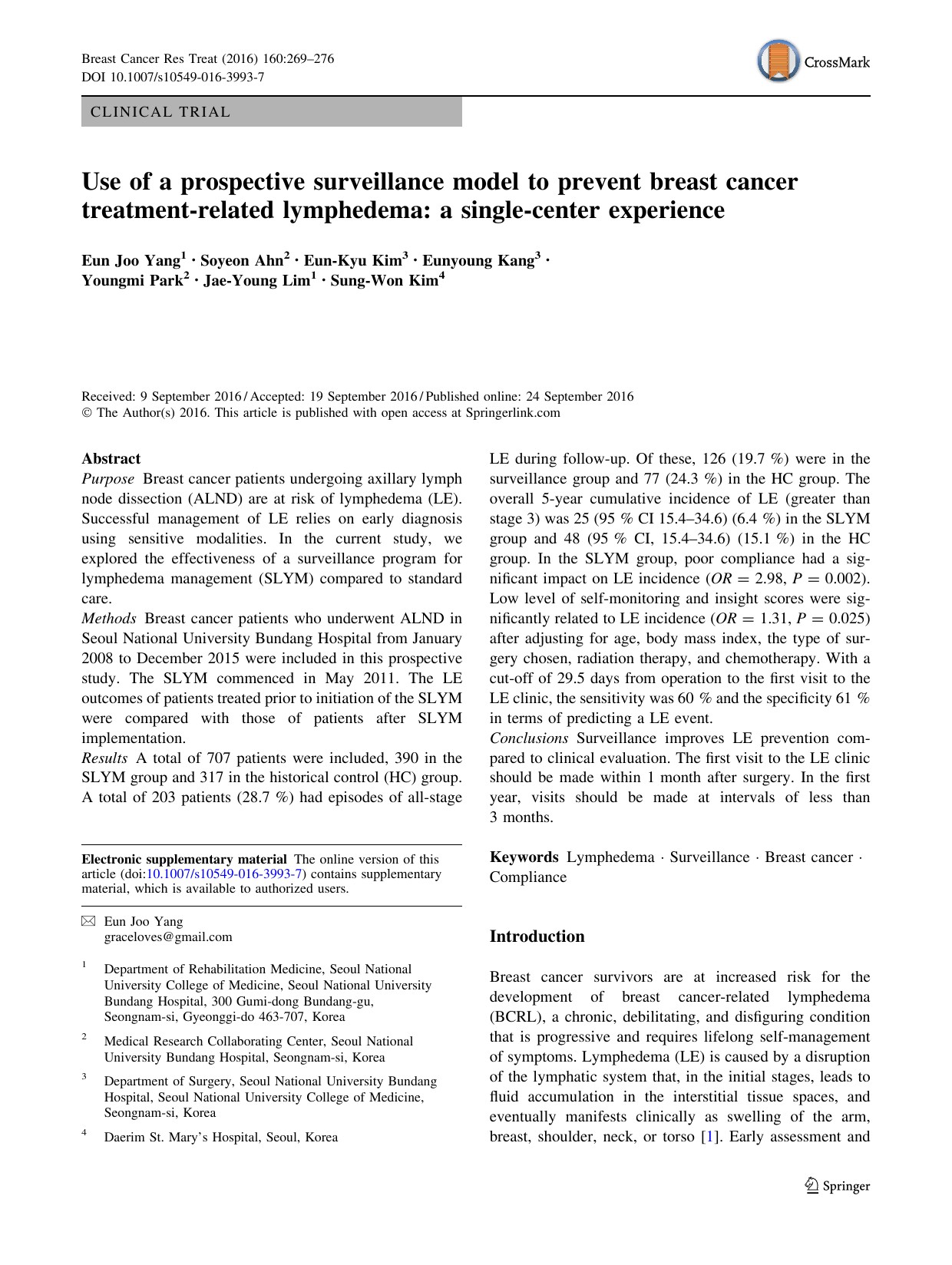
유방암 연구 저널 Use of a prospective surveillance model to prevent breast cancer treatment-related lymphedema: a single-center experience 2016.09.24.Breast Cancer Res Treat . 2016 Nov;160(2):269-276 논문 보기PurposeBreast cancer patients undergoing axillary lymph node dissection (ALND) are at risk of lymphedema (LE). Successful management of LE relies on early diagnosis using sensitive modalities. In the current study, we explored the effectiveness of a surveillance program for lymphedema management (SLYM) compared to standard care.MethodsBreast cancer patients who underwent ALND in Seoul National University Bundang Hospital from January 2008 to December 2015 were included in this prospective study. The SLYM commenced in May 2011. The LE outcomes of patients treated prior to initiation of the SLYM were compared with those of patients after SLYM implementation.ResultsA total of 707 patients were included, 390 in the SLYM group and 317 in the historical control (HC) group. A total of 203 patients (28.7 %) had episodes of all-stage LE during follow-up. Of these, 126 (19.7 %) were in the surveillance group and 77 (24.3 %) in the HC group. The overall 5-year cumulative incidence of LE (greater than stage 3) was 25 (95 % CI 15.4-34.6) (6.4 %) in the SLYM group and 48 (95 % CI, 15.4-34.6) (15.1 %) in the HC group. In the SLYM group, poor compliance had a significant impact on LE incidence (OR = 2.98, P = 0.002). Low level of self-monitoring and insight scores were significantly related to LE incidence (OR = 1.31, P = 0.025) after adjusting for age, body mass index, the type of surgery chosen, radiation therapy, and chemotherapy. With a cut-off of 29.5 days from operation to the first visit to the LE clinic, the sensitivity was 60 % and the specificity 61 % in terms of predicting a LE event.ConclusionsSurveillance improves LE prevention compared to clinical evaluation. The first visit to the LE clinic should be made within 1 month after surgery. In the first year, visits should be made at intervals of less than 3 months.
Total : 35개 (page : 2/3)
-
 Association analysis identifies 65 new breast cancer risk loci
-
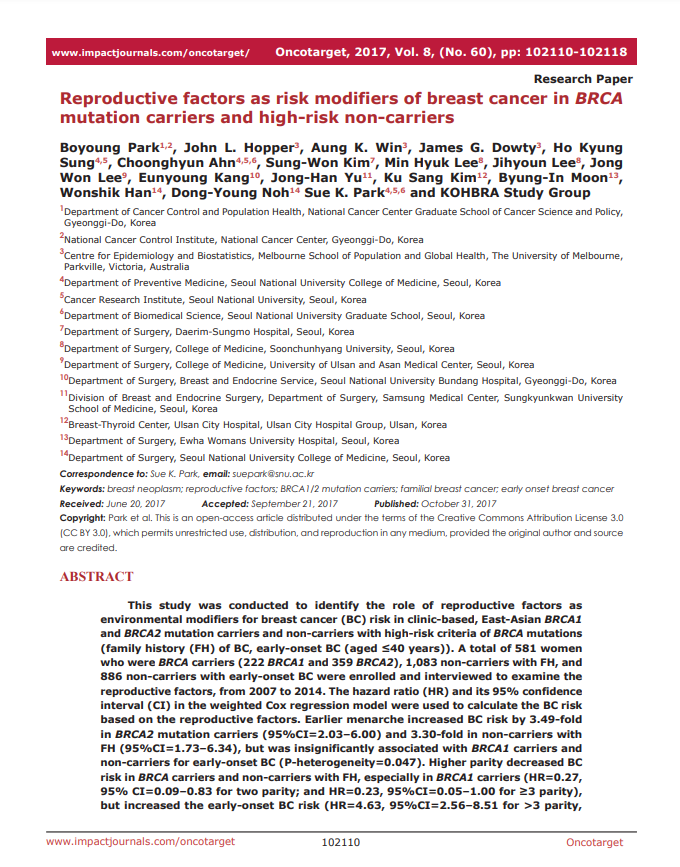 Reproductive factors as risk modifiers of breast cancer in BRCA mutation carriers and high risk
-
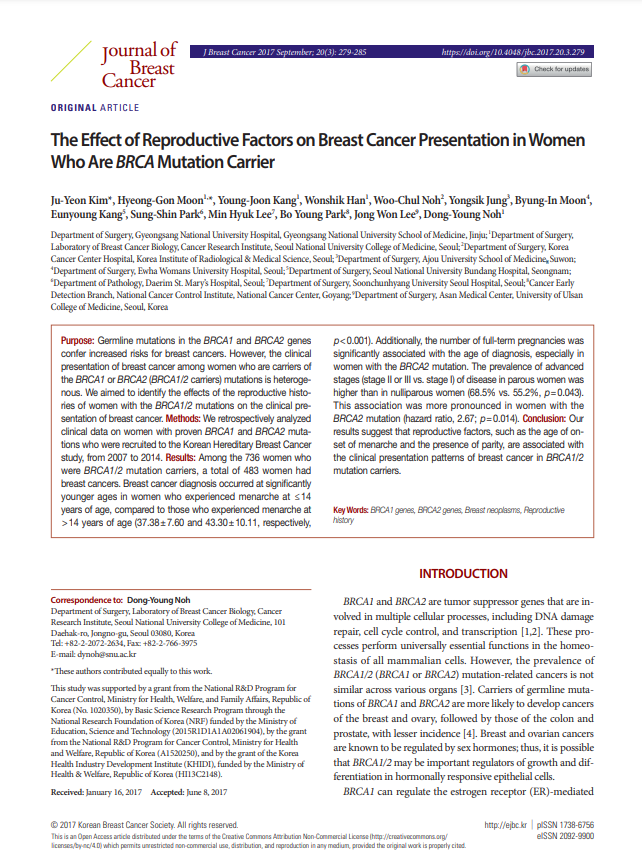 The Effect of Reproductive Factors on Breast Cancer Presentation in Women Who Are BRCA Mutation Carrier
-
 The Management Strategy of Benign Solitary Intraductal Papilloma on Breast Core Biopsy
-
 Prediction of Breast and Prostate Cancer Risks in Male BRCA1 and BRCA2 Mutation Carriers Using Polygenic Risk Scores
-
 Influence of the Angelina Jolie Announcement and Insurance Reimbursement on Practice Patterns for Hereditary Breast Cancer
-
 Suggestion of BRCA1 c.5339T>C (p.L1780P) variant confer from 'unknown significance' to 'Likely pathogenic' based on clinical evidence in Korea
-
 Identification of 12 new susceptibility loci for different histotypes of epithelial ovarian cancer
-
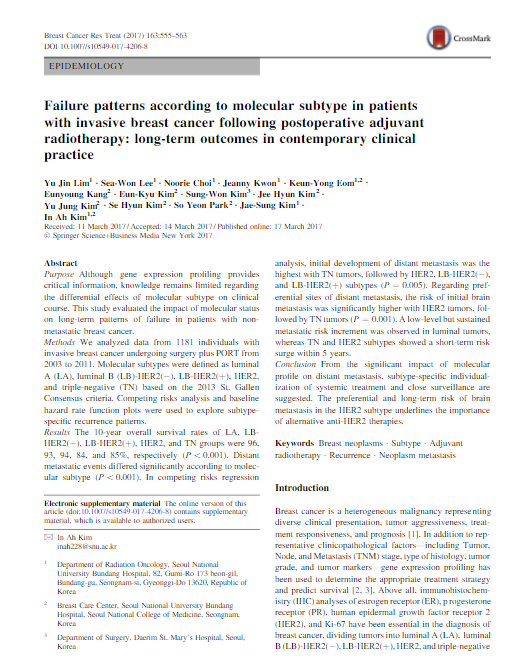 Failure patterns according to molecular subtype in patients with invasive breast cancer following postoperative adjuvant radiotherapy: long-term outcomes in contemporary clinical practice
-
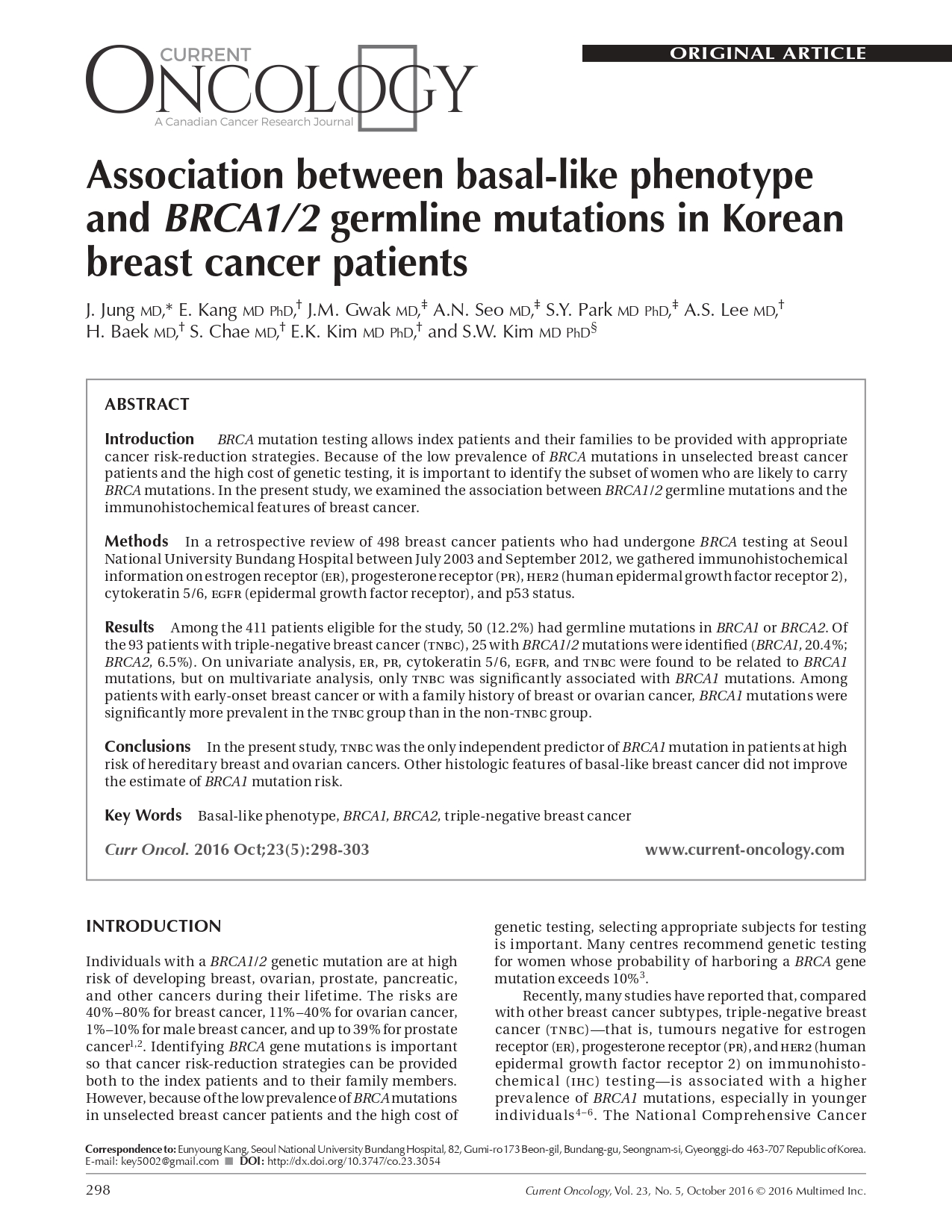 Association between basal-like phenotype and BRCA1/2 germline mutations in Korean breast cancer patients
-
Use of a prospective surveillance model to prevent breast cancer treatment-related lymphedema: a single-center experience
-
 Reliability of Computer-Assisted Breast Density Estimation: Comparison of Interactive Thresholding, Semiautomated, and Fully Automated Methods
-
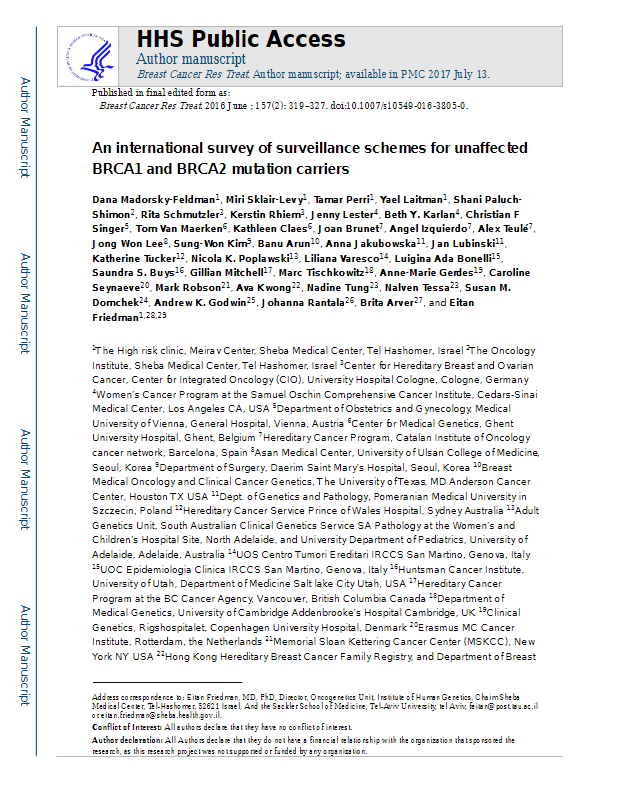 An international survey of surveillance schemes for unaffected BRCA1 and BRCA2 mutation carriers
-
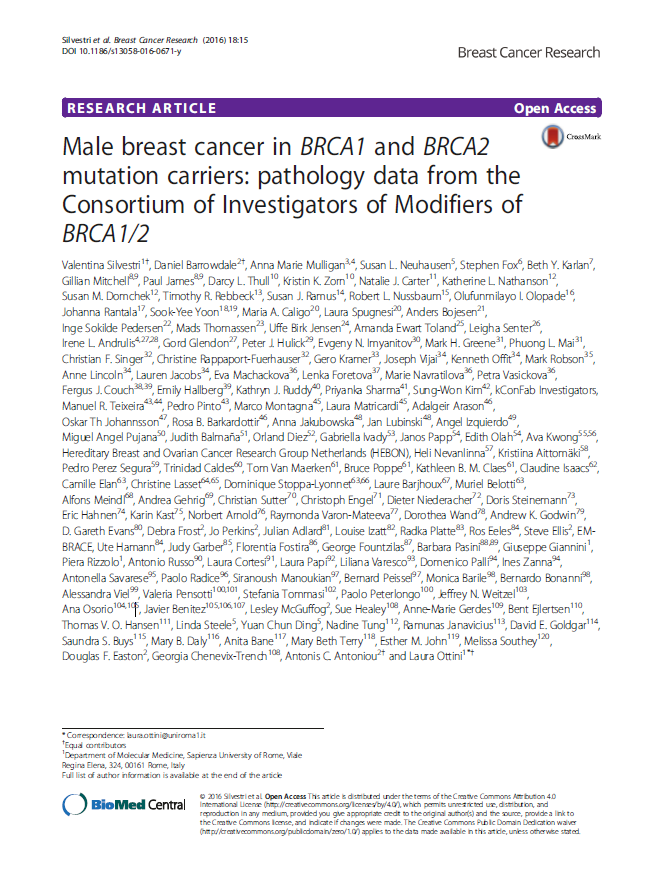 Male breast cancer in BRCA1 and BRCA2 mutation carriers: pathology data from the Consortium of Investigators of Modifiers of BRCA1/2
-
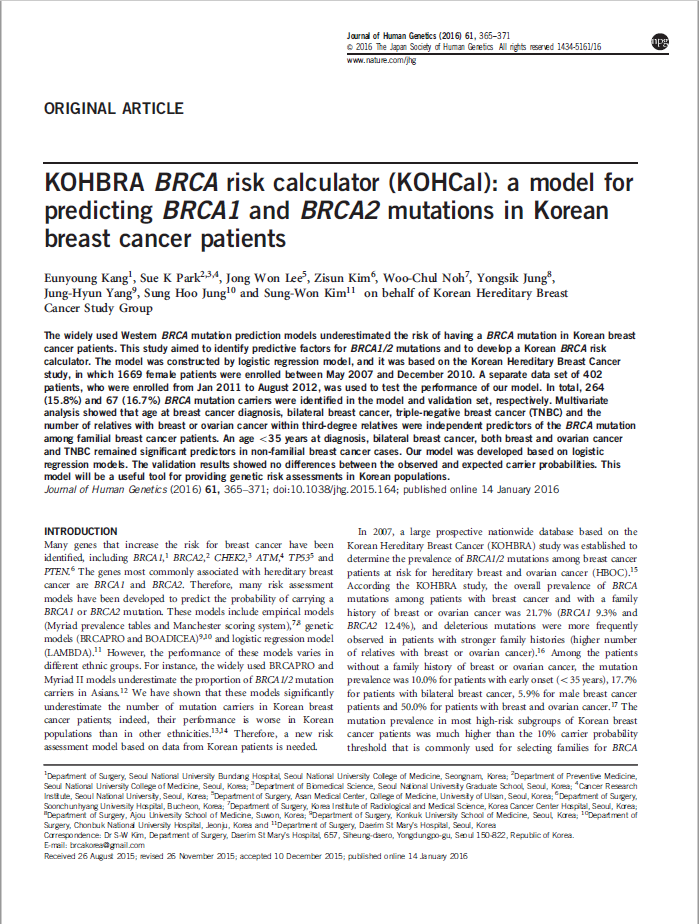 KOHBRA BRCA risk calculator (KOHCal): a model for predicting BRCA1 and BRCA2 mutations in Korean breast cancer patients


