


-
-
미국 영상의학회지 Reliability of Computer-Assisted Breast Density Estimation: Comparison of Interactive Thresholding, Semiautomated, and Fully Automated Methods 2016.07.10.American Journal of Roentgenology. 2016;207: 126-134. 10.2214 논문 보기Materials and MethodsCraniocaudal mammograms of 100 healthy subjects were collected from a screening mammography databa
se. Three expert readers independently assessed mammographic breast density twice in a 1-month period using interactive thresholding and semiautomated methods. In addition, fully automated breast density estimation software was used to generate ob jective breast density estimates. The reliability of the computer-assisted breast density estimation was assessed in terms of concordance correlation coefficients, limits of agreement, systematic difference, and reader variability. ResultsStatistically significant systematic bias (paired t test, p < 0.01) and variability (4.75–10.91) were found within and between readers for both the interactive thresholding and the semiautomated methods. Using the semiautomated method significantly reduced the within-reader bias of one reader (p < 0.02) and the between-reader variability of all three readers (p < 0.05). The breast density estimates obtained with the fully automated method had excellent agreement with those of the reference standard (concordance correlation coefficient, 0.93) without a significant systematic difference.ConclusionsReader-dependent variability and systematic bias exist in breast density estimates obtained with the interactive thresholding method, but they may be reduced in part by use of the semiautomated method. Assessing reader performance may be necessary for more reliable breast density estimation, especially for surveillance of breast density over time. The fully automated method has the potential to provide reliable breast density estimates nearly free from reader-dependent systematic bias and reader variability.
Total : 35개 (page : 2/3)
-
 Association analysis identifies 65 new breast cancer risk loci
-
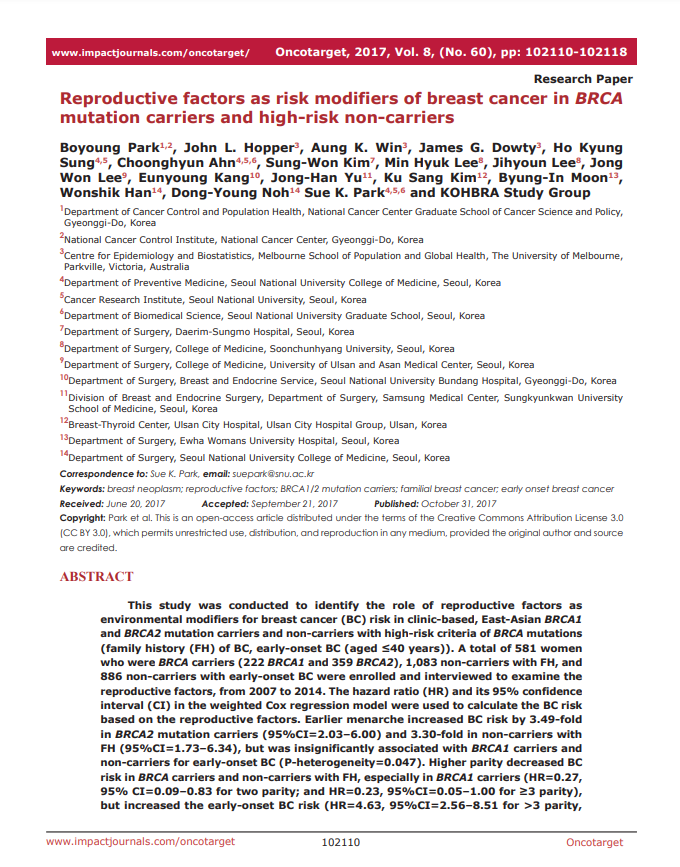 Reproductive factors as risk modifiers of breast cancer in BRCA mutation carriers and high risk
-
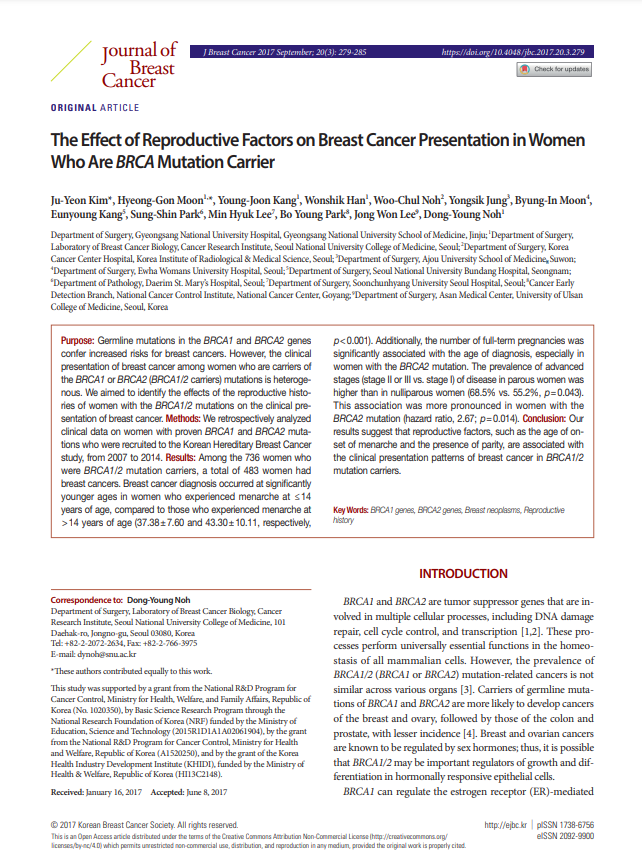 The Effect of Reproductive Factors on Breast Cancer Presentation in Women Who Are BRCA Mutation Carrier
-
 The Management Strategy of Benign Solitary Intraductal Papilloma on Breast Core Biopsy
-
 Prediction of Breast and Prostate Cancer Risks in Male BRCA1 and BRCA2 Mutation Carriers Using Polygenic Risk Scores
-
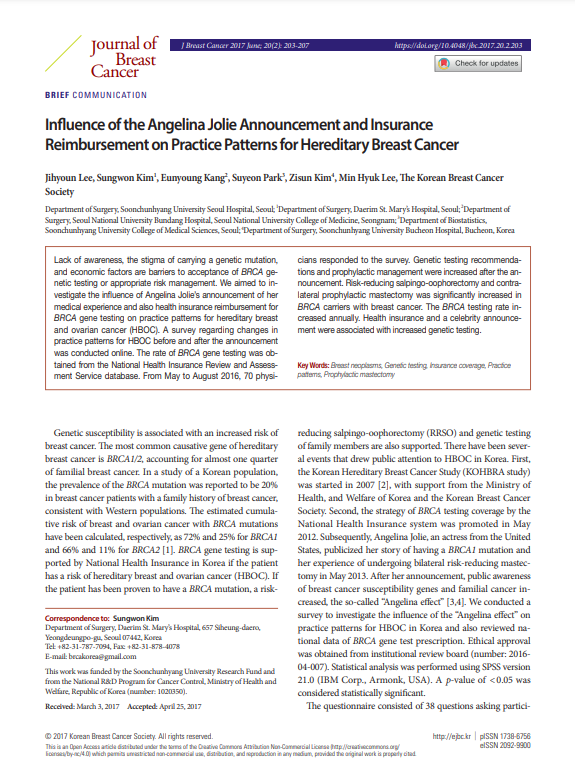 Influence of the Angelina Jolie Announcement and Insurance Reimbursement on Practice Patterns for Hereditary Breast Cancer
-
 Suggestion of BRCA1 c.5339T>C (p.L1780P) variant confer from 'unknown significance' to 'Likely pathogenic' based on clinical evidence in Korea
-
 Identification of 12 new susceptibility loci for different histotypes of epithelial ovarian cancer
-
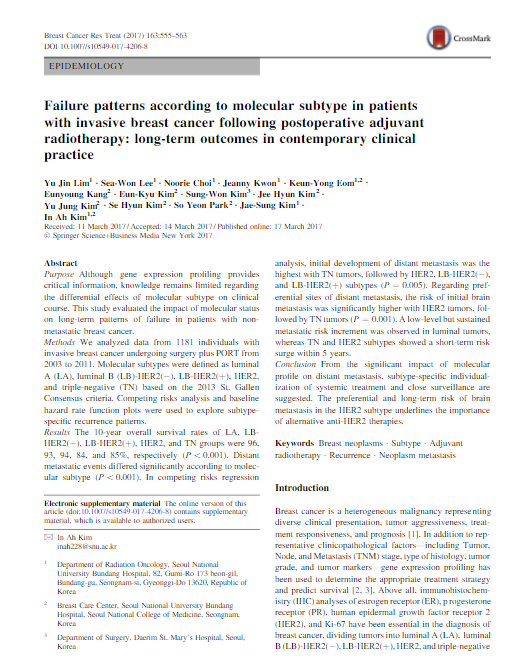 Failure patterns according to molecular subtype in patients with invasive breast cancer following postoperative adjuvant radiotherapy: long-term outcomes in contemporary clinical practice
-
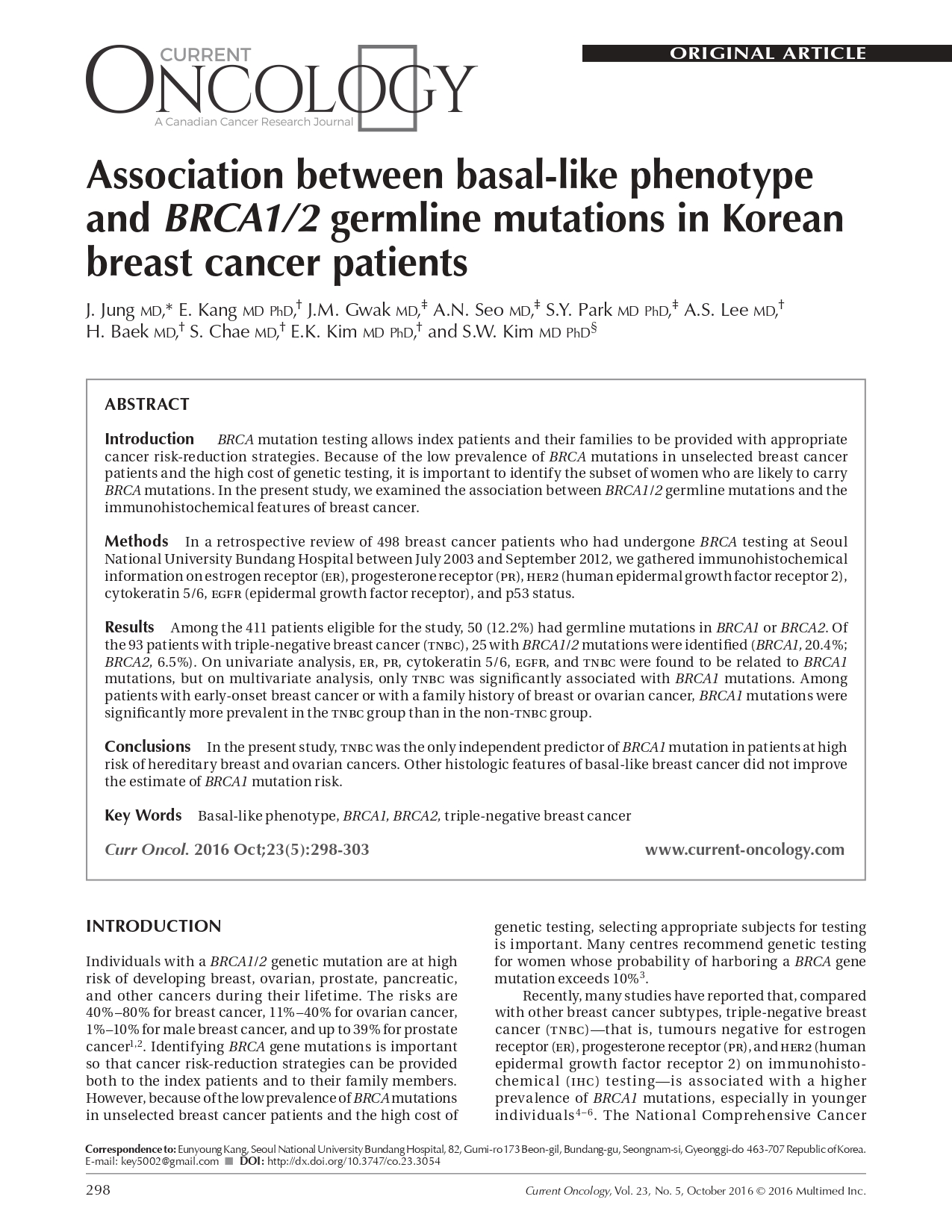 Association between basal-like phenotype and BRCA1/2 germline mutations in Korean breast cancer patients
-
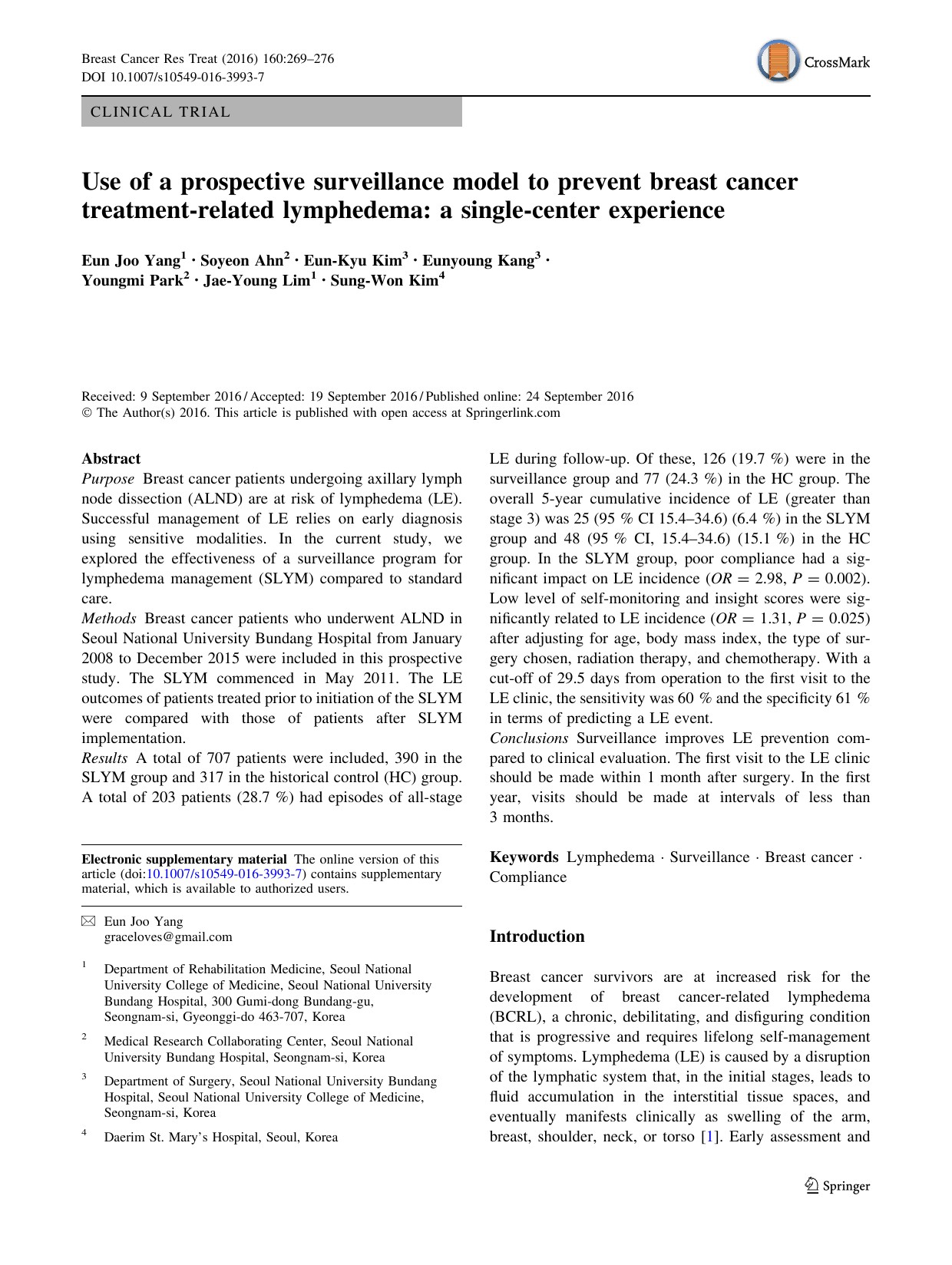 Use of a prospective surveillance model to prevent breast cancer treatment-related lymphedema: a single-center experience
-
Reliability of Computer-Assisted Breast Density Estimation: Comparison of Interactive Thresholding, Semiautomated, and Fully Automated Methods
-
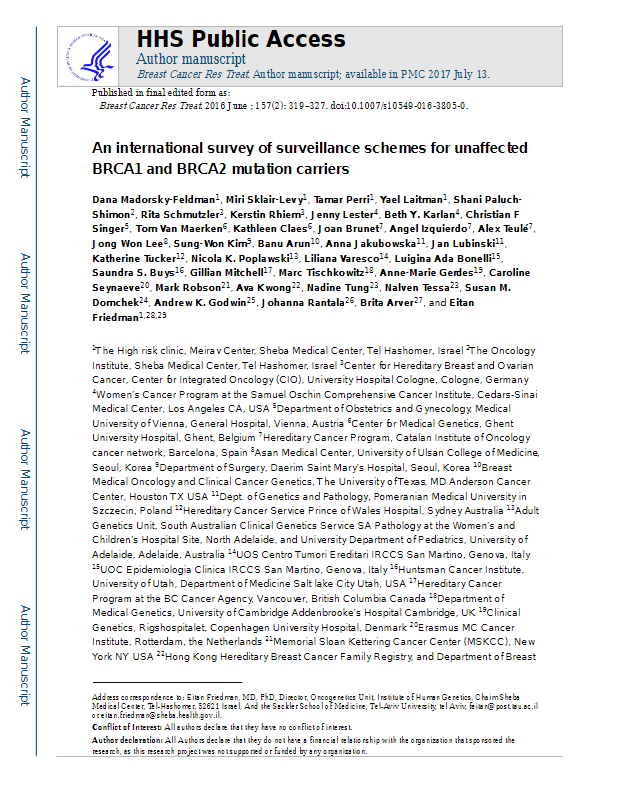 An international survey of surveillance schemes for unaffected BRCA1 and BRCA2 mutation carriers
-
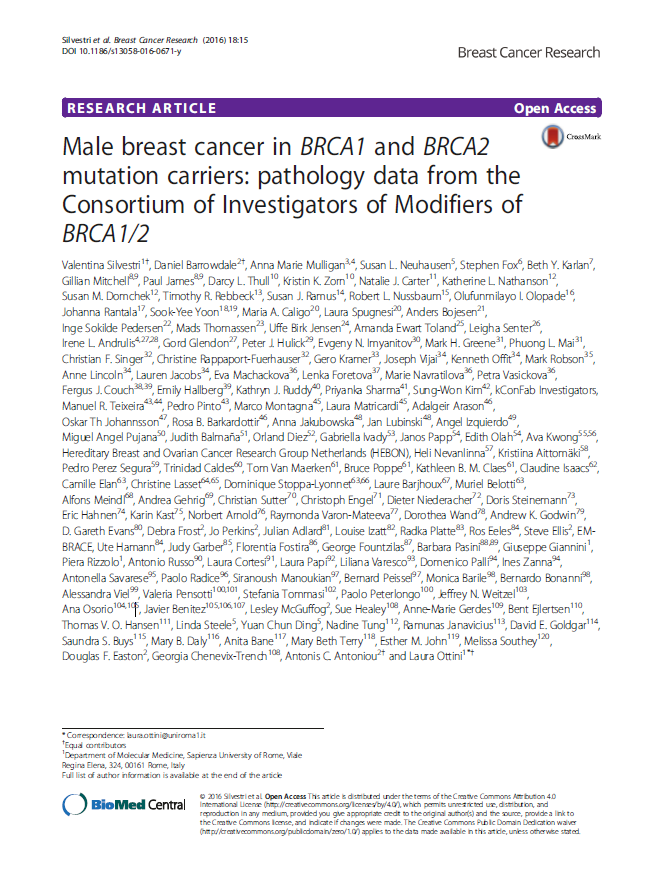 Male breast cancer in BRCA1 and BRCA2 mutation carriers: pathology data from the Consortium of Investigators of Modifiers of BRCA1/2
-
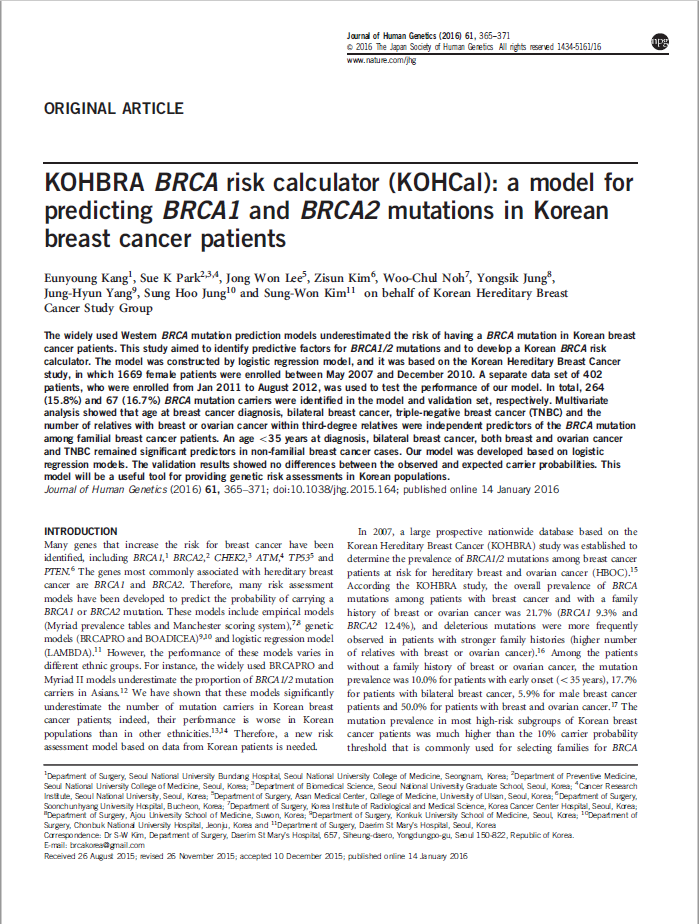 KOHBRA BRCA risk calculator (KOHCal): a model for predicting BRCA1 and BRCA2 mutations in Korean breast cancer patients


