


-
-
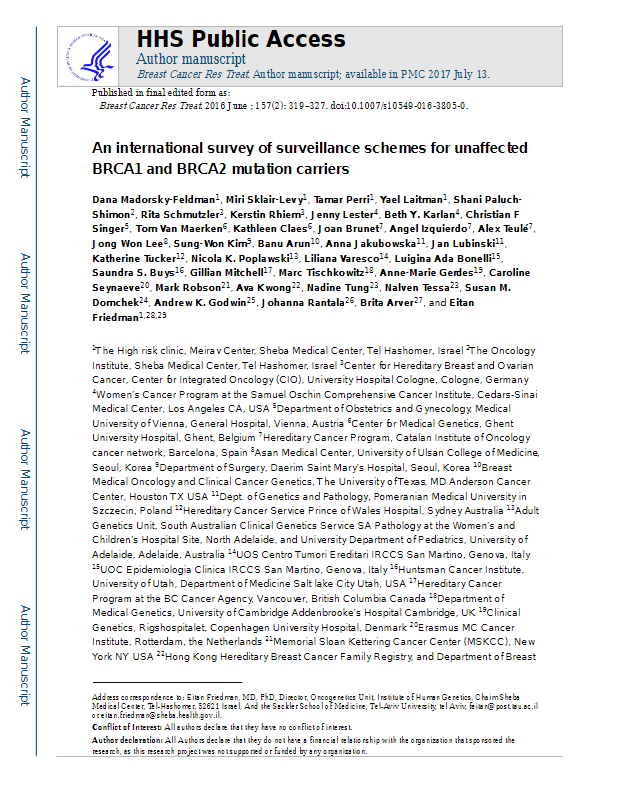
유방암 연구 저널 An international survey of surveillance schemes for unaffected BRCA1 and BRCA2 mutation carriers 2016.04.27.Breast Cancer Research and Treatment 157, pages319–327 (2016) 논문 보기PurposeFemale BRCA1/BRCA2 mutation carriers are at substantially increased risk for developing breast and/or ovarian cancer, and are offered enhanced surveillance including screening from a young age and risk-reducing surgery (RRS)-mastectomy (RRM) and/or salpingo-oophorectomy (RRSO). While there are established guidelines for early detection of breast cancer in high-risk women who have not undergone RRM, there are less developed guidelines after RRM. We evaluated the schemes offered before and after RRS in internationally diverse high-risk clinics.MethodsAn e mailed survey distributed to high-risk clinics affiliated with CIMBA.ResultsOverall, 22 centers from 16 countries responded. Pre RRS surveillance schemes overwhelmingly included breast imaging (primarily MRI) from 18–30 years and clinical breast exam (CBE) at 6–12 month intervals. For ovarian cancer, all but 6 centers offered semiannual/annual gynecological exam, transvaginal ultrasound, and CA 125 measurements. Post RRM, most centers offered only annual CBE while 4 centers offered annual MRI, primarily for substantial residual breast tissue. After RRSO only 4 centers offered specific gynecological surveillance.ConclusionsExisting guidelines for breast/ovarian cancer detection in BRCA carriers are being applied pre RRS but are not globally harmonized, and most centers offer no specific surveillance post RRS. From this comprehensive multinational study it is clear that evidence-ba
sed, long term prospective data on the most effective scheme for BRCA carriers post RRS is urgently needed
Total : 35개 (page : 2/3)
-
 Association analysis identifies 65 new breast cancer risk loci
-
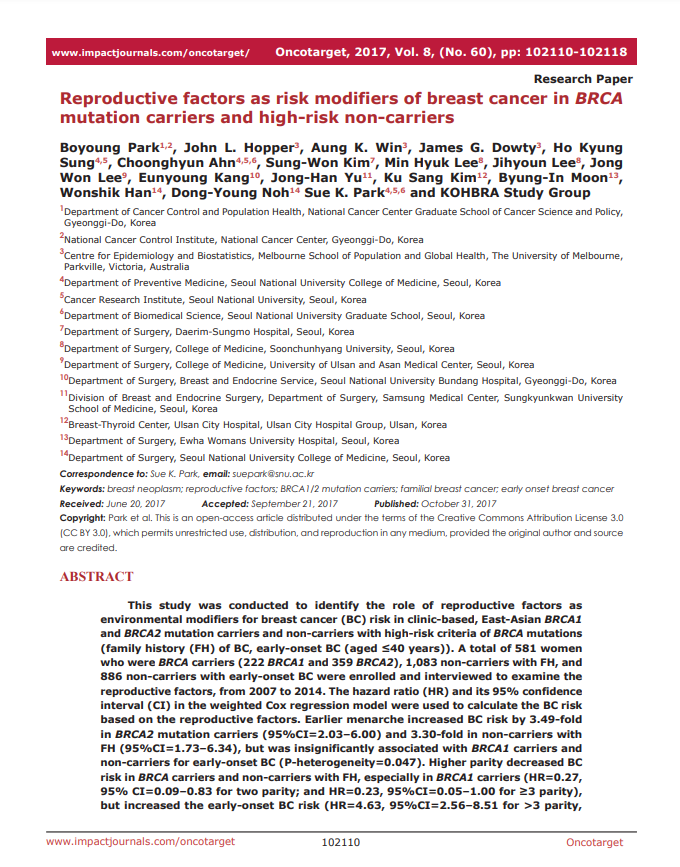 Reproductive factors as risk modifiers of breast cancer in BRCA mutation carriers and high risk
-
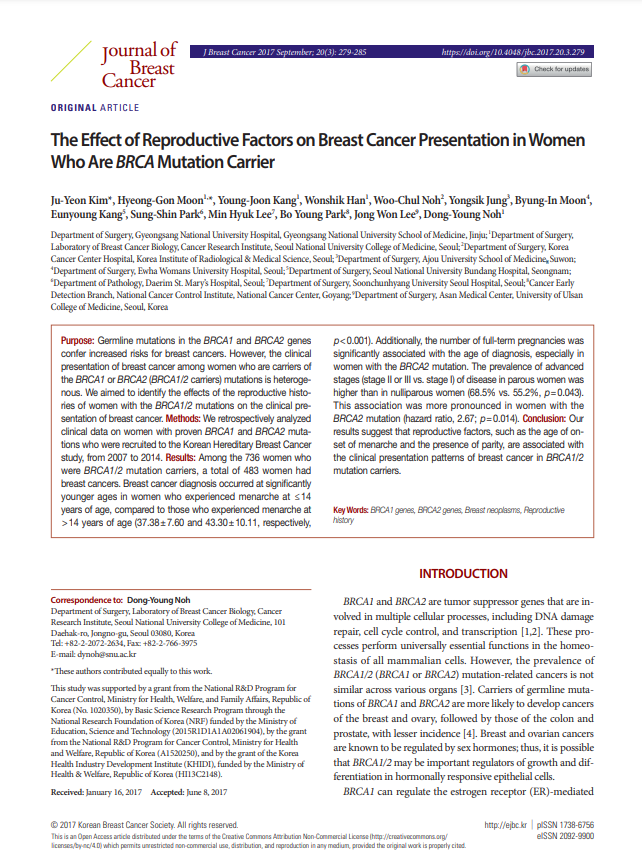 The Effect of Reproductive Factors on Breast Cancer Presentation in Women Who Are BRCA Mutation Carrier
-
 The Management Strategy of Benign Solitary Intraductal Papilloma on Breast Core Biopsy
-
 Prediction of Breast and Prostate Cancer Risks in Male BRCA1 and BRCA2 Mutation Carriers Using Polygenic Risk Scores
-
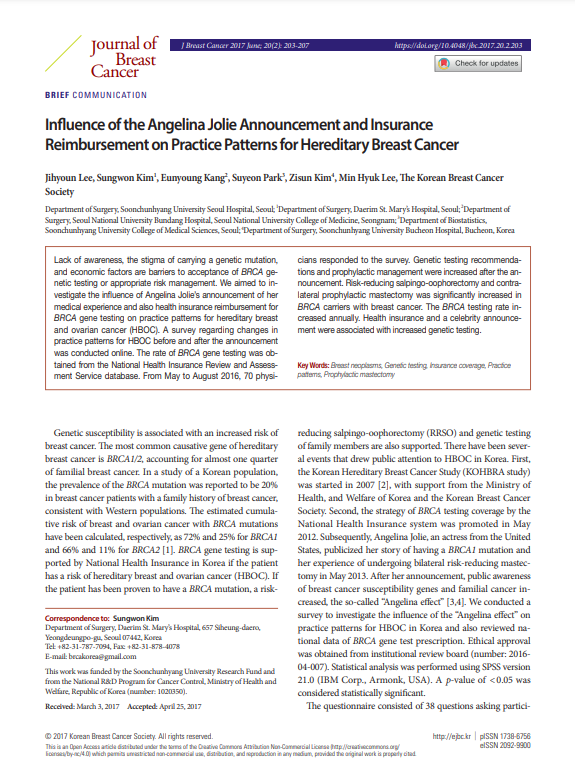 Influence of the Angelina Jolie Announcement and Insurance Reimbursement on Practice Patterns for Hereditary Breast Cancer
-
 Suggestion of BRCA1 c.5339T>C (p.L1780P) variant confer from 'unknown significance' to 'Likely pathogenic' based on clinical evidence in Korea
-
 Identification of 12 new susceptibility loci for different histotypes of epithelial ovarian cancer
-
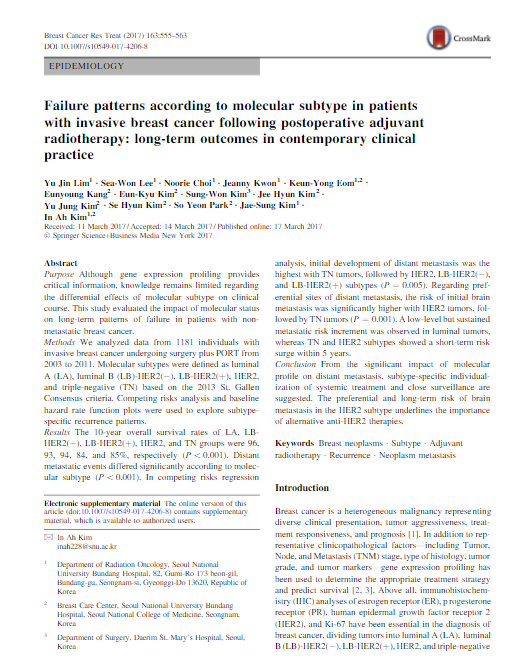 Failure patterns according to molecular subtype in patients with invasive breast cancer following postoperative adjuvant radiotherapy: long-term outcomes in contemporary clinical practice
-
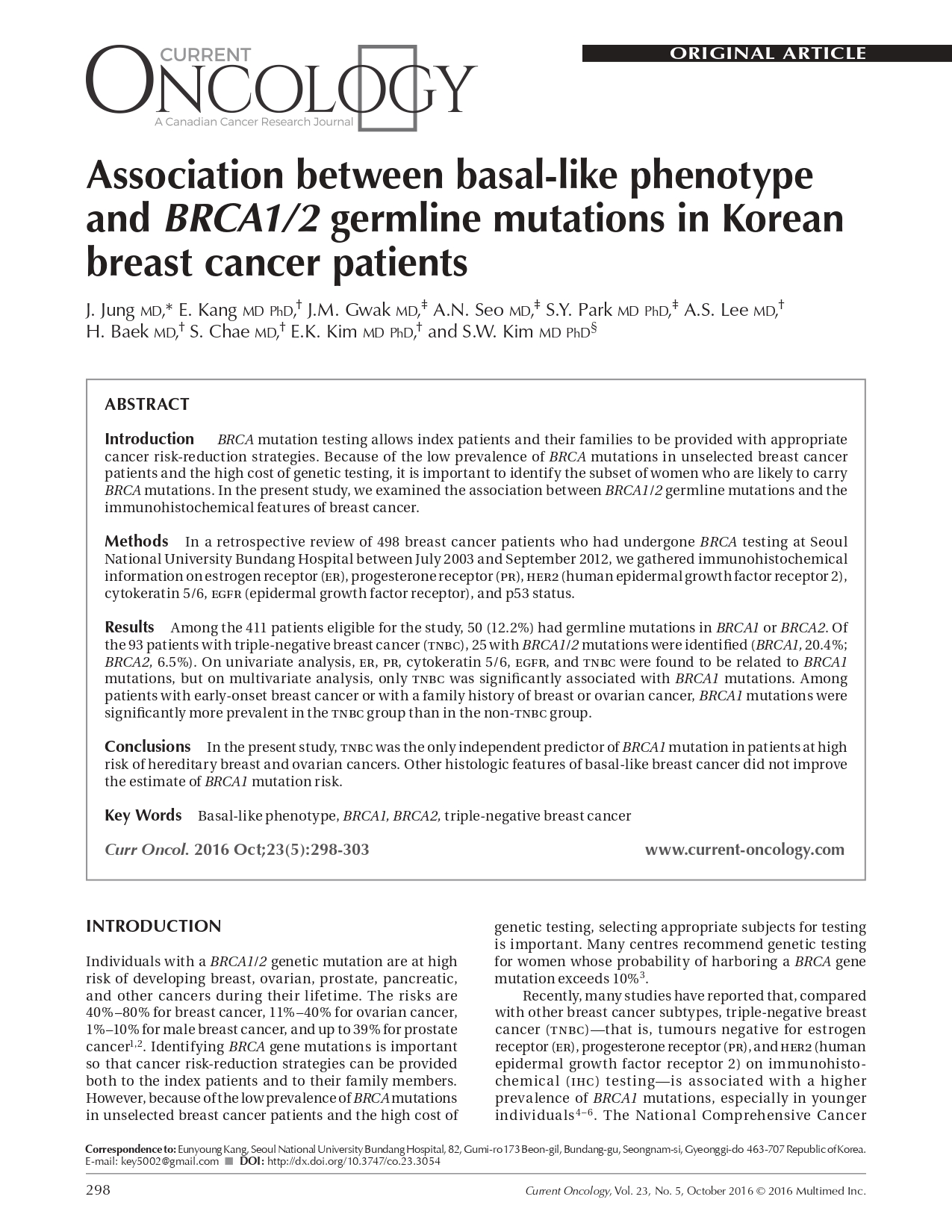 Association between basal-like phenotype and BRCA1/2 germline mutations in Korean breast cancer patients
-
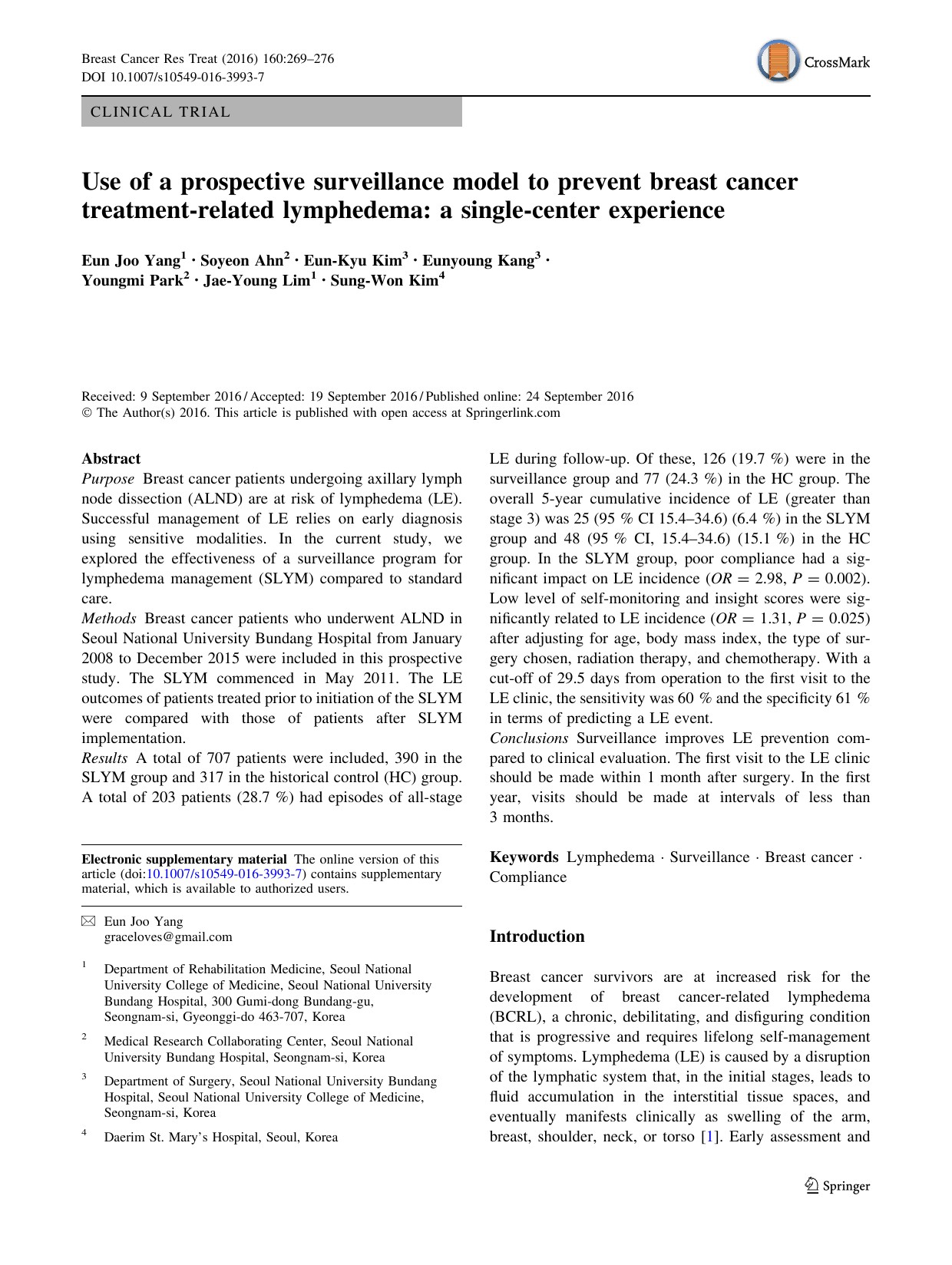 Use of a prospective surveillance model to prevent breast cancer treatment-related lymphedema: a single-center experience
-
 Reliability of Computer-Assisted Breast Density Estimation: Comparison of Interactive Thresholding, Semiautomated, and Fully Automated Methods
-
An international survey of surveillance schemes for unaffected BRCA1 and BRCA2 mutation carriers
-
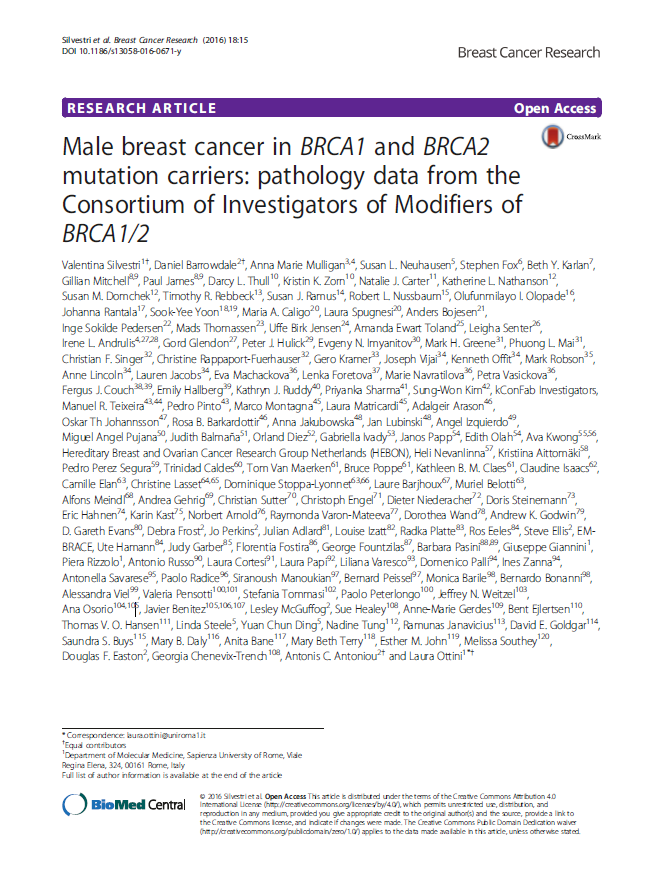 Male breast cancer in BRCA1 and BRCA2 mutation carriers: pathology data from the Consortium of Investigators of Modifiers of BRCA1/2
-
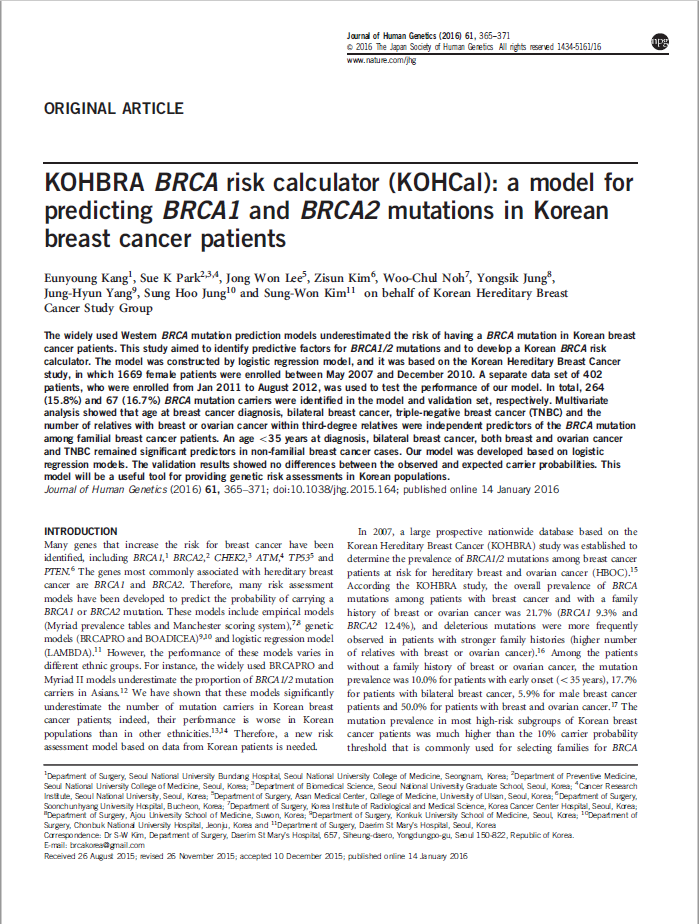 KOHBRA BRCA risk calculator (KOHCal): a model for predicting BRCA1 and BRCA2 mutations in Korean breast cancer patients


