


-
-
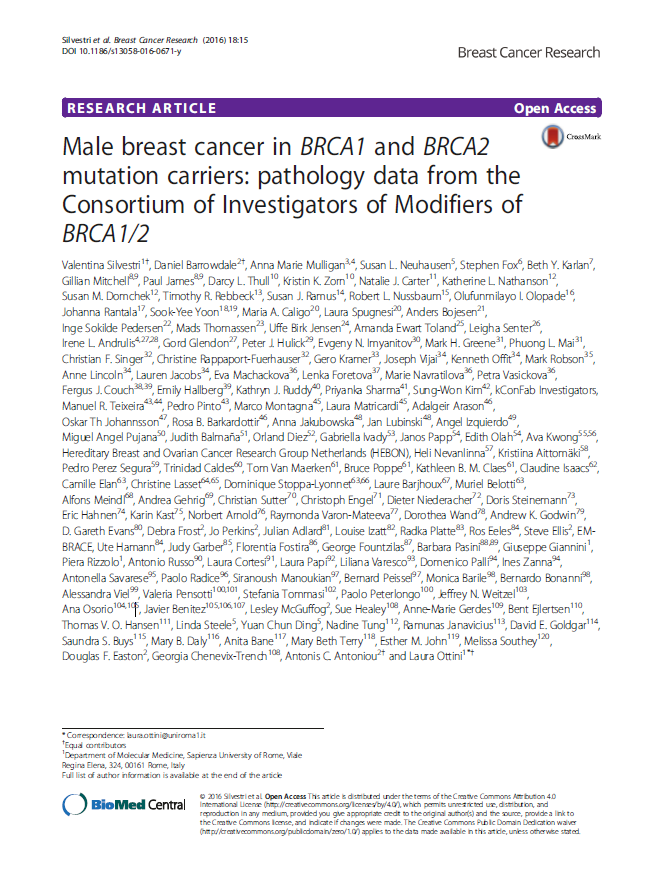
유방암 연구 저널 Male breast cancer in BRCA1 and BRCA2 mutation carriers: pathology data from the Consortium of Investigators of Modifiers of BRCA1/2 2016.02.09.Breast Cancer Research (09 February 2016) 논문 보기BackgroundBRCA1 and, more commonly, BRCA2 mutations are associated with increased risk of male breast cancer (MBC). However, only a paucity of data exists on the pathology of breast cancers (BCs) in men with BRCA1/2 mutations. Using the largest available dataset, we determined whether MBCs arising in BRCA1/2 mutation carriers display specific pathologic features and whether these features differ from those of BRCA1/2 female BCs (FBCs).MethodsWe characterised the pathologic features of 419 BRCA1/2 MBCs and, using logistic regression analysis, contrasted those with data from 9675 BRCA1/2 FBCs and with population-ba
sed data from 6351 MBCs in the Surveillance, Epidemiology, and End Results (SEER) databa se. ResultsAmong BRCA2 MBCs, grade significantly decreased with increasing age at diagnosis (P = 0.005). Compared with BRCA2 FBCs, BRCA2 MBCs were of significantly higher stage (P for trend = 2 × 10⁻⁵) and higher grade (P for trend = 0.005) and were more likely to be oestrogen receptor–positive [odds ratio (OR) 10.59; 95 % confidence interval (CI) 5.15–21.80] and progesterone receptor–positive (OR 5.04; 95 % CI 3.17–8.04). With the exception of grade, similar patterns of associations emerged when we compared BRCA1 MBCs and FBCs. BRCA2 MBCs also presented with higher grade than MBCs from the SEER database (P for trend = 4 × 10⁻¹²). ConclusionsOn the basis of the largest series analysed to date, our results show that BRCA1/2 MBCs display distinct pathologic characteristics compared with BRCA1/2 FBCs, and we identified a specific BRCA2-associated MBC phenotype characterised by a variable suggesting greater biological aggressiveness (i.e., high histologic grade). These findings could lead to the development of gender-specific risk prediction models and guide clinical strategies appropriate for MBC management.
Total : 35개 (page : 1/3)
-
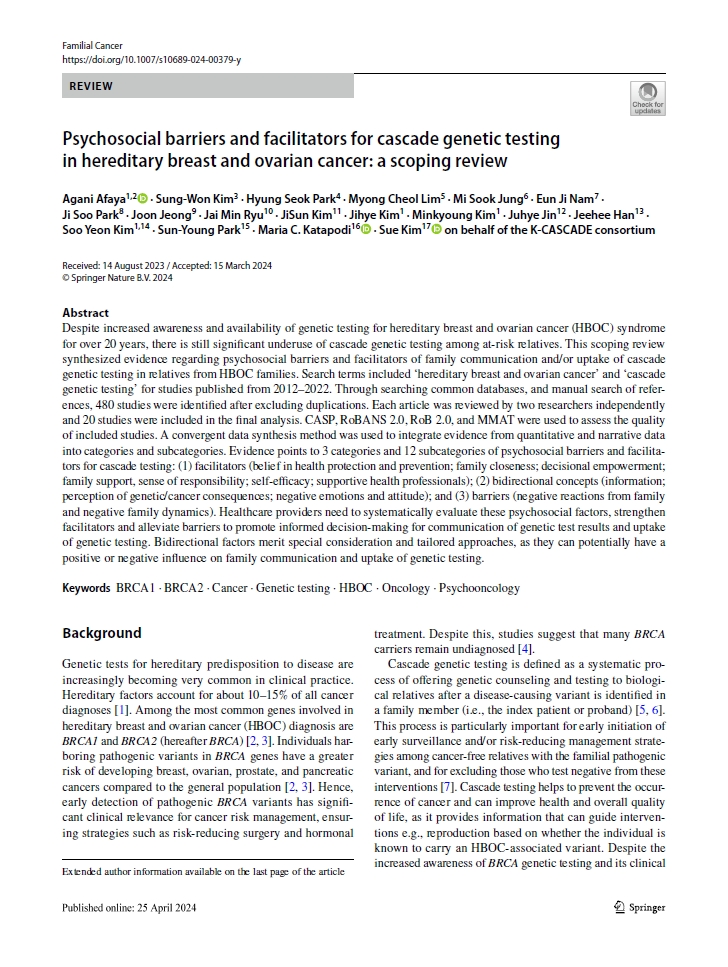 Psychosocial barriers and facilitators for cascade genetic testing in hereditary breast and ovarian cancer: a scoping review
-
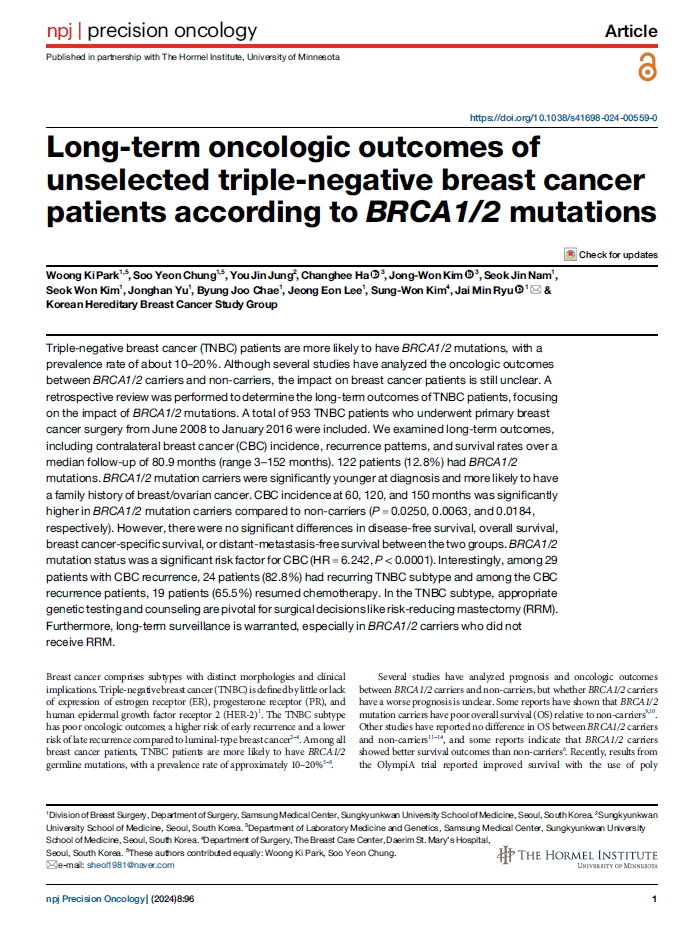 Long-term oncologic outcomes of unselected triple-negative breast cancer patients according to BRCA1/2 mutations
-
Associations of a Breast Cancer Polygenic Risk Score With Tumor Characteristics and Survival
-
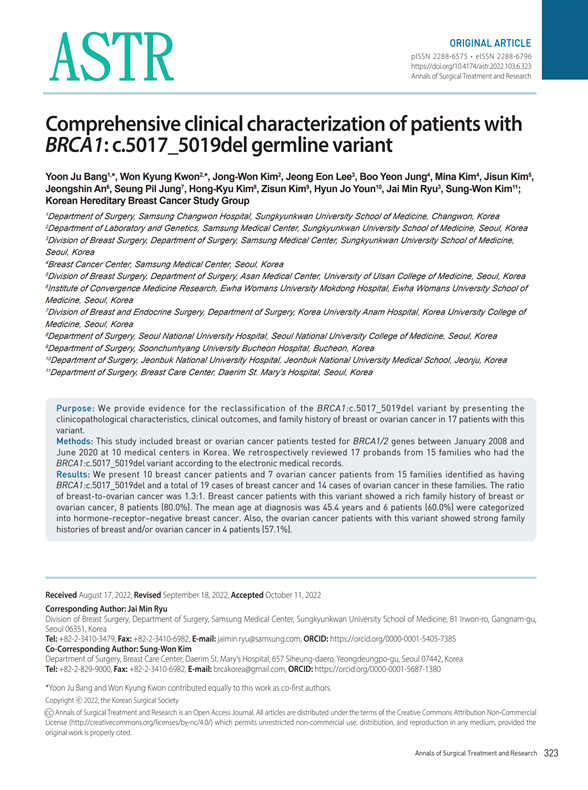 Comprehensive clinical characterization of patients with BRCA1: c.5017_5019del germline variant
-
 BRCA and Breast Cancer-Related High-Penetrance Genes
-
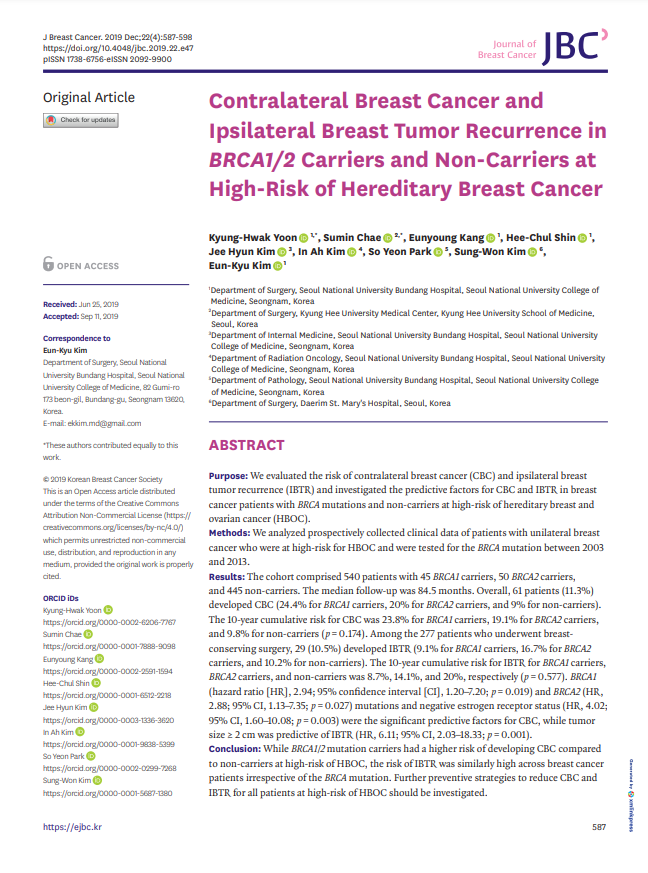 Contralateral Breast Cancer and Ipsilateral Breast Tumor Recurrence in BRCA1/2 Carriers and Non-Carriers at High-Risk of Hereditary Breast Cancer
-
 The functional ALDH2 polymorphism is associated with breast cancer risk: A pooled analysis from the Breast Cancer Association Consortium
-
 Height and body mass index as Modifiers of breast cancer risk in BRCA1/2 mutation carriers: A Mendelian randomization study
-
 Prevalence and oncologic outcomes of BRCA 1/2 mutations in unselected triple-negative breast cancer patients in Korea
-
 Development of a Management Algorithm for the Diagnosis of Cellular Fibroepithelial Lesions From Core Needle Biopsies
-
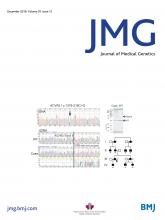 Reclassification of BRCA1 and BRCA2 variants of uncertain significance: a multifactorial analysis of multicentre prospective cohort
-
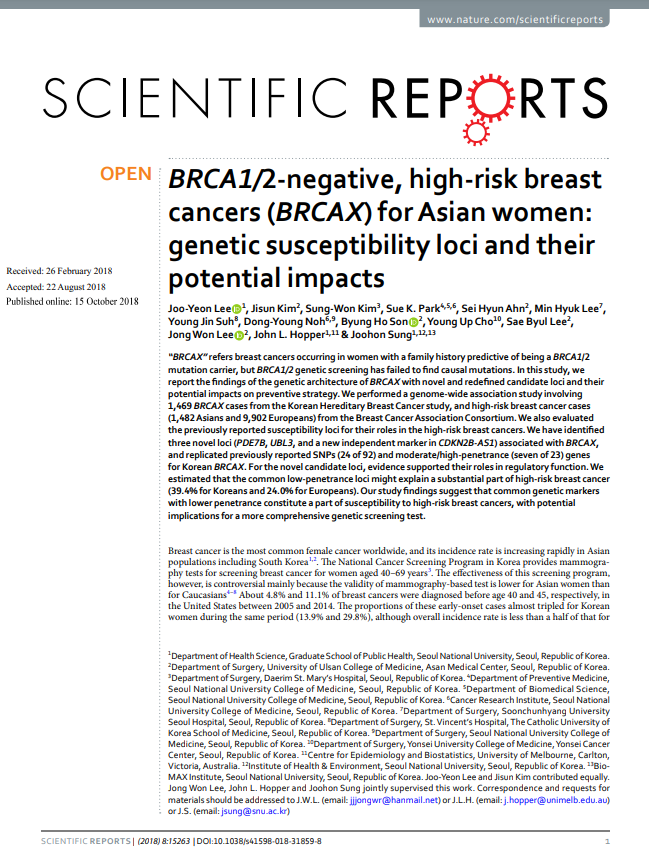 BRCA1/2-negative, high-risk breast cancers (BRCAX) for Asian women: genetic susceptibility loci and their potential impacts
-
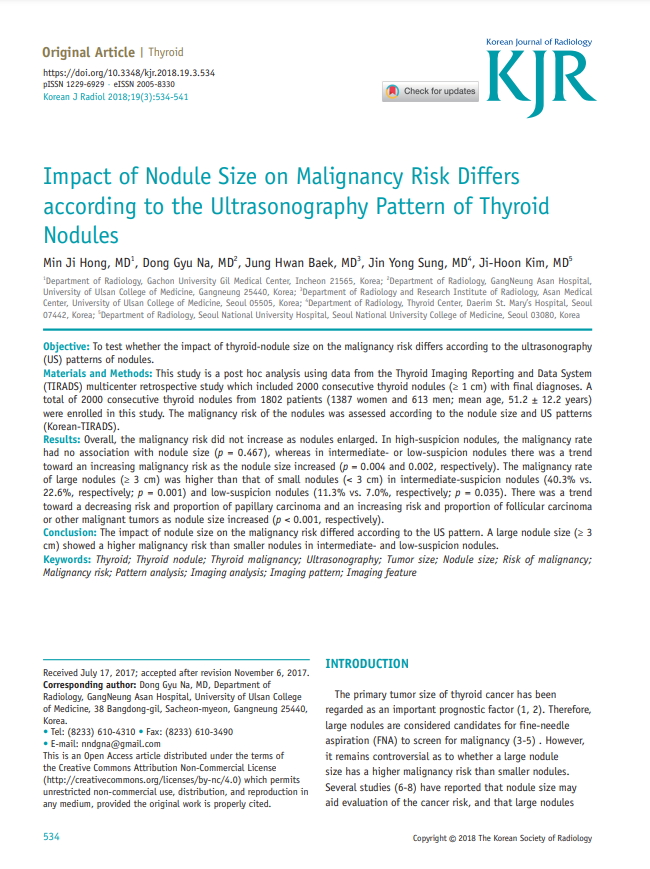 Impact of Nodule Size on Malignancy Risk Differs according to the Ultrasonography Pattern of Thyroid Nodules
-
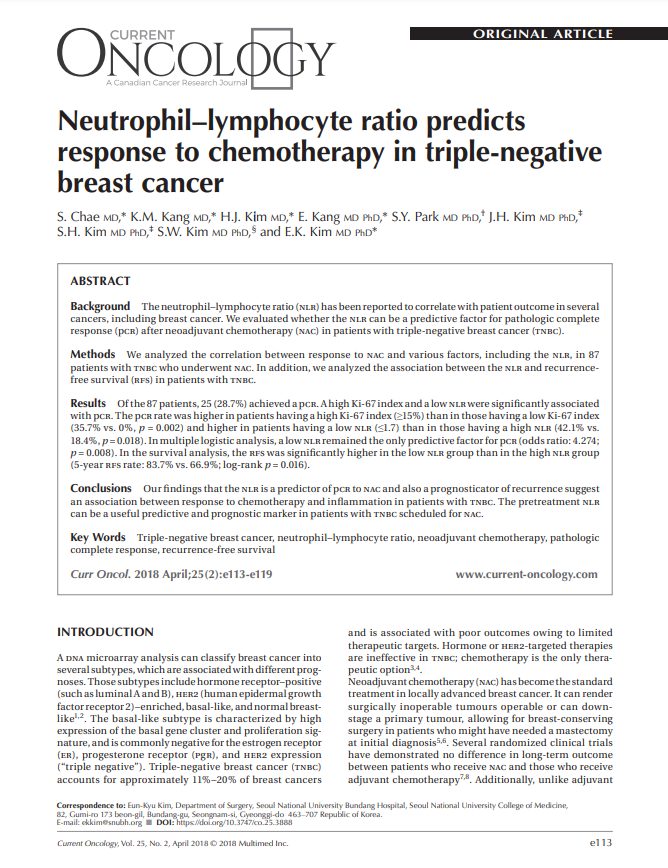 Neutrophil–lymphocyte ratio predicts response to chemotherapy in triple-negative breast cancer
-
 Identification of ten variants associated with risk of estrogen-receptor-negative breast cancer


