


-
-
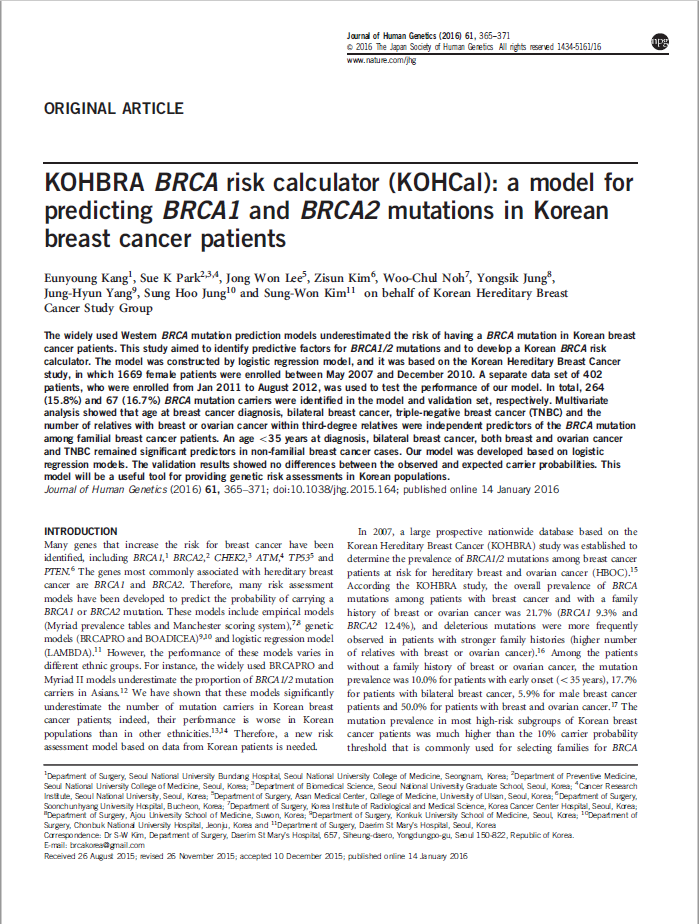
인간 유전 학회 학회지 KOHBRA BRCA risk calculator (KOHCal): a model for predicting BRCA1 and BRCA2 mutations in Korean breast cancer patients 2016.01.14.Journal of Human Genetics volume 61, pages365–371 (2016) 논문 보기IntroductionThe widely used Western BRCA mutation prediction models underestimated the risk of having a BRCA mutation in Korean breast cancer patients. This study aimed to identify predictive factors for BRCA1/2 mutations and to develop a Korean BRCA risk calculator. The model was constructed by logistic regression model, and it was ba
sed on the Korean Hereditary Breast Cancer study, in which 1669 female patients were enrolled between May 2007 and December 2010. A separate data set of 402 patients, who were enrolled from Jan 2011 to August 2012, was used to test the performance of our model. In total, 264 (15.8%) and 67 (16.7%) BRCA mutation carriers were identified in the model and validation set, respectively. Multivariate analysis showed that age at breast cancer diagnosis, bilateral breast cancer, triple-negative breast cancer (TNBC) and the number of relatives with breast or ovarian cancer within third-degree relatives were independent predictors of the BRCA mutation among familial breast cancer patients. An age <35 years at diagnosis, bilateral breast cancer, both breast and ovarian cancer and TNBC remained significant predictors in non-familial breast cancer cases. Our model was developed ba sed on logistic regression models. The validation results showed no differences between the observed and expected carrier probabilities. This model will be a useful tool for providing genetic risk assessments in Korean populations.
Total : 35개 (page : 2/3)
-
 Association analysis identifies 65 new breast cancer risk loci
-
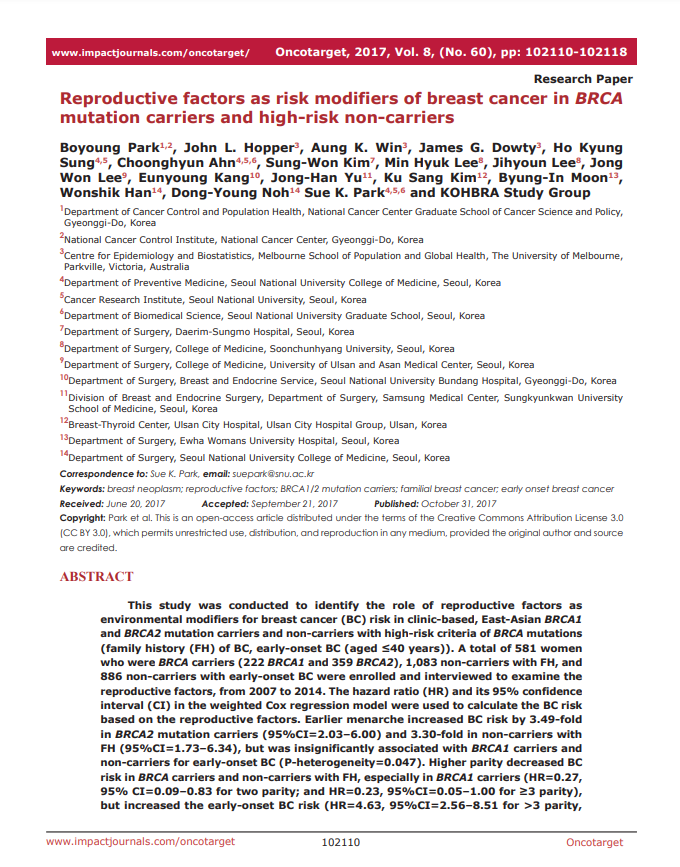 Reproductive factors as risk modifiers of breast cancer in BRCA mutation carriers and high risk
-
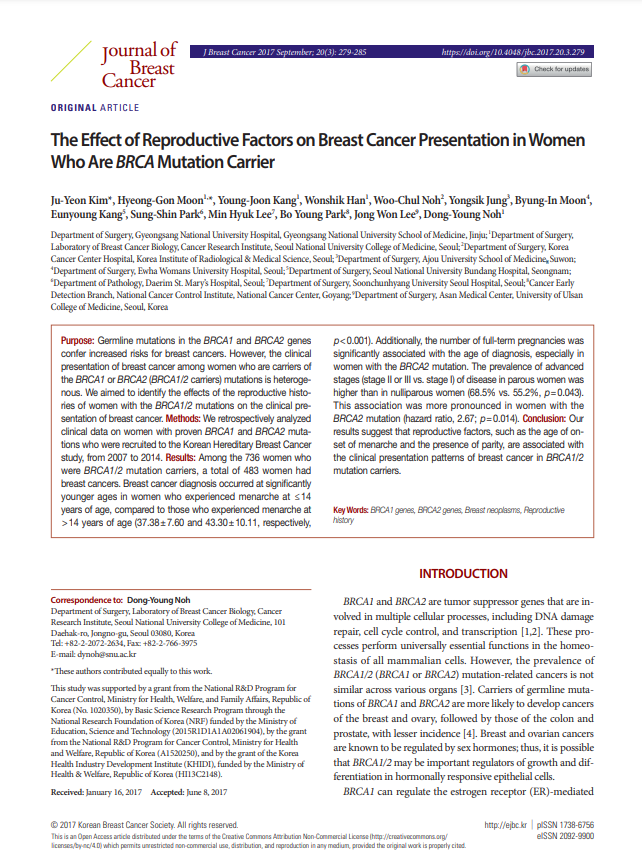 The Effect of Reproductive Factors on Breast Cancer Presentation in Women Who Are BRCA Mutation Carrier
-
 The Management Strategy of Benign Solitary Intraductal Papilloma on Breast Core Biopsy
-
 Prediction of Breast and Prostate Cancer Risks in Male BRCA1 and BRCA2 Mutation Carriers Using Polygenic Risk Scores
-
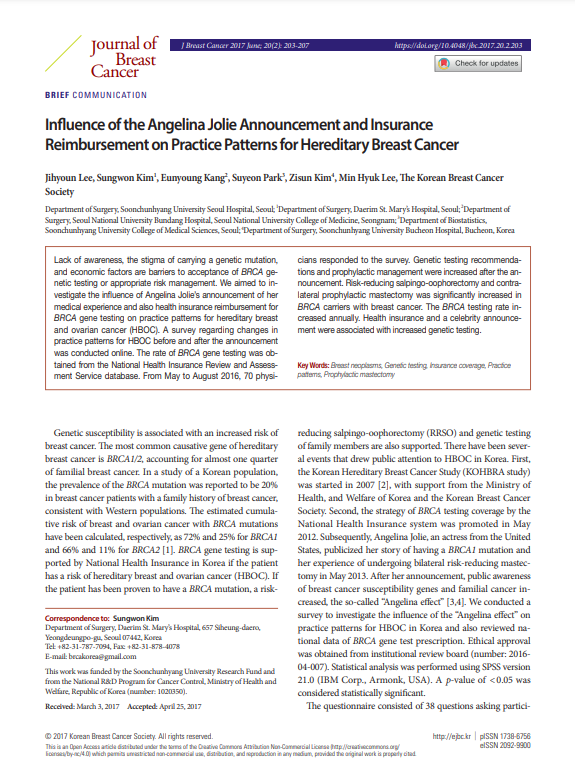 Influence of the Angelina Jolie Announcement and Insurance Reimbursement on Practice Patterns for Hereditary Breast Cancer
-
 Suggestion of BRCA1 c.5339T>C (p.L1780P) variant confer from 'unknown significance' to 'Likely pathogenic' based on clinical evidence in Korea
-
 Identification of 12 new susceptibility loci for different histotypes of epithelial ovarian cancer
-
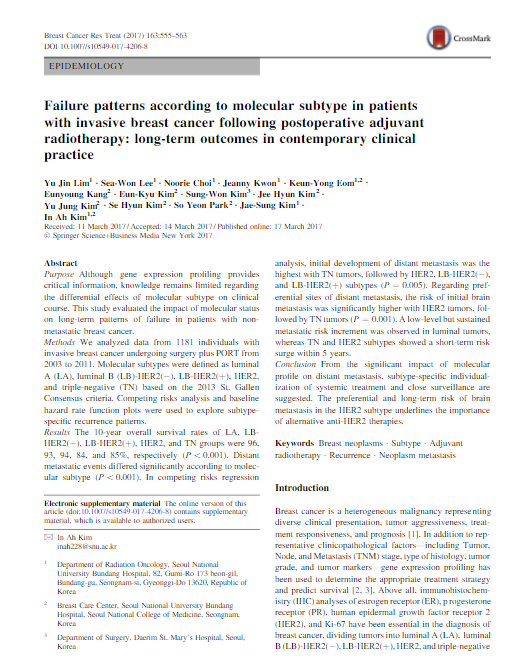 Failure patterns according to molecular subtype in patients with invasive breast cancer following postoperative adjuvant radiotherapy: long-term outcomes in contemporary clinical practice
-
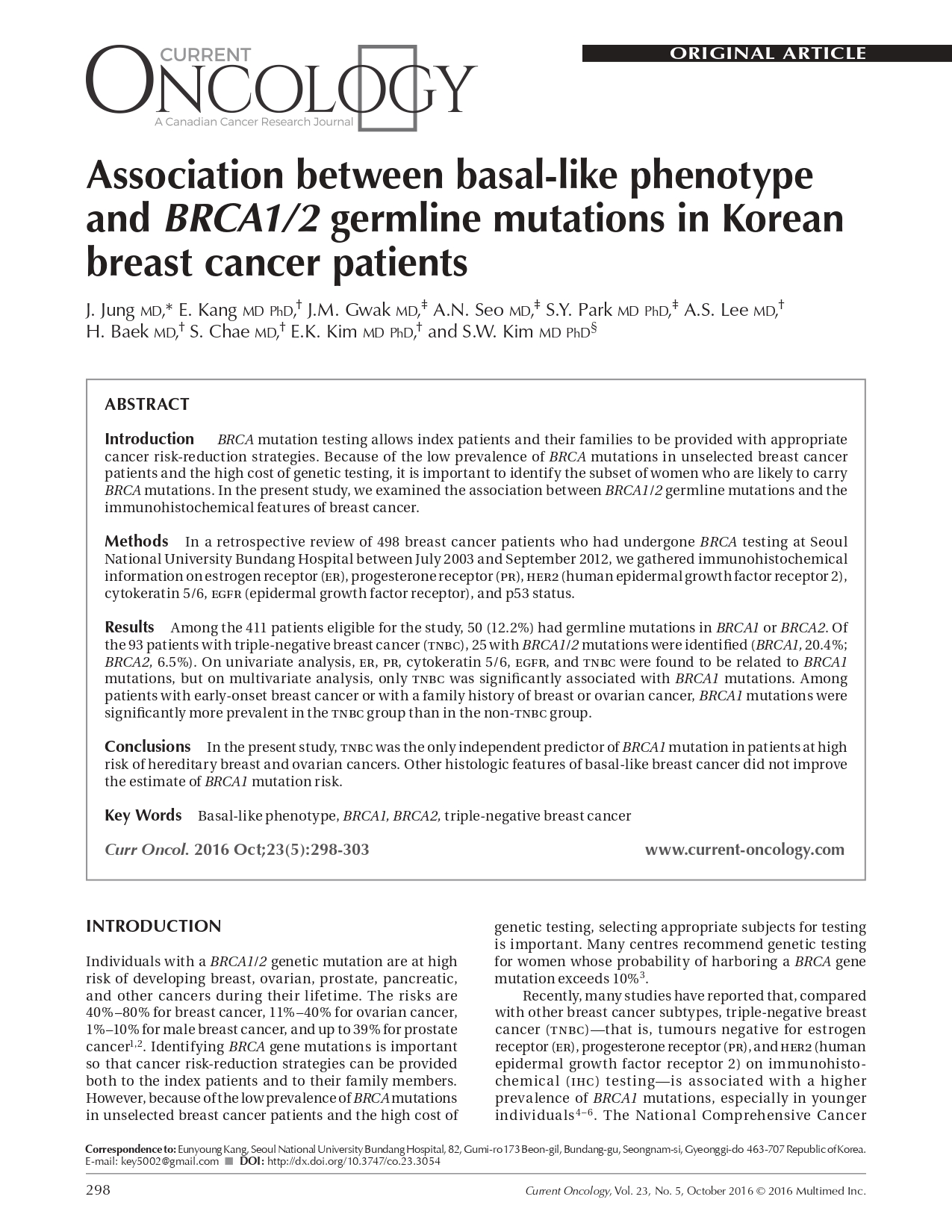 Association between basal-like phenotype and BRCA1/2 germline mutations in Korean breast cancer patients
-
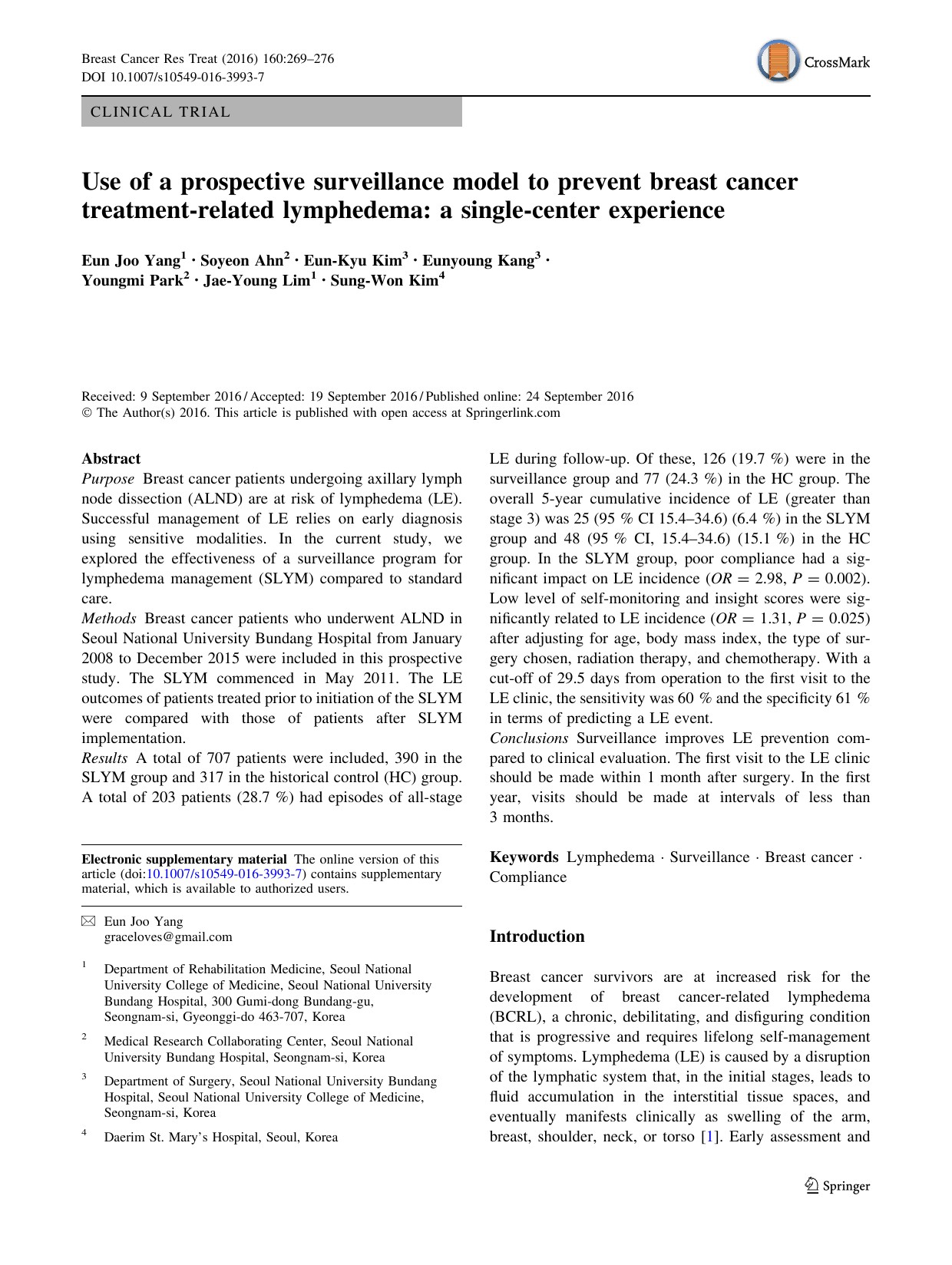 Use of a prospective surveillance model to prevent breast cancer treatment-related lymphedema: a single-center experience
-
 Reliability of Computer-Assisted Breast Density Estimation: Comparison of Interactive Thresholding, Semiautomated, and Fully Automated Methods
-
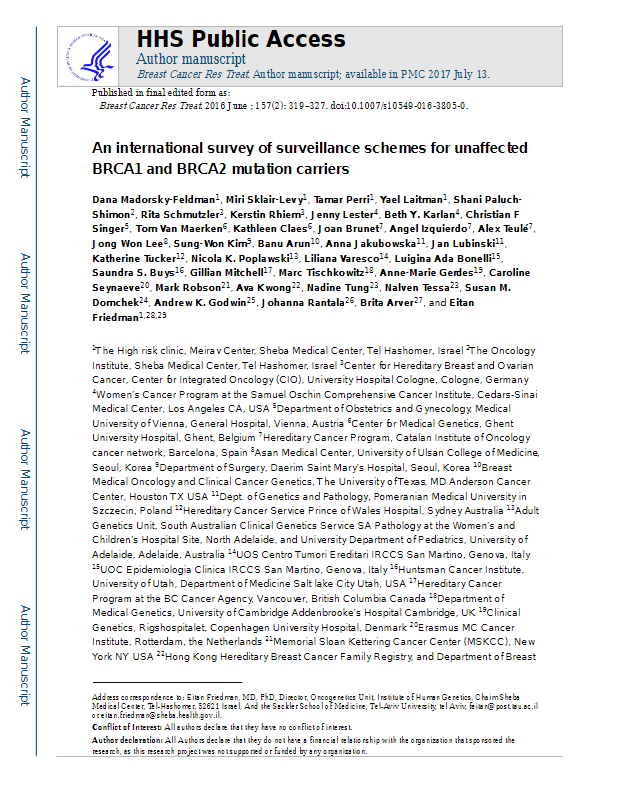 An international survey of surveillance schemes for unaffected BRCA1 and BRCA2 mutation carriers
-
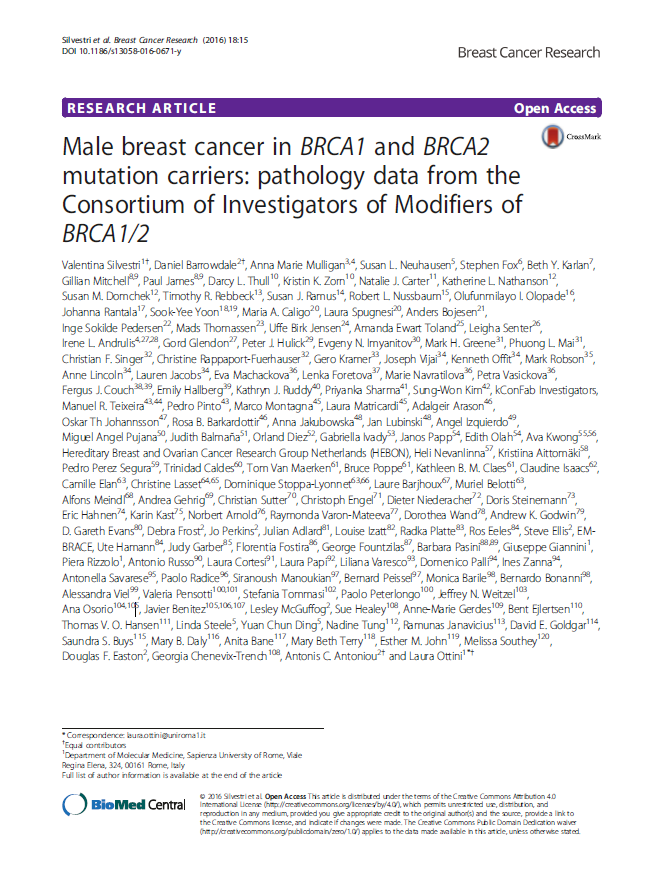 Male breast cancer in BRCA1 and BRCA2 mutation carriers: pathology data from the Consortium of Investigators of Modifiers of BRCA1/2
-
KOHBRA BRCA risk calculator (KOHCal): a model for predicting BRCA1 and BRCA2 mutations in Korean breast cancer patients


