


-
-
미국 재활 의학 학회지 Discrepant Trajectories of Impairment, Activity, and Participation Related to Upper-Limb Function in Patients With Breast Cancer 2015.09.03.Archives of Physical Medicine and Rehabilitation (VOLUME 96, ISSUE 12, P2161-2168, DECEMBER 01, 2015) 논문 보기ob
jectives To explore upper-limb disability with respect to health outcomes, operationalized by Disabilities of the Arm, Shoulder, and Hand, and to identify factors associated with each element of upper-limb disability over a 2-year period in breast cancer survivors.Main Outcome Measuresobjectives We evaluated demographics, social variables, and upper-limb disability in a baseline assessment preoperatively. Follow-up evaluations were conducted in outpatient clinics 3 months after surgery and at 12 and 24 months after surgery. Linear regression models with the generalized estimating equations of the compound symmetry covariance structure were used. ResultsTime since surgery was inversely associated with the impairment items score (β=−.20; 95% confidence interval [CI], −.49 to −.08) and positively associated with the activity limitation items score (β=.59; 95% CI, .29–.88). The impact of upper-limb disability preoperatively on the items involving both the activity limitation and participation restrictions scores was positive (β=2.89; 95% CI, .76–5.02) after adjusting for demographic, treatment type, and socioeconomic factors.ConclusionsOur study revealed that upper-limb impairment recovered with time after breast cancer surgery; however, upper-limb function-related activity and participation were reduced through 2 years after surgery.
Total : 35개 (page : 2/3)
-
 Association analysis identifies 65 new breast cancer risk loci
-
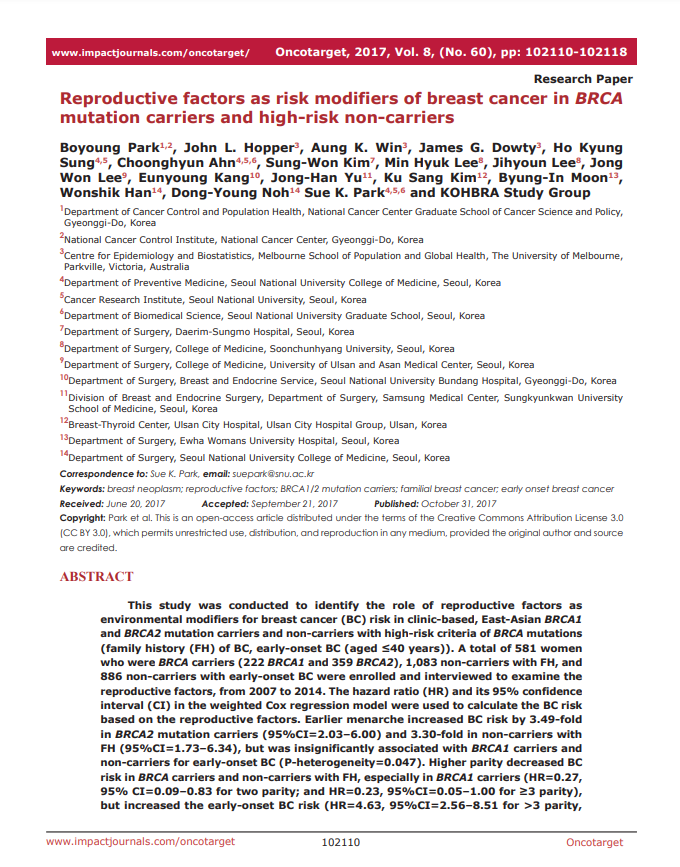 Reproductive factors as risk modifiers of breast cancer in BRCA mutation carriers and high risk
-
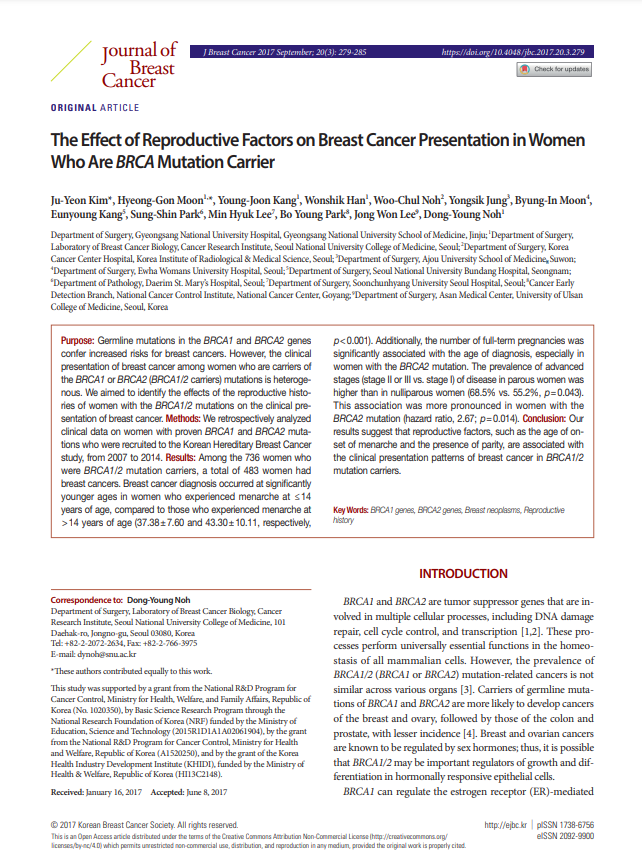 The Effect of Reproductive Factors on Breast Cancer Presentation in Women Who Are BRCA Mutation Carrier
-
 The Management Strategy of Benign Solitary Intraductal Papilloma on Breast Core Biopsy
-
 Prediction of Breast and Prostate Cancer Risks in Male BRCA1 and BRCA2 Mutation Carriers Using Polygenic Risk Scores
-
 Influence of the Angelina Jolie Announcement and Insurance Reimbursement on Practice Patterns for Hereditary Breast Cancer
-
 Suggestion of BRCA1 c.5339T>C (p.L1780P) variant confer from 'unknown significance' to 'Likely pathogenic' based on clinical evidence in Korea
-
 Identification of 12 new susceptibility loci for different histotypes of epithelial ovarian cancer
-
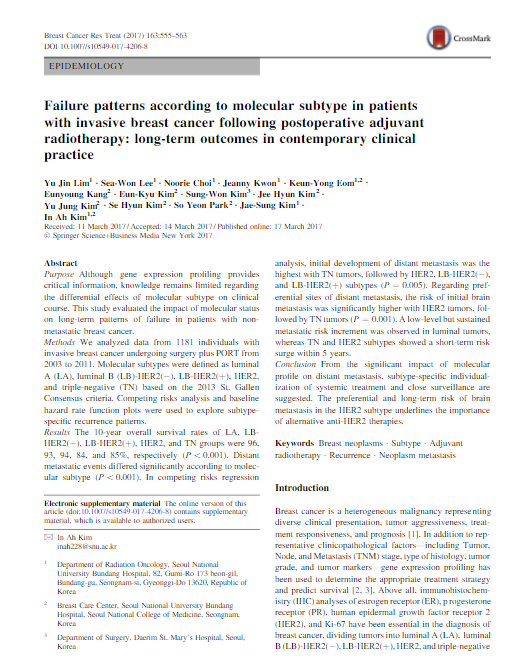 Failure patterns according to molecular subtype in patients with invasive breast cancer following postoperative adjuvant radiotherapy: long-term outcomes in contemporary clinical practice
-
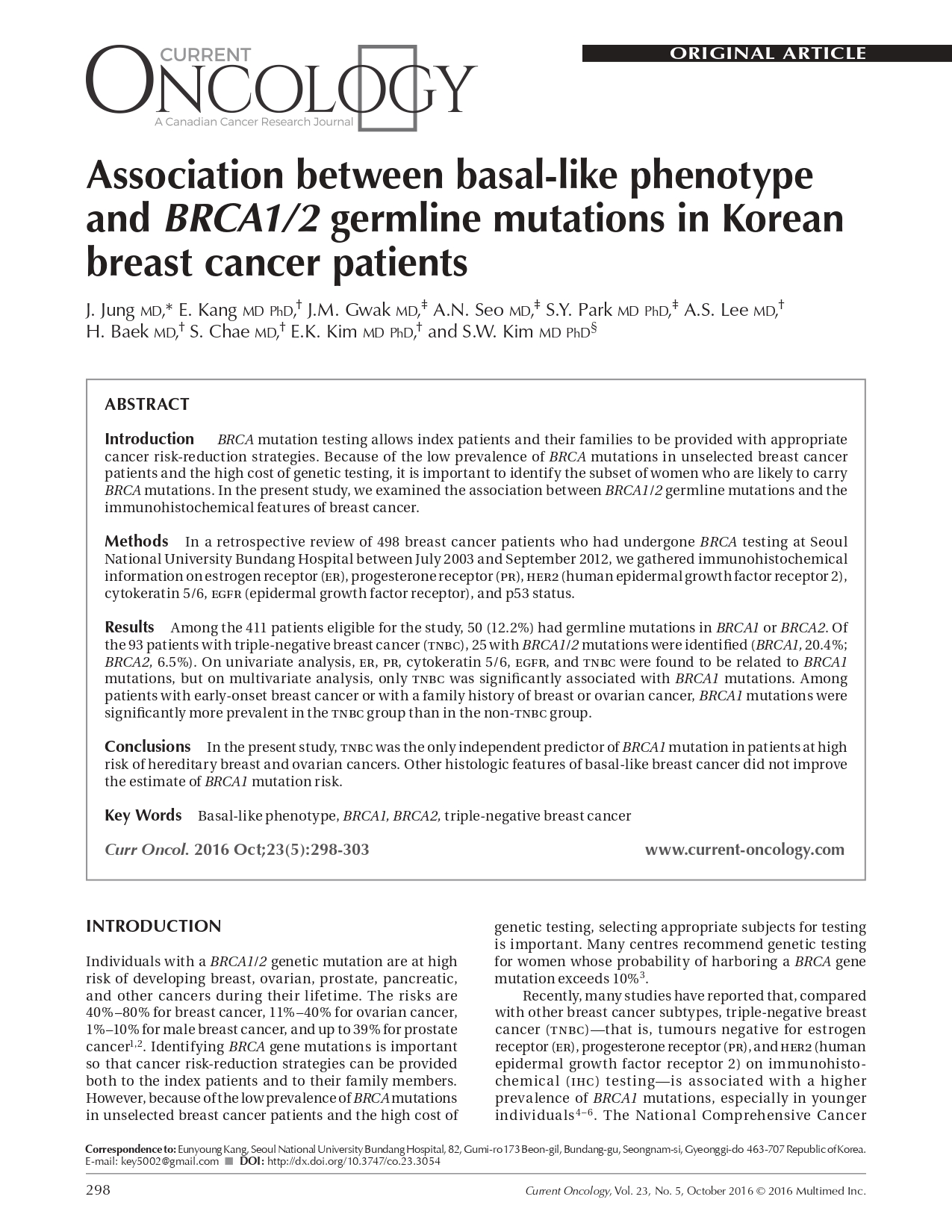 Association between basal-like phenotype and BRCA1/2 germline mutations in Korean breast cancer patients
-
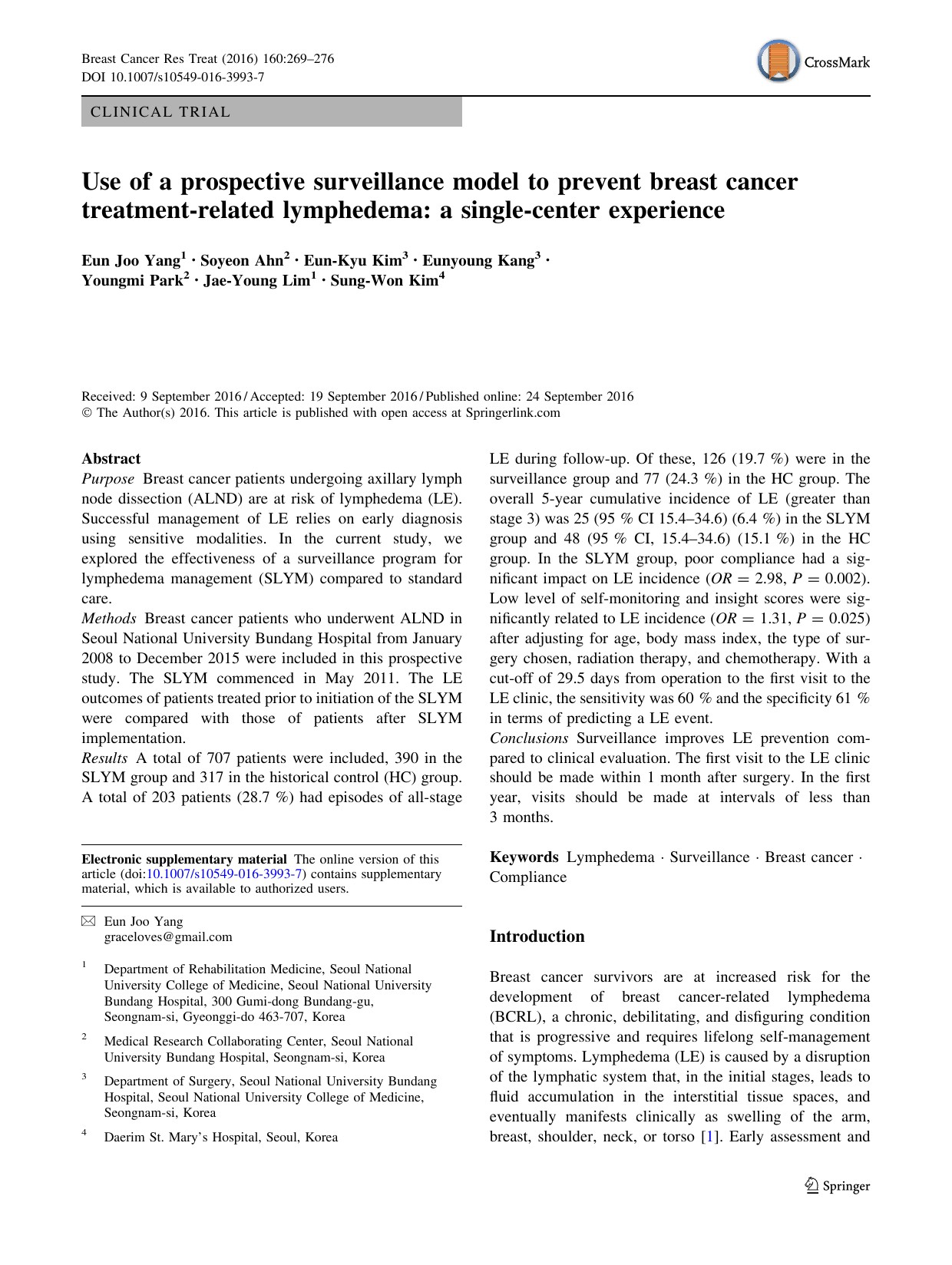 Use of a prospective surveillance model to prevent breast cancer treatment-related lymphedema: a single-center experience
-
 Reliability of Computer-Assisted Breast Density Estimation: Comparison of Interactive Thresholding, Semiautomated, and Fully Automated Methods
-
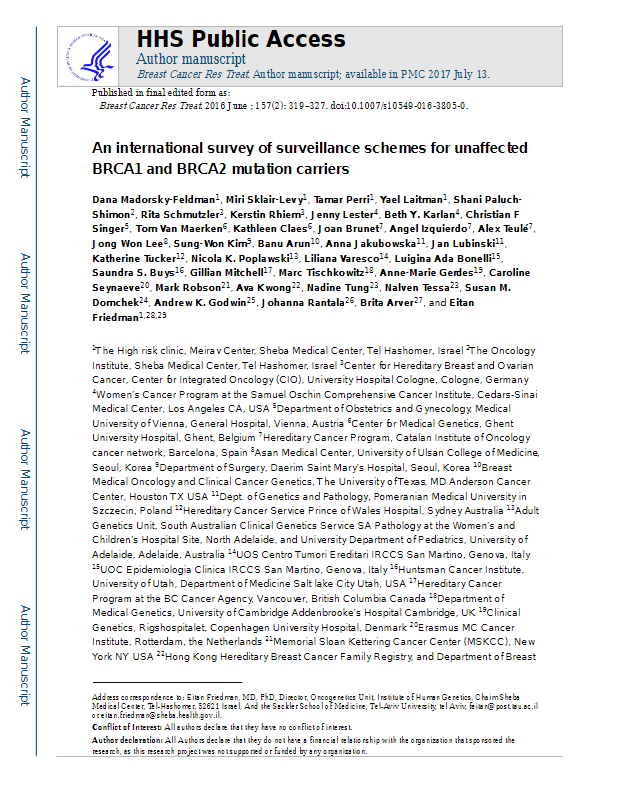 An international survey of surveillance schemes for unaffected BRCA1 and BRCA2 mutation carriers
-
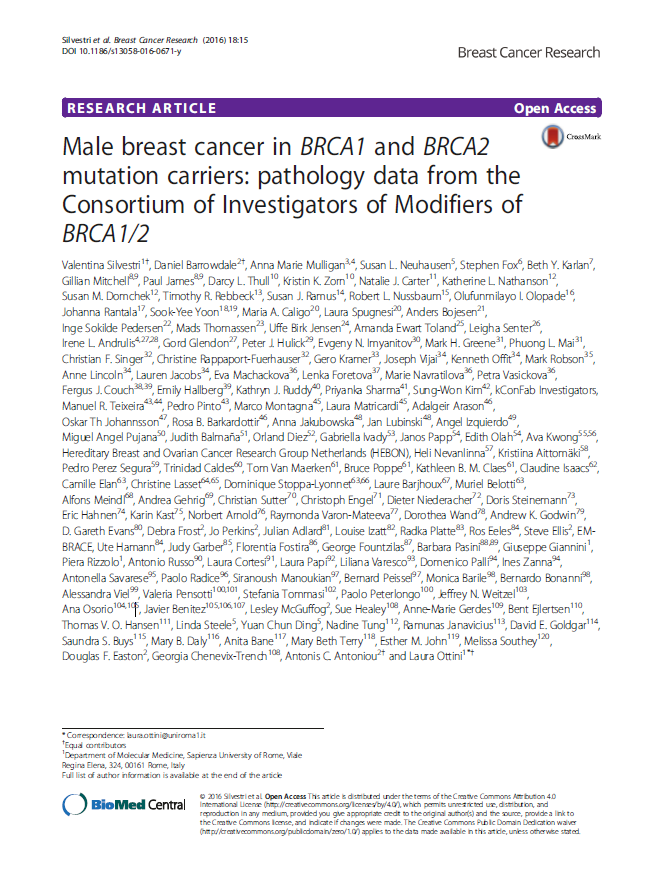 Male breast cancer in BRCA1 and BRCA2 mutation carriers: pathology data from the Consortium of Investigators of Modifiers of BRCA1/2
-
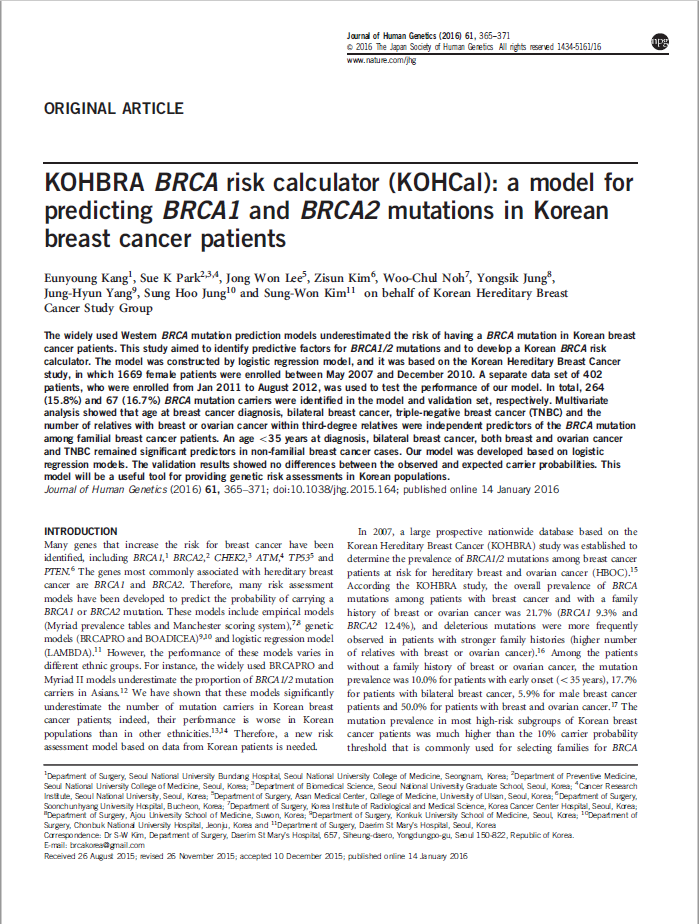 KOHBRA BRCA risk calculator (KOHCal): a model for predicting BRCA1 and BRCA2 mutations in Korean breast cancer patients


